Vanneste Lotte, Heymans Isabelle, Belche Jean-Luc, Huybrechts Ine, Van de Velde Dominique, De Vriendt Patricia, Haverals Reini, Boeykens Dagje, Anthierens Sibyl, Boeckxstaens Pauline
Department of Public Health and Primary Care, Faculty of Medicine and Health Sciences, Ghent University, Ghent, Belgium.
Department of Family Medicine, Faculty of Medicine, University of Liège, Liège, Belgium.
Int J Integr Care. 2025 May 2;25(2):7. doi: 10.5334/ijic.8983. eCollection 2025 Apr-Jun.
Goal oriented care (GOC) and its readiness for implementation has been described in scientific literature, but research on GOC implementation in primary care organisations is limited. This study aims to capture the experiences of primary care organisations in implementing GOC in their context.
A qualitative study, with data triangulation, was conducted. Primary care organisations that experimented with the implementation of GOC in their context were followed. Data were analysed using inductive thematic analysis.
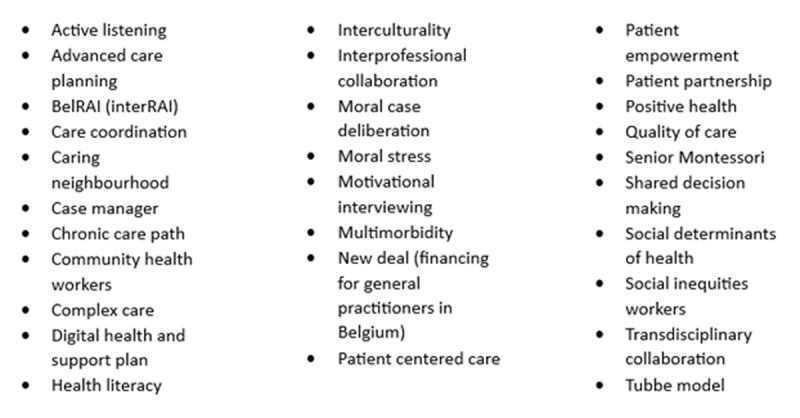
Seven themes supporting GOC implementation were identified. Project leaders from the primary care organisations experienced that related concepts can serve as a foundation for initiating the implementation of GOC. The implementation process is an iterative and reflective process, with resistance viewed as an integral part of the process, offering opportunities for reflection. Collaborating with partners, especially the active participation of patients, was seen as a facilitator. Furthermore, having a clear vision for GOC is necessary. Projects invested in adapting tools and processes to align with GOC and provided relevant training.
The findings led to recommendations that can guide the implementation of future GOC projects. Effective implementation extends beyond the development and adaptation of tools; it requires translating theoretical concepts into practical application and creating a shared vision on GOC.
科学文献中已描述了目标导向型照护(GOC)及其实施准备情况,但关于初级保健机构实施GOC的研究有限。本研究旨在了解初级保健机构在其背景下实施GOC的经验。
开展了一项采用数据三角剖分法的定性研究。对在其背景下尝试实施GOC的初级保健机构进行追踪。使用归纳主题分析法对数据进行分析。
确定了支持GOC实施的七个主题。初级保健机构的项目负责人认为,相关概念可为启动GOC实施奠定基础。实施过程是一个迭代和反思的过程,阻力被视为该过程的一个组成部分,提供了反思的机会。与合作伙伴合作,尤其是患者的积极参与,被视为一个促进因素。此外,对GOC有清晰的愿景很有必要。各项目投入资源调整工具和流程以与GOC保持一致,并提供相关培训。
研究结果得出了可指导未来GOC项目实施的建议。有效的实施不仅仅是工具的开发和调整;它需要将理论概念转化为实际应用,并就GOC形成共同愿景。