Jousse Céline, Parry Laurent, Cueff Gwendal, Brandolini-Bunlon Marion, Tournayre Jérémy, Bruhat Alain, Maurin Anne-Catherine, Vituret Cyrielle, Averous Julien, Muranishi Yuki, Fafournoux Pierre
UMR1019 Unité de Nutrition Humaine (UNH), INRAE, Université Clermont Auvergne, Clermont-Ferrand, France.
iScience. 2025 Apr 8;28(5):112377. doi: 10.1016/j.isci.2025.112377. eCollection 2025 May 16.
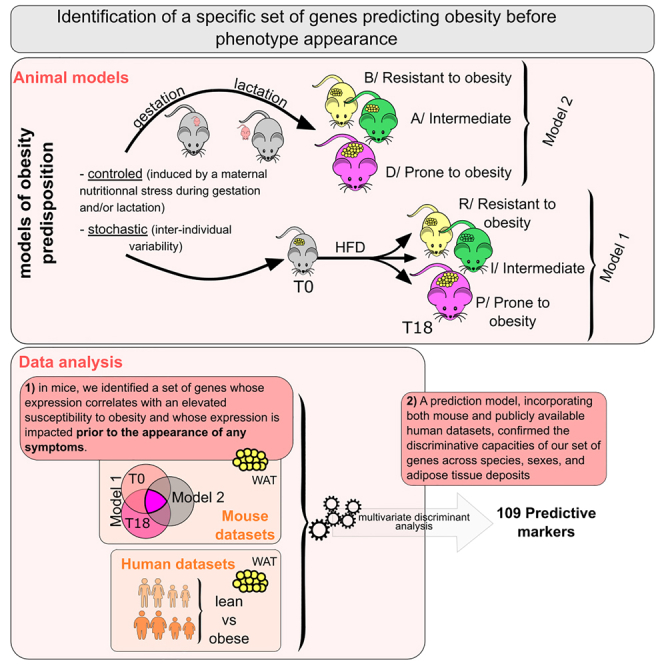
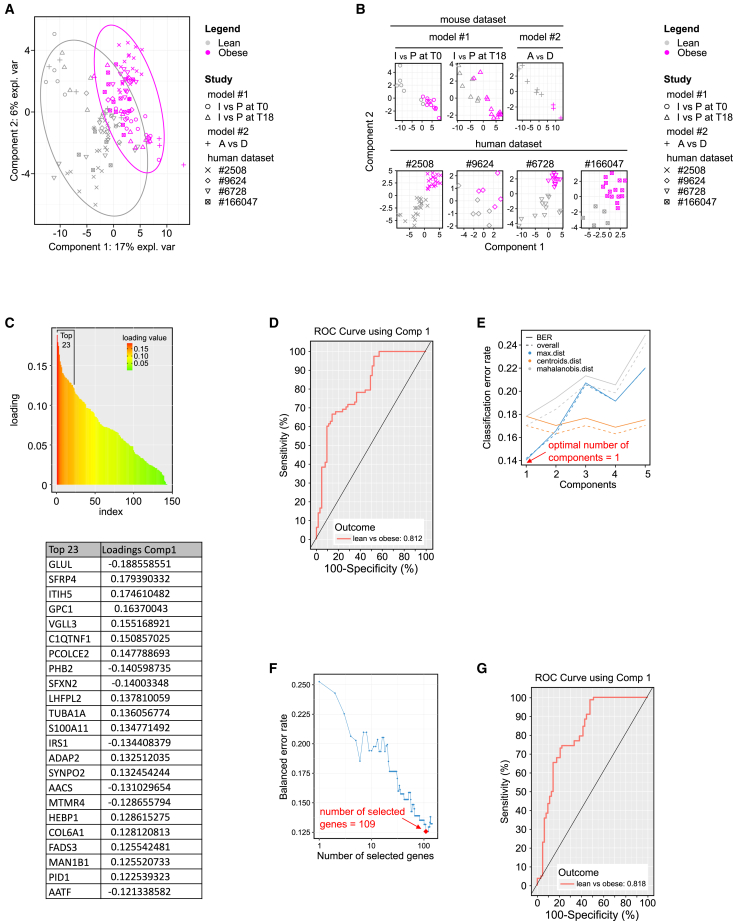
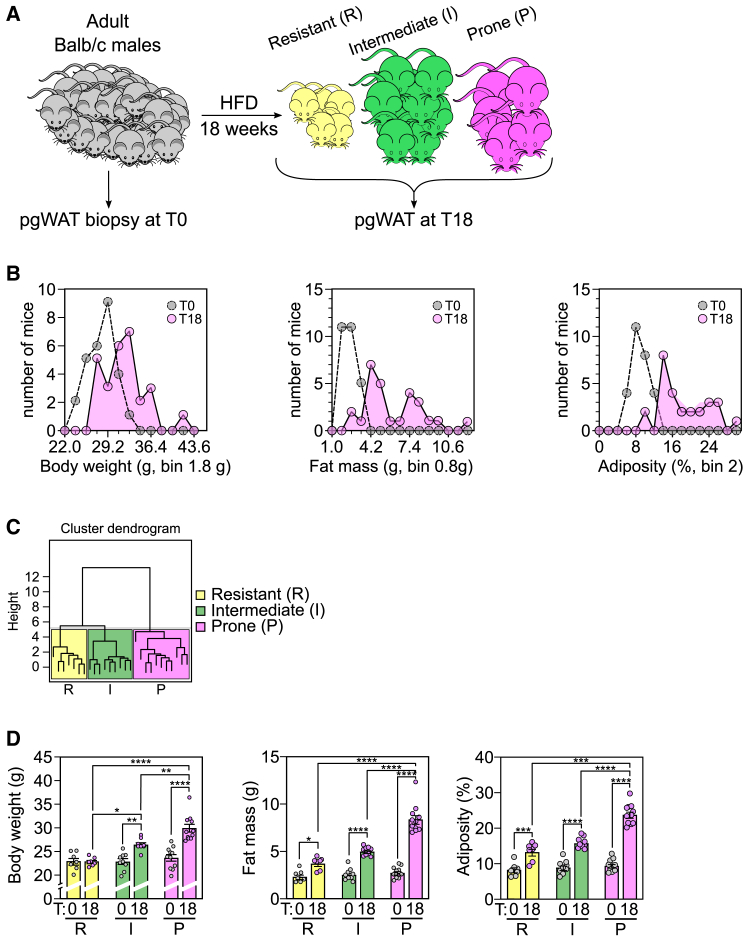
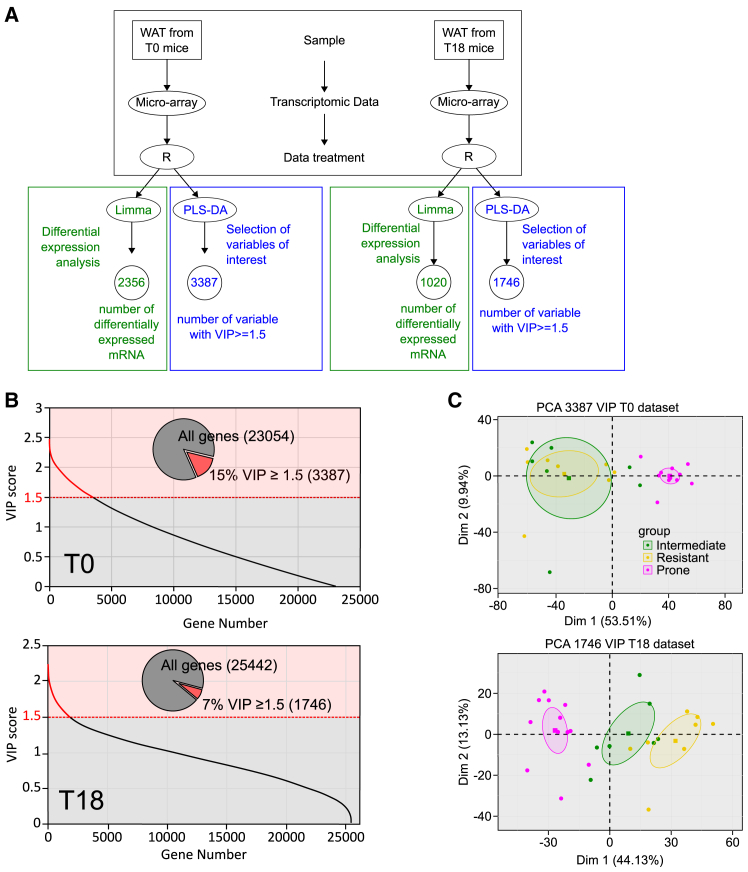
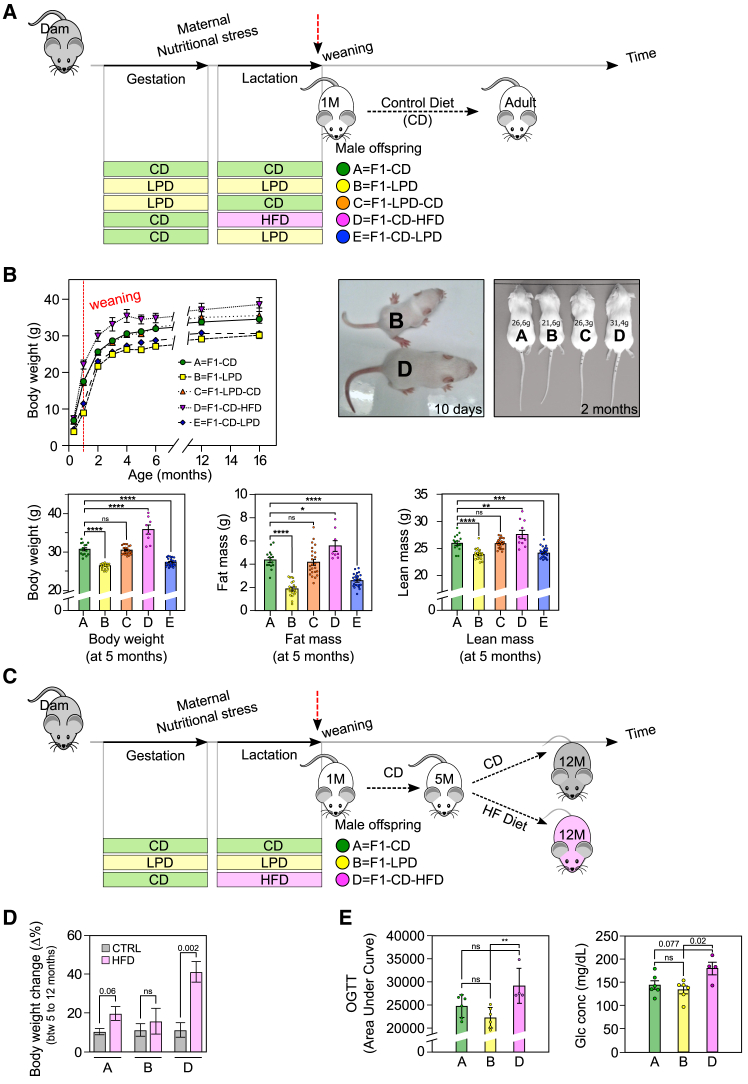
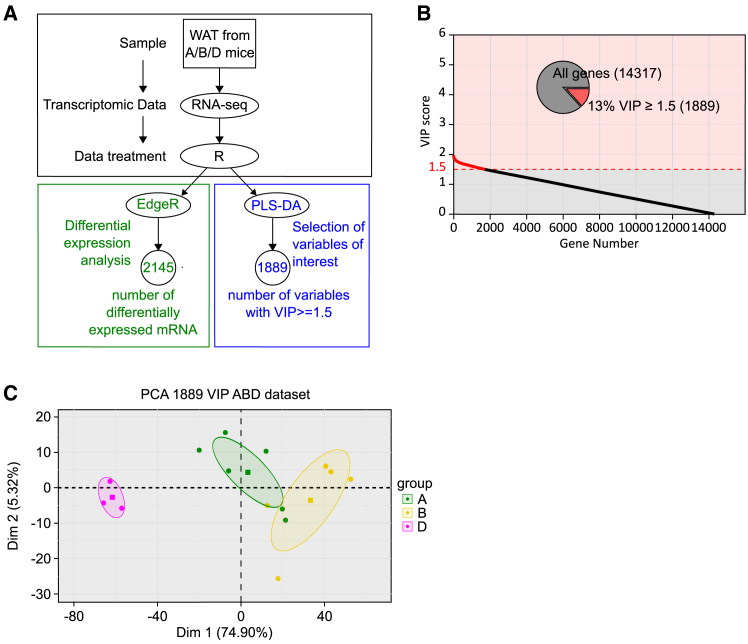
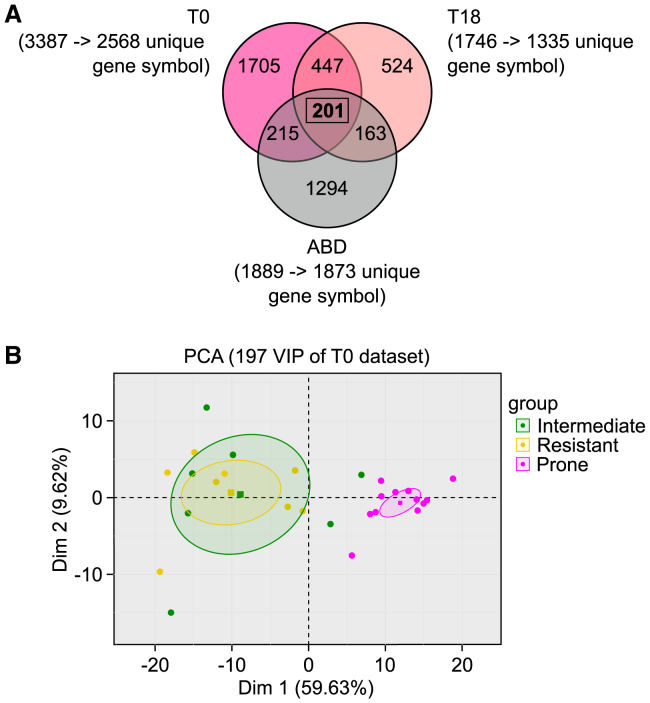
Obesity poses significant health and socioeconomic challenges, necessitating early detection of predisposition for effective personalized prevention. To identify candidate predictive markers, our study used two mouse models: one exhibiting interindividual variability in obesity predisposition and another inducing metabolic phenotypes through maternal nutritional stresses. In both cases, predisposition was assessed by challenging mice with a high-fat diet. Using multivariate analyses of transcriptomic data from white adipose tissue, we identified a set of genes whose expression correlates with an elevated susceptibility to obesity. Importantly, the expression of these genes was impacted prior to the appearance of any symptoms. A prediction model, incorporating both mouse and publicly available human datasets, confirmed the discriminative capacities of our set of genes across species, sexes, and adipose tissue deposits. These genes are promising candidates to serve as diagnostic tools for identifying individuals at risk of obesity.
肥胖带来了重大的健康和社会经济挑战,因此需要早期检测易感性以进行有效的个性化预防。为了识别候选预测标志物,我们的研究使用了两种小鼠模型:一种在肥胖易感性方面表现出个体间差异,另一种通过母体营养应激诱导代谢表型。在这两种情况下,通过给小鼠喂食高脂饮食来评估易感性。利用对白色脂肪组织转录组数据的多变量分析,我们鉴定出一组基因,其表达与肥胖易感性升高相关。重要的是,这些基因的表达在任何症状出现之前就受到了影响。一个整合了小鼠和公开可用人类数据集的预测模型,证实了我们这组基因在不同物种、性别和脂肪组织沉积中的判别能力。这些基因有望成为识别肥胖风险个体的诊断工具。