Hailu Bayuh Asmamaw, Daba Chala, Tsega Yawkal, Asaminew Ashebir, Miheretu Birhan Asmame, Endawkie Abel
Monitoring and Evaluation, Wollo University, Dessie, Ethiopia.
Research Center for Inclusive Development in Africa (RIDA), Addis Ababa, Ethiopia.
PLoS One. 2025 May 7;20(5):e0321254. doi: 10.1371/journal.pone.0321254. eCollection 2025.
Inadequate minimum dietary diversity (MMD) is the leading cause of malnutrition among young children in Sub-Saharan Africa (SSA). The evidence of geospatial distribution and multilevel determinants of inadequate MDD and its consequence among children is important for the Sustainable Development Goal (SDG0) 2030 agenda. Therefore, this study aimed to determine the geospatial distribution and multilevel determinants of inadequate MDD and its consequences among children in SSA.
The study utilized recent Demographic and Health Surveys data including 57,912 children. Spatial and multilevel analyses were employed, and variables significantly associated with inadequate MDD and undernutrition with MDD consumption were assessed and significance was declared using a p-value threshold of <0.05. Adjusted odds ratio (AOR) with 95% confidence interval (CI) was reported.
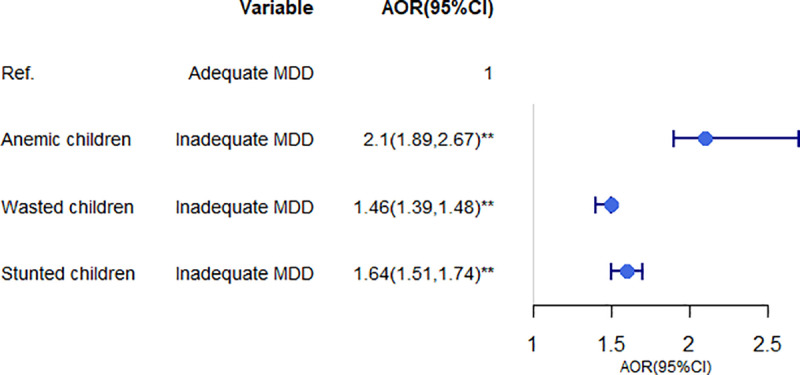
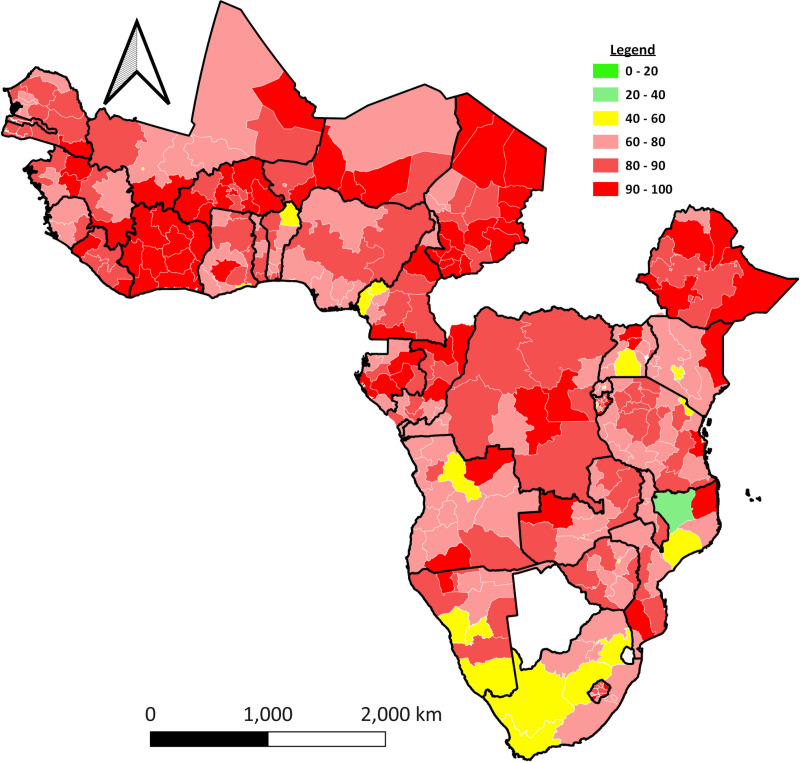
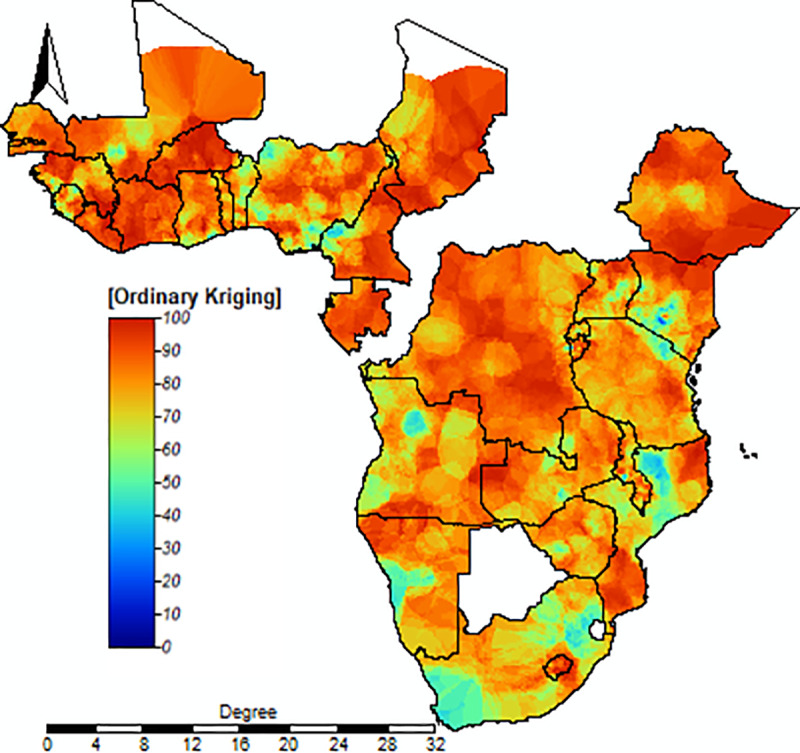
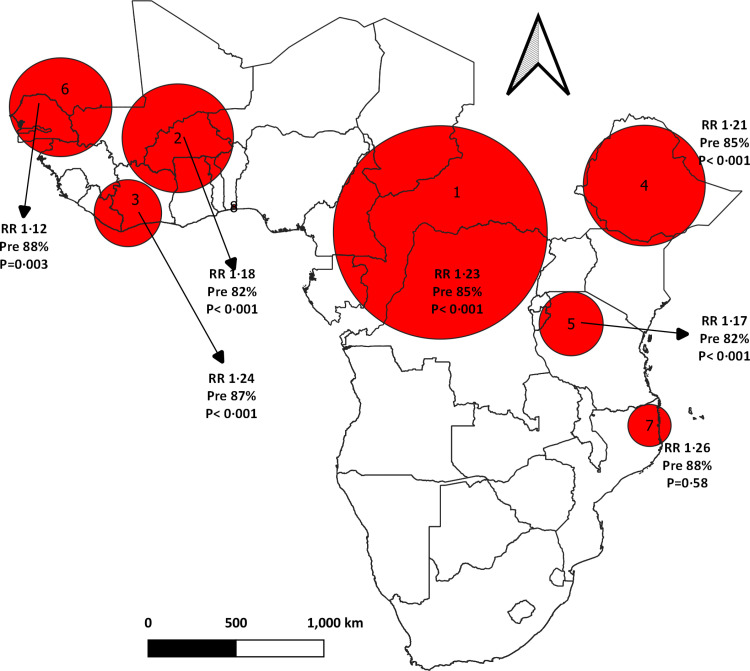
The prevalence of inadequate MDD was 80.3% with distinct spatial variation. Spatial distribution showed that; Gabon, Cameron, Ethiopia, Democratic Republic of Congo, Chad, Mali, Burkina Faso, Ivory Coast, Liberia, and Senegal had a very high burden of inadequate MDD. Factors like children's age, maternal age, educational status, antenatal care (ANC)/ postnatal care (PNC) visits, no media exposure, wealth status, maternal stunting and wasting, and distance from health facilities were associated with inadequate MDD in SSA. The risk of anemia, stunting, and wasting were significantly associated with inadequate MDD among children in SSA.
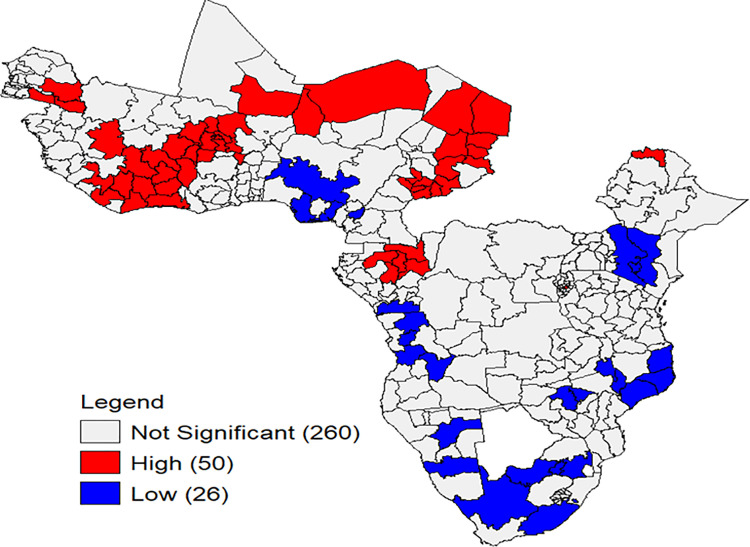
The prevalence of inadequate MDD in SSA is high. Spatial distribution revealed that inadequate MDD was prevalent in most areas of the Western, Northern, Eastern, and Central parts of SSA. Maternal and children's age, educational status, ANC/ PNC visits, no media exposure, wealth status, maternal stunting and wasting, and distance from health facilities were determinants of inadequate MDD in SSA. The spatial clustering of inadequate MDD in certain regions of SSA, suggests the need for geographically targeted interventions to address the determinants of inadequate MDD in these high-burden areas. The study revealed strategies should focus on promoting frequent ANC/ PNC visits, improving maternal nutrition, reducing poverty, and improving maternal employment status to reduce inadequate MDD among children. This study highlights a significant association between MDD and anemia, stunting, and wasting in children aged 6--23 months. To address these critical issues, it is essential to improve MDD among children, as this intervention can play a vital role in achieving SDG target 2.2, which aims to end all forms of malnutrition by 2030.
最低膳食多样性不足(MMD)是撒哈拉以南非洲(SSA)幼儿营养不良的主要原因。MMD不足及其对儿童影响的地理空间分布和多层次决定因素的证据,对2030年可持续发展目标(SDG0)议程很重要。因此,本研究旨在确定SSA儿童中MMD不足及其后果的地理空间分布和多层次决定因素。
该研究利用了包括57912名儿童在内的最新人口与健康调查数据。采用了空间和多层次分析方法,评估了与MMD不足及MMD消费导致的营养不良显著相关的变量,并使用<0.05的p值阈值确定显著性。报告了调整后的优势比(AOR)及其95%置信区间(CI)。
MMD不足的患病率为80.3%,存在明显的空间差异。空间分布显示,加蓬、喀麦隆、埃塞俄比亚、刚果民主共和国、乍得、马里、布基纳法索、科特迪瓦、利比里亚和塞内加尔的MMD不足负担非常高。儿童年龄、母亲年龄、教育状况、产前护理(ANC)/产后护理(PNC)就诊次数、无媒体接触、财富状况、母亲发育迟缓与消瘦以及与医疗机构的距离等因素,与SSA地区的MMD不足有关。在SSA儿童中,贫血、发育迟缓和消瘦的风险与MMD不足显著相关。
SSA地区MMD不足的患病率很高。空间分布显示,MMD不足在SSA西部、北部、东部和中部的大部分地区普遍存在。母亲和儿童的年龄、教育状况、ANC/PNC就诊次数、无媒体接触、财富状况、母亲发育迟缓与消瘦以及与医疗机构的距离是SSA地区MMD不足的决定因素。SSA某些地区MMD不足的空间聚集表明,需要针对地理区域进行有针对性的干预,以解决这些高负担地区MMD不足的决定因素。该研究表明,策略应侧重于促进频繁的ANC/PNC就诊、改善母亲营养、减少贫困以及提高母亲就业状况,以减少儿童中的MMD不足。本研究强调了6至23个月大儿童的MMD与贫血、发育迟缓和消瘦之间的显著关联。为解决这些关键问题,改善儿童的MMD至关重要,因为这一干预措施在实现SDG目标2.2(即到2030年消除一切形式的营养不良)方面可发挥重要作用。