Sarhan Susan, Ahmed Enji, Hussein Radwa R, Abou-Bakr Asmaa
Oral Medicine and Periodontology, Faculty of Dentistry, Ain Shams University, Cairo, Egypt.
Oral Medicine and Periodontology, Faculty of Dentistry, Cairo University, Giza, Egypt.
BMC Oral Health. 2025 May 7;25(1):691. doi: 10.1186/s12903-025-06020-3.
Gingival recession (GR) is a common oral health condition characterized by the exposure of the tooth's root which affects diverse populations worldwide. Thus, this study aimed to analyze data from adult dental patients at the outpatient clinic of the Faculty of Dentistry, Ain Shams University, to assess the prevalence of GR among Egyptian adults and to identify associated risk factors and clinical characteristics.
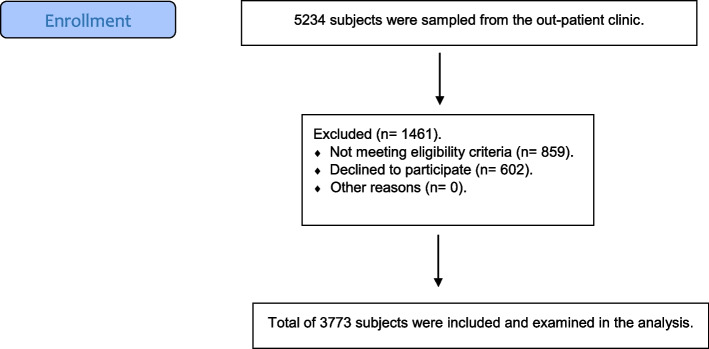
This study was a cross-sectional study that included 3773 individuals to detect the prevalence, risk factors and clinical characteristics of GR. All participants were examined for presence of GR, and their demographic data was collected by electronic form, while only participants who fulfilled the inclusion criteria were then subjected to a full professional periodontal examination. GR was categorized following the 2018 World Workshop Cairo classification system (RT1, RT2, RT3). The statistical tests used were Kruskal-Wallis and Dunn's post hoc with Bonferroni correction, as well as Fisher's exact test followed by pairwise comparisons using multiple z-tests with Bonferroni correction.
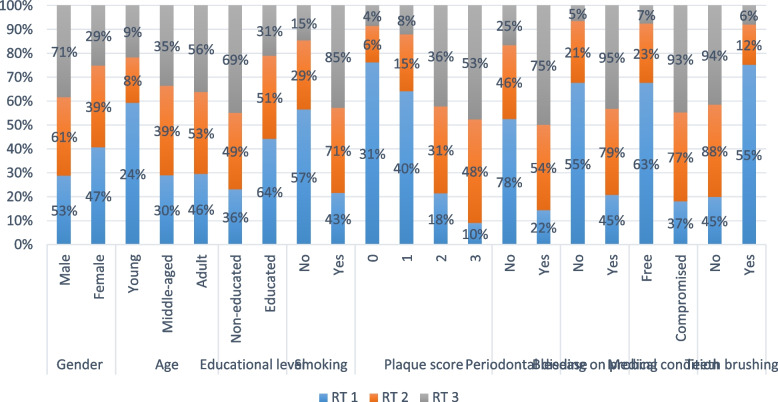
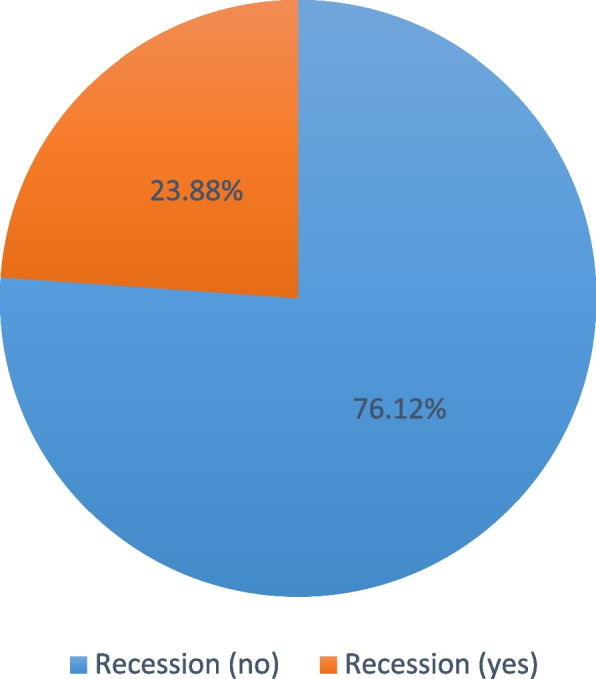
Out of 3773 participants only 901 subjects had GR with a prevalence of 23.88%. The prevalence of localized recession (63.93%) was higher than generalized recession (36.07%) with RT1 (43.8%) being the most prevalent followed by RT2 (37.29%), and RT3 (18.87%). The most affected teeth were lower anterior teeth (46.53%) followed by upper left premolars (13.02%), then upper right premolars (11.11%), and upper anterior teeth (10.76%). The prevalence of GR was higher in males (59.6%) more than in females (40.4%), and in smokers (61.49%) more than non-smokers (38.51%). The most common medical conditions were diabetes mellitus and hypertension. Higher severity of the GR was associated with males, middle aged and old age, periodontal diseases, higher plaque and bleeding scores, medical conditions, smoking, and uneducated patients.
The prevalence of GR in Egyptians is 23.88% with the most prevalent class of was RT1. Higher severity of the GR was associated with periodontal diseases, higher plaque and bleeding scores, presence of underlying medical conditions and smoking suggesting that regular dental assessments as well as dentists' awareness of the prevention, and treatment of GR has to be increased.
牙龈退缩(GR)是一种常见的口腔健康状况,其特征是牙齿根部暴露,影响着全球不同人群。因此,本研究旨在分析艾因夏姆斯大学牙科学院门诊成年牙科患者的数据,以评估埃及成年人中GR的患病率,并确定相关危险因素和临床特征。
本研究为横断面研究,纳入3773名个体以检测GR的患病率、危险因素和临床特征。所有参与者均接受GR检查,其人口统计学数据通过电子表格收集,而只有符合纳入标准的参与者才会接受全面的专业牙周检查。GR按照2018年开罗世界研讨会分类系统(RT1、RT2、RT3)进行分类。所使用的统计检验包括Kruskal-Wallis检验和经Bonferroni校正的Dunn事后检验,以及Fisher精确检验,随后使用经Bonferroni校正的多个z检验进行两两比较。
在3773名参与者中,只有901名受试者患有GR,患病率为23.88%。局限性退缩的患病率(63.93%)高于广泛性退缩(36.07%),其中RT1最为常见(43.8%),其次是RT2(37.29%)和RT3(18.87%)。受影响最严重的牙齿是下前牙(46.53%),其次是左上第一前磨牙(13.02%)、右上第一前磨牙(11.11%)和上前牙(10.76%)。男性GR的患病率(59.6%)高于女性(40.4%),吸烟者(61.49%)高于非吸烟者(38.51%)。最常见的疾病是糖尿病和高血压。GR的严重程度越高与男性、中年和老年、牙周疾病、更高的菌斑和出血评分、疾病、吸烟以及未受过教育的患者有关。
埃及人GR的患病率为23.88%,最常见的类型是RT1。GR的严重程度越高与牙周疾病、更高的菌斑和出血评分、潜在疾病的存在以及吸烟有关,这表明必须增加定期的牙科评估以及牙医对GR预防和治疗的认识。