Cheng Jiali, Chen Yuan, Guo Fengxia, Dong Pengbin, Zhou Chunyan, Liang Wei, Wang Hongyan
College of Agronomy, College of Life Science and Technology, State Key Laboratory of Aridland Crop Science, Gansu Agricultural University, Lanzhou, China.
College of Economics and Management, Hexi University, Zhangye, China.
Front Plant Sci. 2025 Apr 24;16:1567140. doi: 10.3389/fpls.2025.1567140. eCollection 2025.
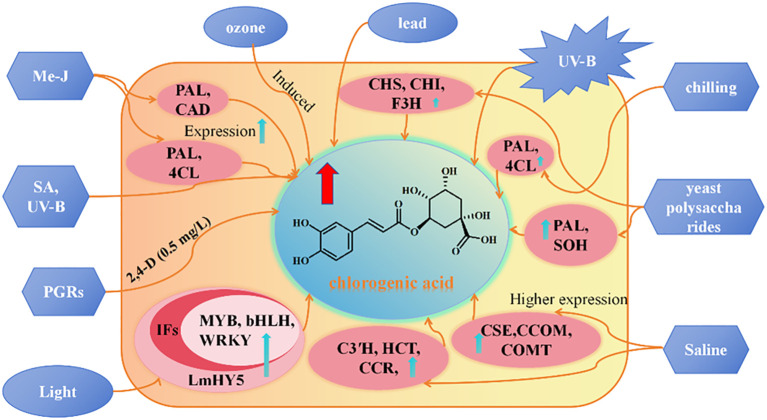
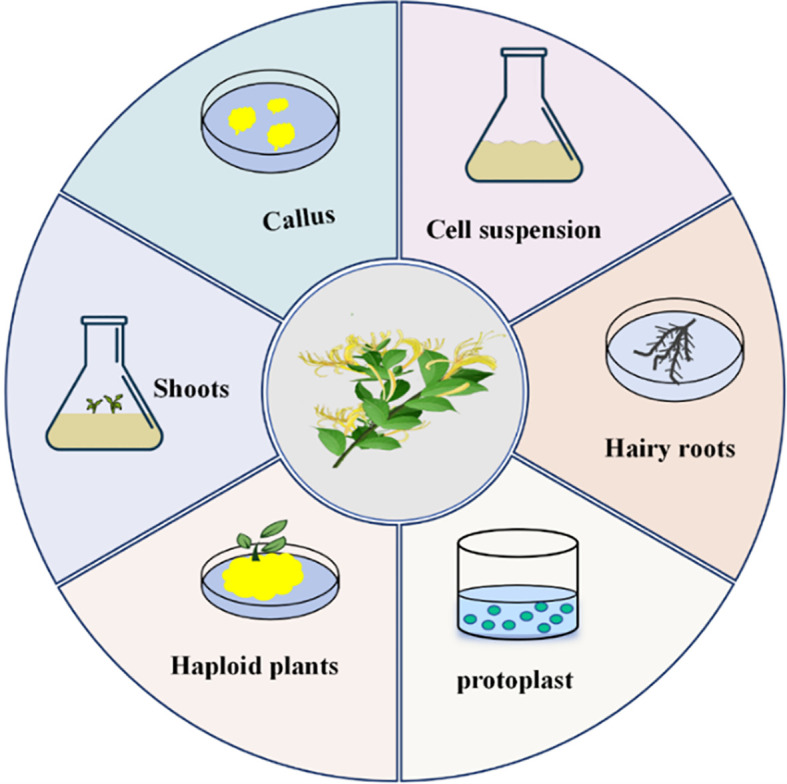
Plant tissue culture is a fundamental and widely applied technique in plant biology and agriculture. In medicinal plant research, tissue culture plays an indispensable role in the conservation of endangered species, the rapid propagation of valuable resources, the preservation of germplasm, and the production of secondary metabolites. As a representative medicinal plant of the genus, is widely utilized worldwide due to its significant economic, ecological, medicinal, and ornamental value. By using tissue culture technology, it is possible to significantly enhance the production of secondary metabolites in and effectively alleviate resource shortages, providing a new approach for its sustainable utilization. This review summarizes the recent research progress on in the field of tissue culture, covering aspects such as direct organogenesis, indirect organogenesis through callus tissues, protoplast culture, hairy root culture, and polyploid culture. Additionally, the biosynthetic pathway of chlorogenic acid was explored in detail, and the mechanism of action of inducers in plant cells was analyzed. The study focused on the potential regulatory mechanisms of inducers on chlorogenic acid. Eventually, the future development trends of medicinal plant biotechnology are envisioned, aiming to provide a broader perspective for the in-depth study of medicinal plants and to promote continuous development and innovation in this field.
植物组织培养是植物生物学和农业领域一项基础且应用广泛的技术。在药用植物研究中,组织培养在濒危物种保护、珍贵资源快速繁殖、种质保存以及次生代谢产物生产等方面发挥着不可或缺的作用。作为该属的代表性药用植物,因其具有显著的经济、生态、药用和观赏价值而在全球被广泛利用。通过运用组织培养技术,有可能显著提高该植物中次生代谢产物的产量,并有效缓解资源短缺问题,为其可持续利用提供新途径。本综述总结了该植物在组织培养领域的最新研究进展,涵盖直接器官发生、通过愈伤组织的间接器官发生、原生质体培养、毛状根培养和多倍体培养等方面。此外,还详细探讨了绿原酸的生物合成途径,并分析了诱导剂在植物细胞中的作用机制。该研究聚焦于诱导剂对绿原酸的潜在调控机制。最终,展望了药用植物生物技术的未来发展趋势,旨在为药用植物的深入研究提供更广阔的视角,并推动该领域的持续发展与创新。