Mizumoto Tomohiro, Ikei Harumi, Hagiwara Kosuke, Matsubara Toshio, Higuchi Fumihiro, Kobayashi Masaaki, Yamashina Takahiro, Sasaki Jun, Yamada Norihiro, Higuchi Naoko, Haraga Kenichi, Kirihara Fumiaki, Okabe Emi, Asai Kumi, Hirotsu Masako, Chen Chong, Miyazaki Yoshifumi, Nakagawa Shin
Division of Neuropsychiatry, Department of Neuroscience, Yamaguchi University Graduate School of Medicine, Ube, Japan.
Center for Environment, Health and Field Sciences, Chiba University, Kashiwa, Japan.
Sci Rep. 2025 May 10;15(1):16317. doi: 10.1038/s41598-025-00681-4.
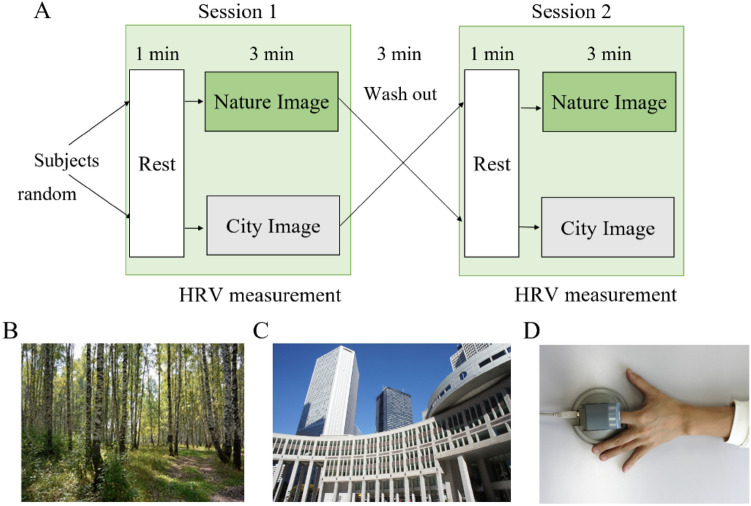
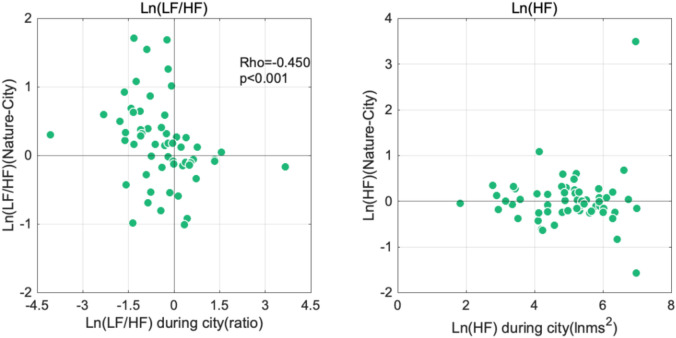
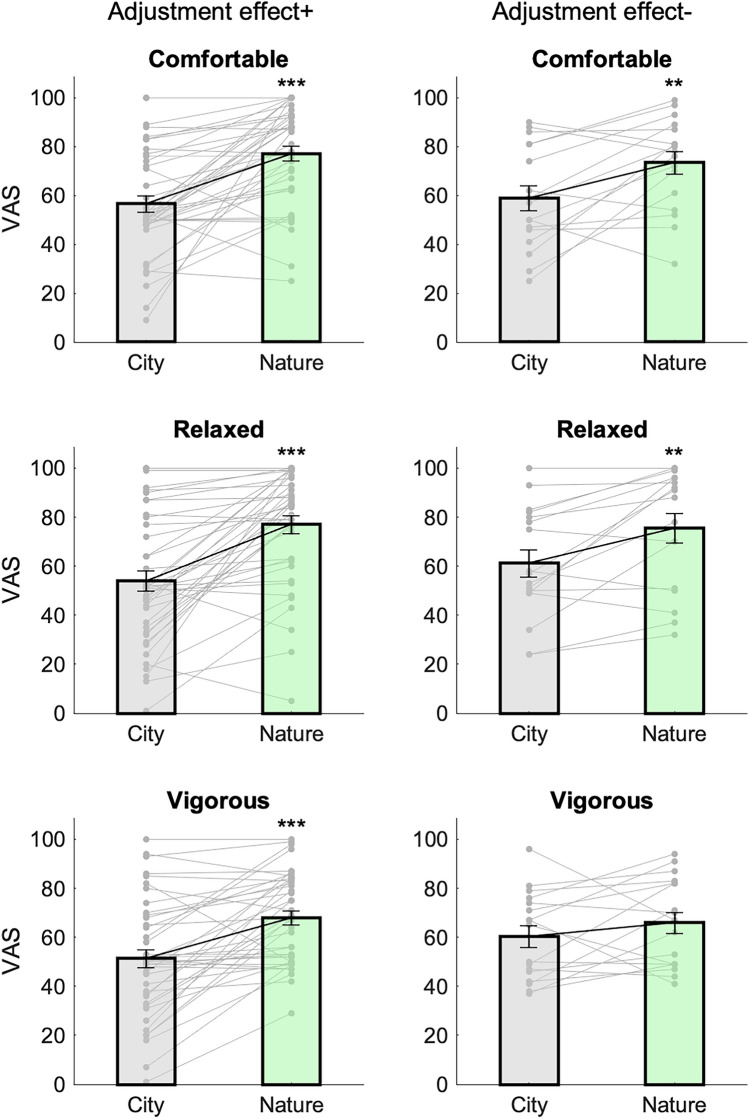
Nature-based interventions improve mood and reduce stress, but their effects on heart rate variability (HRV) remain inconsistent. The physiological adjustment effect theory proposes HRV adjusts to an optimal value during nature contact-increasing when baseline HRV is low and decreasing when high. This study tested this theory in patients with depressive and anxiety disorders and investigated its association with mood changes. A randomized crossover trial was conducted with 60 patients. We assessed the correlation between baseline HRV during control images and HRV change after 3 min natural image viewing. We also examined mood changes in comfort, relaxation, and vigor. A significant negative correlation was found between baseline low-frequency/high-frequency (LF/HF) ratio and changes after viewing natural images, indicating a physiological adjustment effect in sympathetic activity. No significant correlation was found with the parasympathetic indicator, HF. Participants with adjustment effects in LF/HF had greater improvement in vigor. Those without these effects had higher alcohol use and tended towards more comorbid hypertension. Natural interventions may enhance vigor through physiological adjustment in sympathetic activity. The lack of adjustment effects is linked to behaviors and conditions associated with autonomic dysfunction, highlighting the need for targeted therapies in depressive and anxiety disorders.
基于自然的干预措施可改善情绪并减轻压力,但其对心率变异性(HRV)的影响仍不一致。生理调节效应理论提出,HRV在接触自然期间会调整至最佳值,即当基线HRV较低时增加,而当基线HRV较高时降低。本研究在患有抑郁和焦虑症的患者中对该理论进行了验证,并探讨了其与情绪变化的关联。对60名患者进行了一项随机交叉试验。我们评估了对照图像期间的基线HRV与观看自然图像3分钟后的HRV变化之间的相关性。我们还考察了舒适度、放松度和活力方面的情绪变化。结果发现,基线低频/高频(LF/HF)比值与观看自然图像后的变化之间存在显著负相关,表明交感神经活动存在生理调节效应。与副交感神经指标HF未发现显著相关性。LF/HF有调节效应的参与者活力改善更大。没有这些效应的参与者饮酒量更高,且更倾向于合并高血压。自然干预可能通过交感神经活动的生理调节来增强活力。缺乏调节效应与自主神经功能障碍相关的行为和状况有关,这凸显了针对抑郁和焦虑症进行靶向治疗的必要性。