Han Xiao, Cao Xin, Ju Qianqian, Ge Chengxin, Lin Yongqi, Shi Jinhong, Zhang Xinhua, Sun Cheng, Li Haoming
Department of Human Anatomy, Medical School of Nantong University, Nantong, Jiangsu, China; Key Laboratory of Neuroregeneration of Jiangsu and Ministry of Education, Co-Innovation Center of Neuroregeneration, Nantong University, Nantong, Jiangsu, China.
Department of Human Anatomy, Medical School of Nantong University, Nantong, Jiangsu, China.
J Biol Chem. 2025 May 9;301(6):110225. doi: 10.1016/j.jbc.2025.110225.
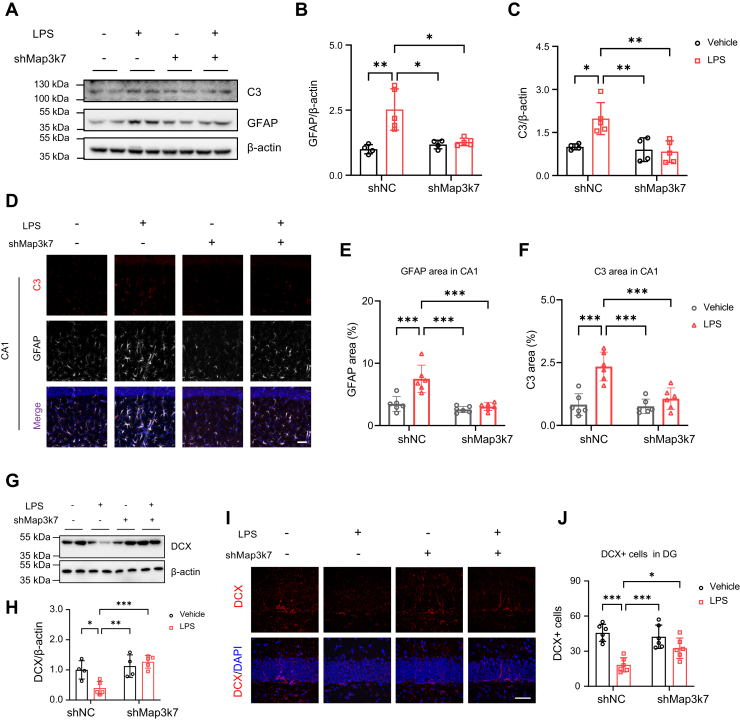
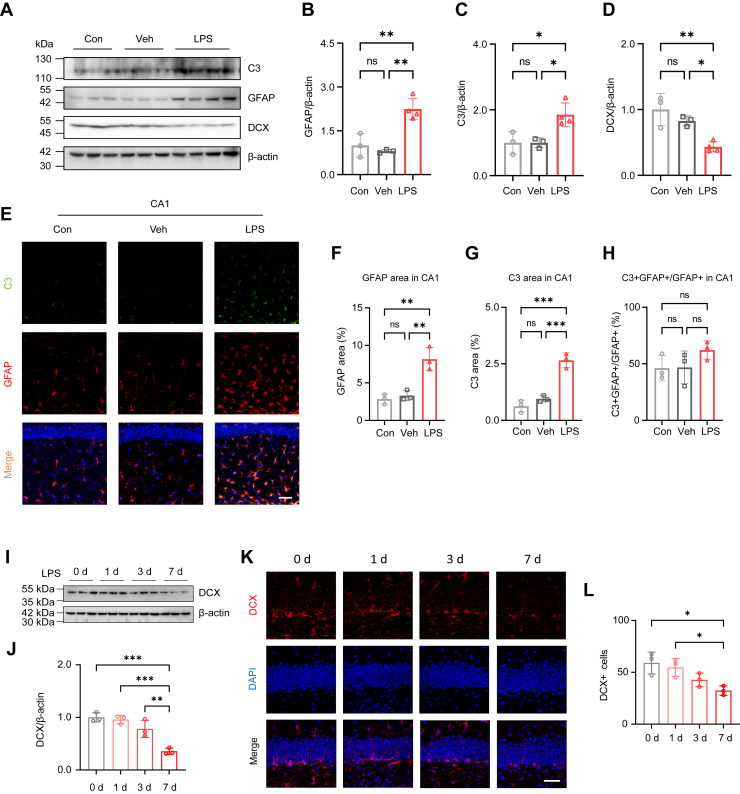
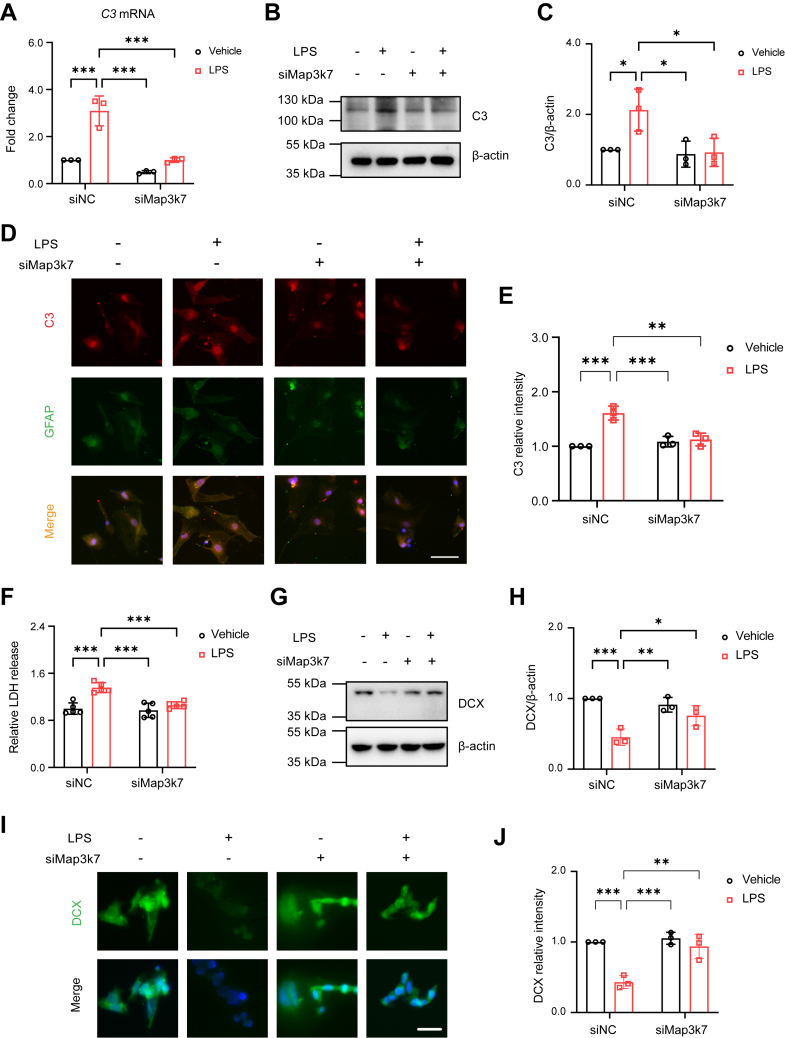
The peripheral immune system has a strong effect on the central nervous system (CNS). Systemic lipopolysaccharides (LPS) administration triggers robust microglial activation and induces significant inflammatory responses in the hippocampus. This study investigates the role of Transforming Growth Factor-β-Activated Kinase 1 (TAK1) in mediating LPS-induced hippocampal neuroinflammation and cognitive impairment. Our findings reveal that LPS induces activation of microglial TAK1, which in turn activates downstream effector NF-κB/p65 to release pro-inflammatory cytokines. The activated microglia also promote astrocytes to polarize into a neurotoxic phenotype (A1-like phenotype) and cause the loss of newborn neurons in the hippocampal dentate gyrus (DG). However, TAK1 reduction inhibits microglial responses, limits neurotoxic astrocytes, rescues newborn neurons, and subsequently improves LPS-induced cognitive deficits, suggesting that targeting TAK1 may be an effective strategy for alleviating neuroinflammation. The interaction between TAK1 activation, microglial responses, and the transition of neurotoxic astrocytes enhances our understanding of the cellular dynamics driving LPS-induced neuroinflammation, suggesting that TAK1 may be a therapeutic target for treating cognitive impairment.
外周免疫系统对中枢神经系统(CNS)有很强的影响。全身给予脂多糖(LPS)会引发强烈的小胶质细胞激活,并在海马体中诱导显著的炎症反应。本研究调查了转化生长因子-β激活激酶1(TAK1)在介导LPS诱导的海马神经炎症和认知障碍中的作用。我们的研究结果表明,LPS诱导小胶质细胞TAK1激活,进而激活下游效应因子NF-κB/p65以释放促炎细胞因子。激活的小胶质细胞还促进星形胶质细胞极化为神经毒性表型(A1样表型),并导致海马齿状回(DG)中新生神经元的丢失。然而,TAK1的减少会抑制小胶质细胞反应,限制神经毒性星形胶质细胞,挽救新生神经元,并随后改善LPS诱导的认知缺陷,这表明靶向TAK1可能是减轻神经炎症的有效策略。TAK1激活、小胶质细胞反应和神经毒性星形胶质细胞转变之间的相互作用加深了我们对驱动LPS诱导神经炎症的细胞动力学的理解,表明TAK1可能是治疗认知障碍的治疗靶点。