Tuersong Tayier, Yong Yu Xuan, Chen Yan, Li Pei Shan, Shataer Samire, Shataer Munire, Ma Liang Ying, Yang Xin Ling
Department of Pharmacy, Xinjiang Key Laboratory of Neurological Diseases, Xinjiang Clinical Research Center for Nervous System Diseases, Second Affiliated Hospital of Xinjiang Medical University, Ürümqi, 830001, Xinjiang, People's Republic of China.
Department of Neurology, Xinjiang Clinical Research Center for Nervous System Diseases, Xinjiang Key Laboratory of Neurological Diseases, Second Affiliated Hospital of Xinjiang Medical University, Ürümqi, 830001, Xinjiang, People's Republic of China.
J Transl Med. 2025 May 12;23(1):535. doi: 10.1186/s12967-025-06541-z.
Parkinson's disease (PD), the second most common neurodegenerative disease with notable clinical heterogeneity, has Parkinson disease dementia (PDD) that severely impacts patients' quality of life. As no effective treatment exists, this study aimed to find potential drug targets for PD cognitive disorders.
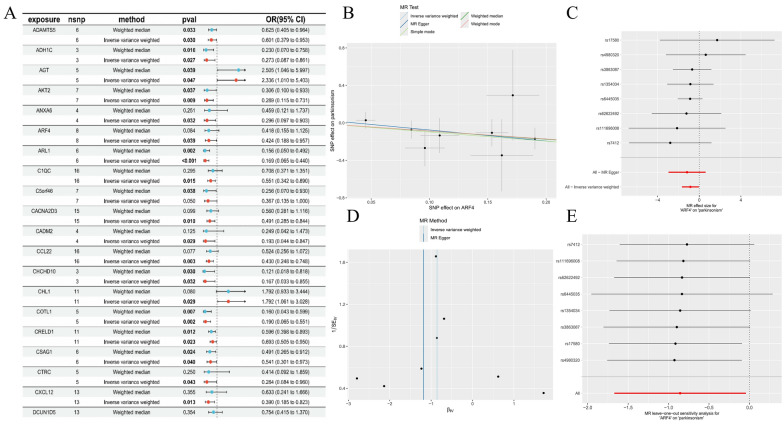
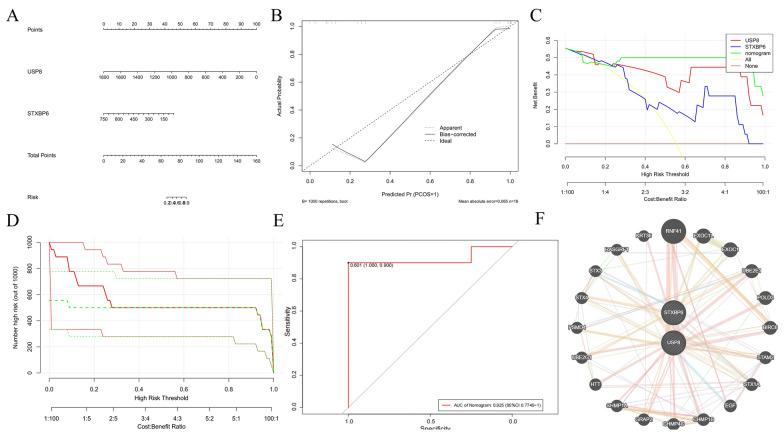
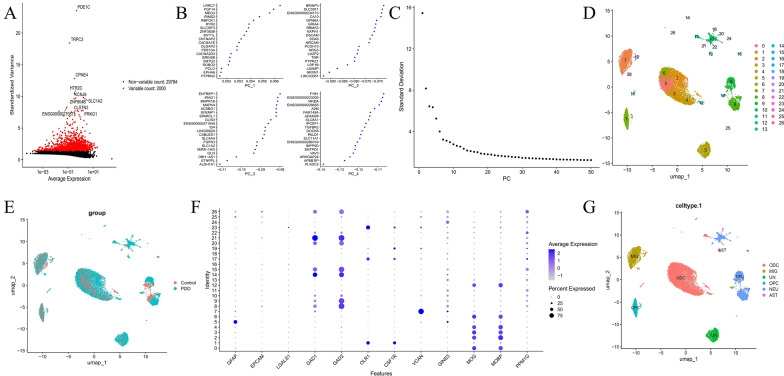
Two-sample Mendelian randomization (MR) and transcriptome analysis were used to identify PD biomarkers. Protein-protein interaction (PPI), gene ontology (GO), and KEGG pathway analyses explored biological effects. A nomogram model was developed.
76 Mendelian randomization genes (MRGs) from MR and 1771 differentially expressed genes (DEGs) from the transcriptome were obtained. Three significant shared DEGs (S-DEGs) were identified, with USP8 and STXBP6 having strong diagnostic value for PDD. The nomogram model with these two genes showed enhanced predictive ability. These genes had physical interactions, co-localization, and correlated with ODC and NEU immune cells. USP8 was linked to five diseases, and STXBP6 to one.
USP8, STXBP6, and immune cells (ODC and NEU) associated with PDD were identified, offering new insights into PD progression.
帕金森病(PD)是第二常见的神经退行性疾病,具有显著的临床异质性,其帕金森病痴呆(PDD)严重影响患者的生活质量。由于尚无有效治疗方法,本研究旨在寻找PD认知障碍的潜在药物靶点。
采用两样本孟德尔随机化(MR)和转录组分析来识别PD生物标志物。蛋白质-蛋白质相互作用(PPI)、基因本体(GO)和KEGG通路分析探索生物学效应。构建了列线图模型。
从MR中获得76个孟德尔随机化基因(MRG),从转录组中获得1771个差异表达基因(DEG)。鉴定出三个显著的共享DEG(S-DEG),其中USP8和STXBP6对PDD具有较强的诊断价值。包含这两个基因的列线图模型显示出增强的预测能力。这些基因存在物理相互作用、共定位,并与ODC和NEU免疫细胞相关。USP8与五种疾病相关,STXBP6与一种疾病相关。
鉴定出与PDD相关的USP8、STXBP6和免疫细胞(ODC和NEU),为PD的进展提供了新的见解。