Ben-David Yossi, Sporny Michael, Brochin Yigal, Piscon Bar, Roth Shira, Zander Itzhak, Nisani Michal, Shoshani Sivan, Yaron Orly, Karako-Lampert Sarit, Lebenthal-Loinger Ilana, Danielli Amos, Opatowsky Yarden, Banin Ehud
The Mina & Everard Goodman Faculty of Life Sciences, The Institute of Nanotechnology and Advanced Materials, Bar-Ilan University, Max and Anna Webb Street, Ramat Gan, 5290002, Israel.
The Alexander Kofkin Faculty of Engineering, The Institute of Nanotechnology and Advanced Materials, Bar-Ilan University, Max and Anna Webb Street, Ramat Gan, 5290002, Israel.
NPJ Biofilms Microbiomes. 2025 May 13;11(1):77. doi: 10.1038/s41522-025-00710-0.
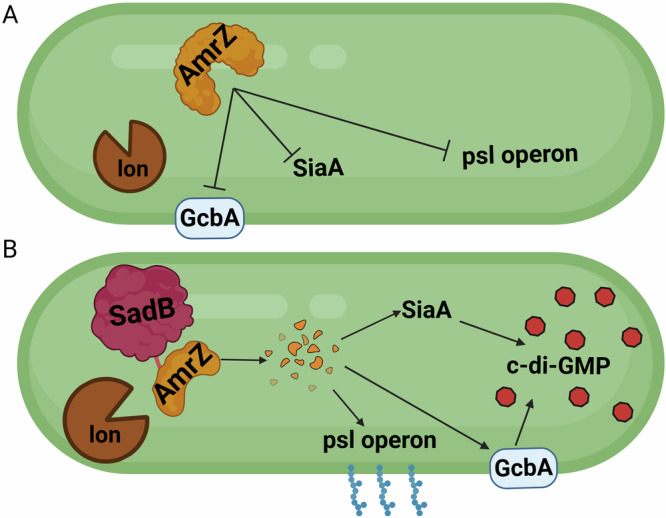
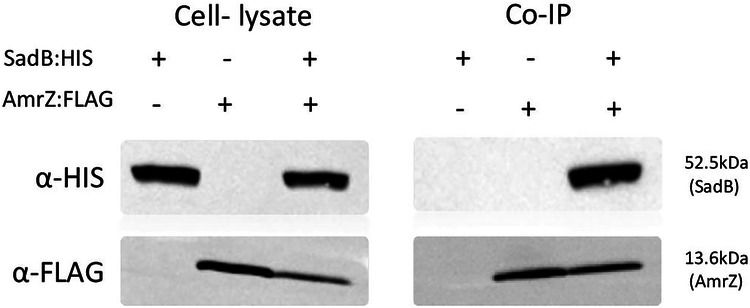
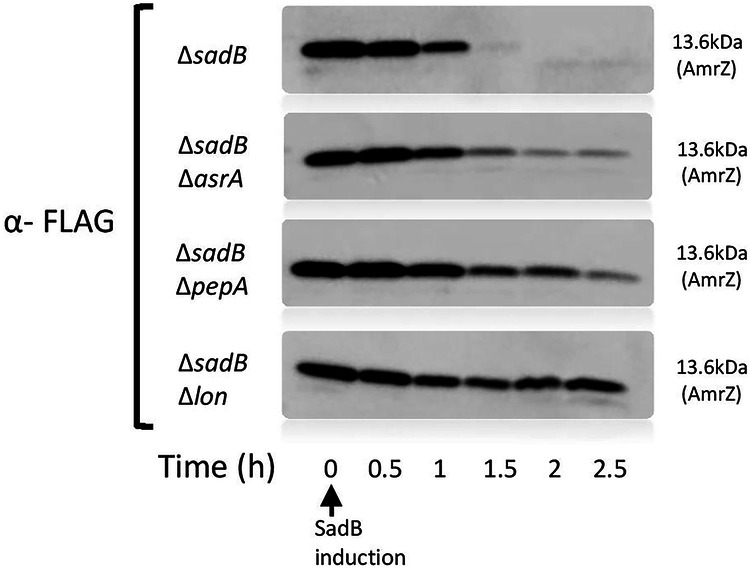
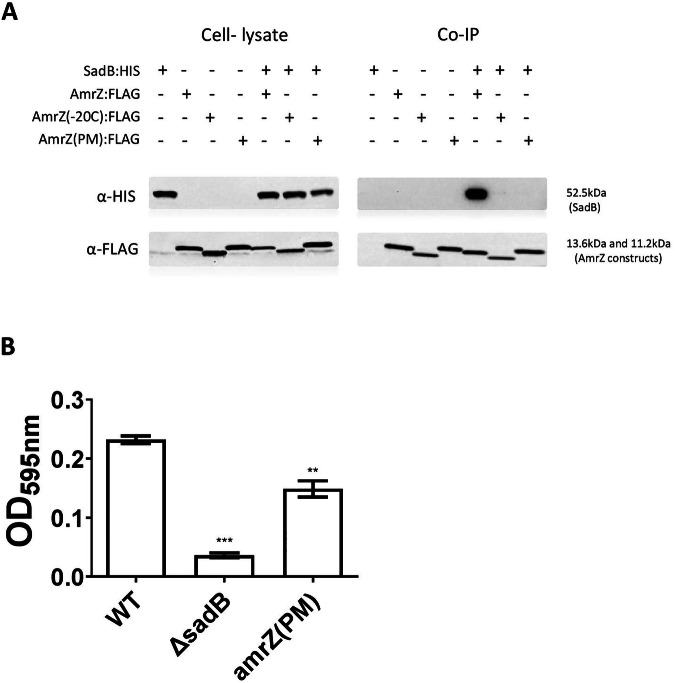
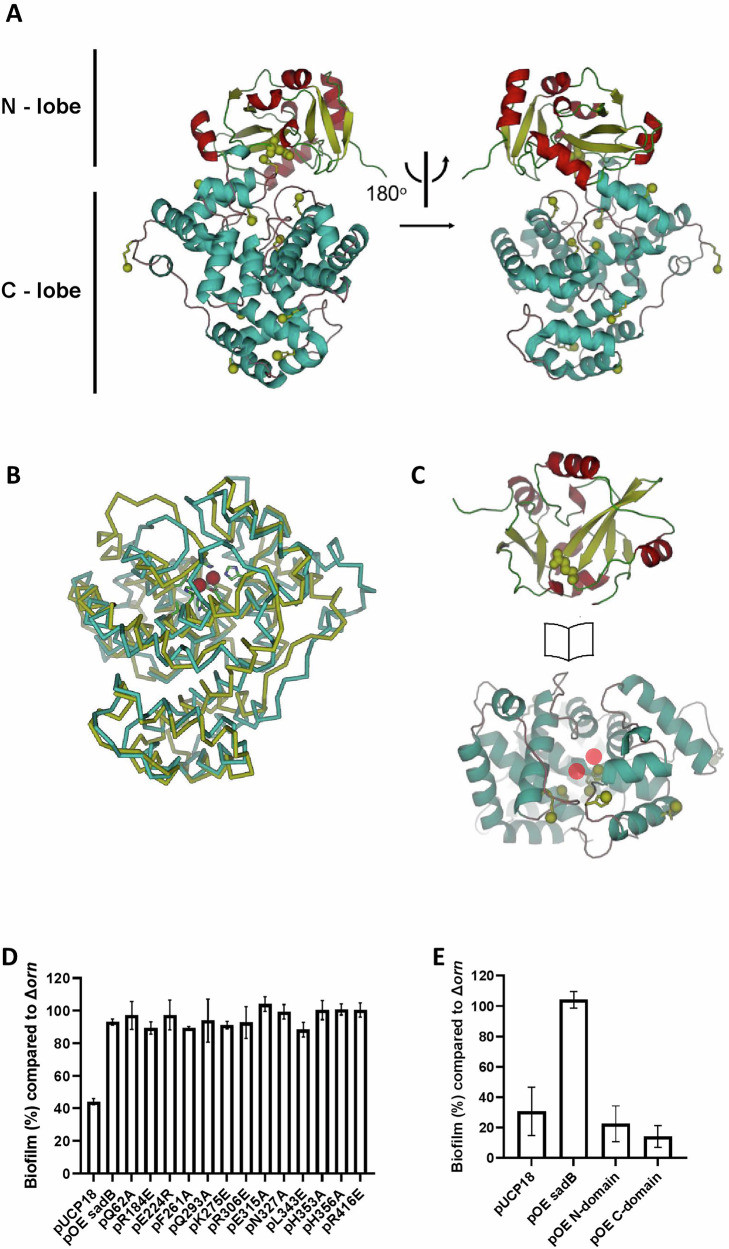
The ability of bacteria to commit to surface colonization and biofilm formation is a highly regulated process. In this study, we characterized the activity and structure of SadB, initially identified as a key regulator in the transition from reversible to irreversible surface attachment. Our results show that SadB acts as an adaptor protein that tightly regulates the master regulator AmrZ at the post-translational level. SadB directly binds to the C-terminal domain of AmrZ, leading to its rapid degradation, primarily by the Lon protease. Structural analysis suggests that SadB does not directly interact with small molecules upon signal transduction, differing from previous findings in Pseudomonas fluorescens. Instead, the SadB structure supports its role in mediating protein-protein interactions, establishing it as a major checkpoint for biofilm commitment.
细菌进行表面定植和生物膜形成的能力是一个受到高度调控的过程。在本研究中,我们对SadB的活性和结构进行了表征,SadB最初被鉴定为从可逆性表面附着转变为不可逆性表面附着过程中的关键调节因子。我们的结果表明,SadB作为一种衔接蛋白,在翻译后水平严格调控主要调节因子AmrZ。SadB直接与AmrZ的C末端结构域结合,主要通过Lon蛋白酶导致其快速降解。结构分析表明,在信号转导过程中,SadB不直接与小分子相互作用,这与先前在荧光假单胞菌中的发现不同。相反,SadB的结构支持其在介导蛋白质-蛋白质相互作用中的作用,使其成为生物膜形成过程中的一个主要检查点。