Battistin Lorena, Moya Luís Felipe Arantes, Ferreira Lucas Vinícius de Oliveira, Braz Aline Márcia Marques, Carvalho Márcio de, Golim Marjorie de Assis, Amorim Rogério Martins
Department of Veterinary Clinic, School of Veterinary Medicine and Animal Science, São Paulo State University (UNESP), Botucatu 18618-681, SP, Brazil.
Center for Translational Research in Regenerative Medicine, School of Veterinary Medicine and Animal Science, São Paulo State University (UNESP), Botucatu 18618-681, SP, Brazil.
Int J Mol Sci. 2025 Apr 29;26(9):4208. doi: 10.3390/ijms26094208.
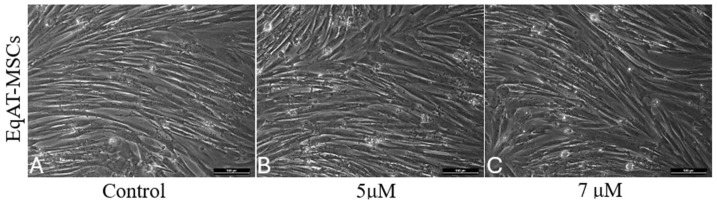
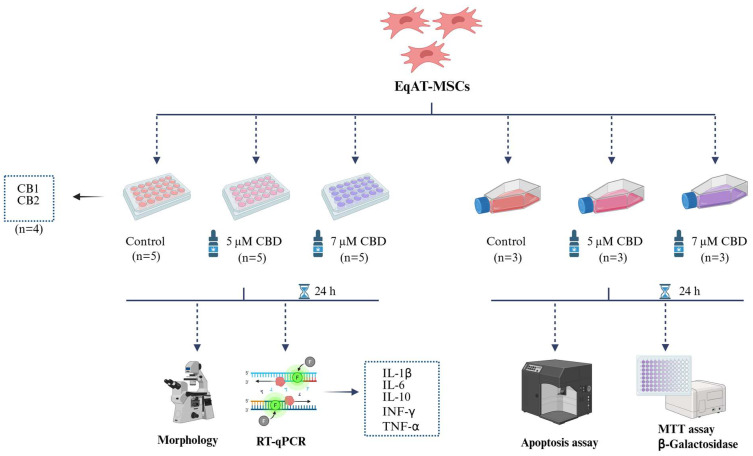
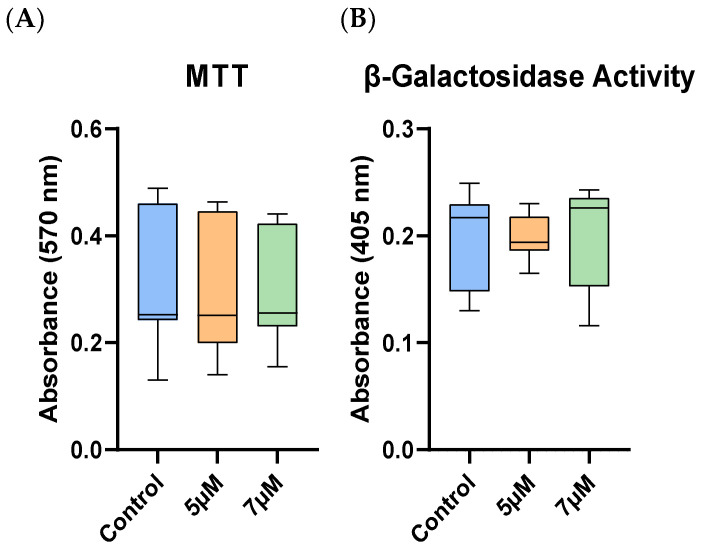
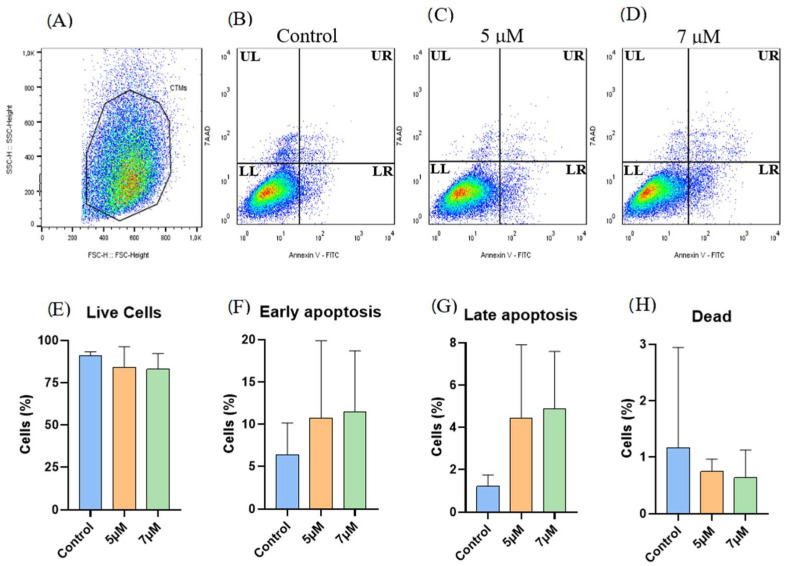
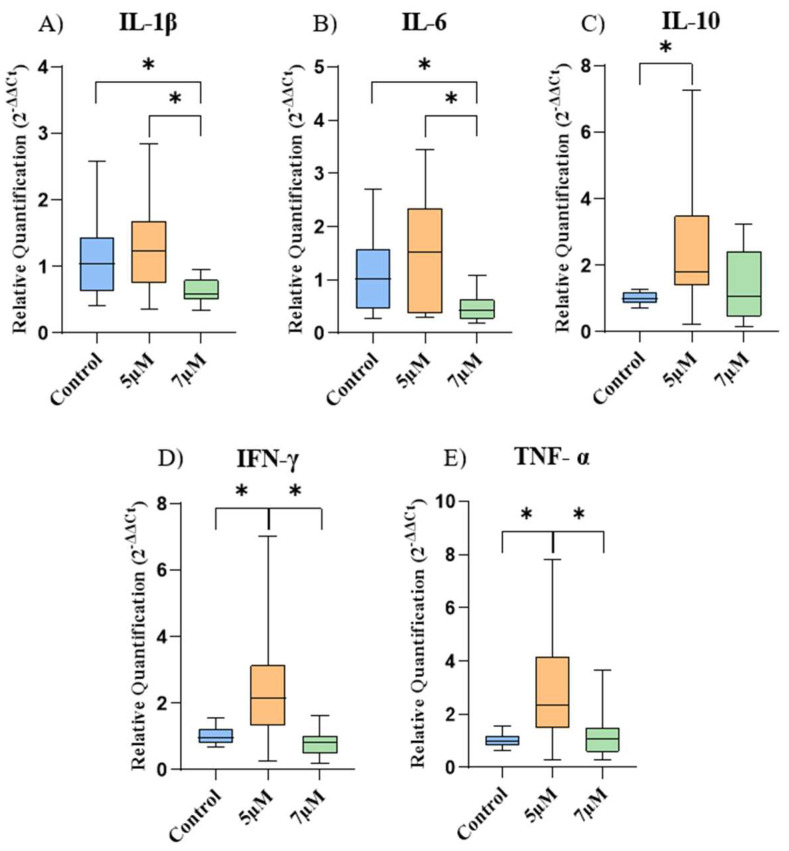
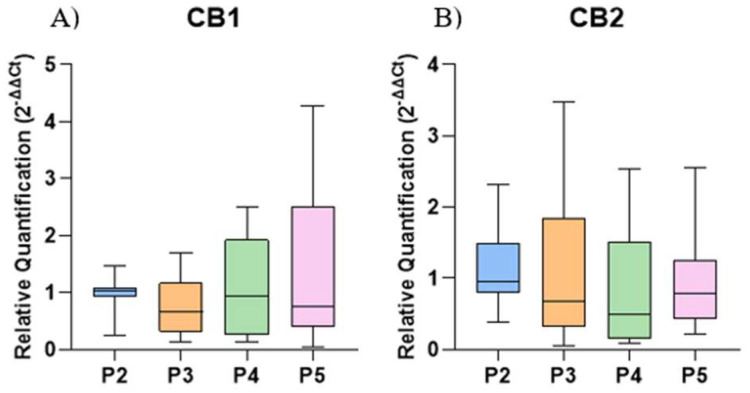
Cell-based therapy using mesenchymal stem cells (MSCs) shows promise for treating several diseases due to their anti-inflammatory and immunomodulatory properties. To enhance the therapeutic potential of MSCs, in vitro priming strategies have been explored. Cannabidiol (CBD), a non-psychoactive compound derived from cannabis, may influence MSC proliferation, differentiation, and immunomodulatory properties. This study evaluates the immunomodulatory potential of equine adipose tissue-derived MSCs (EqAT-MSCs) primed with a CBD-rich cannabis extract. EqAT-MSCs (P3) were primed with CBD concentrations of 5 µM and 7 µM for 24 h. Morphological analysis, MTT assay, β-galactosidase activity, apoptosis assays, and gene expression of interleukins IL-1β, IL-6, IL-10, interferon-gamma (IFN-γ), and tumor necrosis factor-alpha (TNF-α) were conducted. Additionally, cannabinoid receptor 1 (CB1) and 2 (CB2) expression were evaluated in naïve EqAT-MSCs (P2-P5). The naïve EqAT-MSCs expressed CB1 and CB2 receptors. Priming with 5 µM significantly increased the expression of IL-10, TNF-α, and IFN-γ, while 7 µM decreased IL-1β and IL-6 expression. No significant changes were observed in other cytokines, MTT, β-galactosidase activity, or apoptosis. These findings demonstrate that naïve EqAT-MSCs express CB1 and CB2 receptors and priming with the extract modulates the expression of pro- and anti-inflammatory cytokines, highlighting its potential immunomodulatory role in EqAT-MSC-based therapies.
利用间充质干细胞(MSCs)进行的细胞疗法因其抗炎和免疫调节特性,在治疗多种疾病方面显示出前景。为了增强MSCs的治疗潜力,人们探索了体外预处理策略。大麻二酚(CBD)是一种从大麻中提取的非精神活性化合物,可能会影响MSCs的增殖、分化和免疫调节特性。本研究评估了用富含CBD的大麻提取物预处理的马脂肪组织来源的MSCs(EqAT-MSCs)的免疫调节潜力。EqAT-MSCs(P3)用5μM和7μM的CBD浓度预处理24小时。进行了形态学分析、MTT测定、β-半乳糖苷酶活性、凋亡测定以及白细胞介素IL-1β、IL-6、IL-10、干扰素-γ(IFN-γ)和肿瘤坏死因子-α(TNF-α)的基因表达检测。此外,还评估了未处理的EqAT-MSCs(P2-P5)中大麻素受体1(CB1)和2(CB2)的表达。未处理的EqAT-MSCs表达CB1和CB2受体。用5μM预处理显著增加了IL-10、TNF-α和IFN-γ的表达,而7μM降低了IL-1β和IL-6的表达。在其他细胞因子、MTT、β-半乳糖苷酶活性或凋亡方面未观察到显著变化。这些发现表明,未处理的EqAT-MSCs表达CB1和CB受体,用提取物预处理可调节促炎和抗炎细胞因子的表达,突出了其在基于EqAT-MSC的治疗中潜在的免疫调节作用。