Mohammadi Mohammad Mehdi, Naghibzadeh Amirhossein, Mosafer Hadis, Mohammadi Mohammad
Department of Medical-Surgical Nursing, School of Nursing & Midwifery, Kermanshah University of Medical Sciences, Kermanshah, Iran.
Student Research Committee, Kermanshah University of Medical Sciences, Kermanshah, Iran.
BMC Nurs. 2025 May 14;24(1):532. doi: 10.1186/s12912-025-03163-0.
Honesty is considered a desirable trait that can impact happiness and job performance. The clinical environment can present ethical challenges for nurses. A lack of honesty can lead to significant issues for both nurses and patients. Existing tools for measuring honesty have limitations and do not focus specifically on nurses. This study aimed to design and psychometrically evaluate a scale to measure honesty among nurses.
This methodological study involved the design and validation of an honesty measurement tool for nurses. The study employed an inductive-deductive approach to generate items. The face (10 nurses), content (10 nursing experts), and construct validity (320 hospital nurses) of the scale were assessed, along with reliability using internal consistency and stability methods. The Item Impact Method was used for quantitative face validity determination. Content validity was assessed using qualitative and quantitative methods, with the participation of researchers and nursing experts. Cronbach's alpha was used to assess internal consistency, and the test-retest method and Intraclass Correlation Coefficient (ICC) were used to assess reliability. Exploratory factor analysis (EFA) was used to assess construct validity.
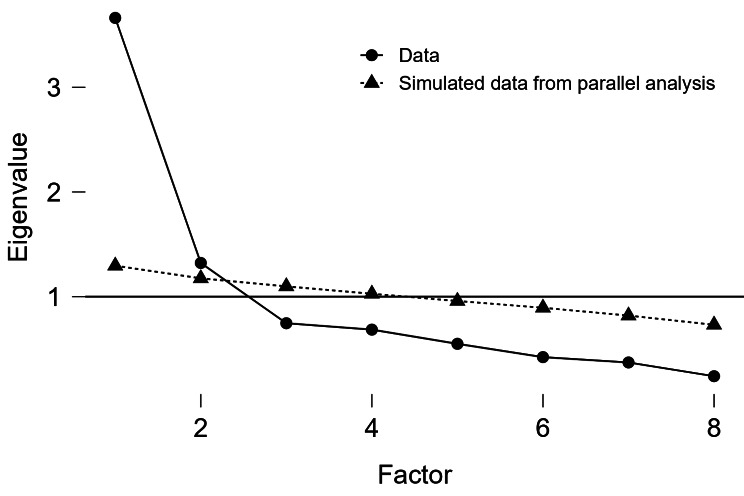
The study resulted in an 8-item tool with two dimensions: behavioral honesty and verbal honesty. The tool explained 51.034% of the total variance. Cronbach's alpha for the entire scale was 0.823, and McDonald's omega was 0.898. The Intraclass Correlation Coefficient (ICC) was reported as 0.918, with a 95% confidence interval of 0.827 to 0.961.
The developed tool is a reliable and valid instrument for measuring honesty among nurses. This study contributes to the field by providing a tool to measure honesty in nurses. The tool's scoring system effectively distinguishes between different levels of honesty in nursing practice, with elevated scores reflecting greater adherence to honest professional conduct. This tool can be used by managers and organizational decision-makers to enhance the quality of management planning.
Not applicable.
诚实被视为一种可取的特质,会影响幸福感和工作表现。临床环境可能给护士带来伦理挑战。缺乏诚实会给护士和患者都带来重大问题。现有的测量诚实的工具存在局限性,且未专门针对护士。本研究旨在设计并从心理测量学角度评估一种用于测量护士诚实度的量表。
本方法学研究涉及为护士设计和验证一种诚实度测量工具。该研究采用归纳 - 演绎法生成条目。评估了量表的表面效度(10名护士)、内容效度(10名护理专家)和结构效度(320名医院护士),并使用内部一致性和稳定性方法评估信度。条目影响法用于定量表面效度测定。内容效度采用定性和定量方法评估,研究人员和护理专家参与其中。Cronbach's α用于评估内部一致性,重测法和组内相关系数(ICC)用于评估信度。探索性因素分析(EFA)用于评估结构效度。
该研究得出一个包含8个条目的工具,有两个维度:行为诚实和言语诚实。该工具解释了总方差的51.034%。整个量表的Cronbach's α为0.823,McDonald's ω为0.898。组内相关系数(ICC)报告为0.918,95%置信区间为0.827至0.961。
所开发的工具是一种可靠且有效的测量护士诚实度的工具。本研究通过提供一种测量护士诚实度的工具为该领域做出了贡献。该工具的评分系统能有效区分护理实践中不同程度的诚实,分数越高表明越坚持诚实的专业行为。管理者和组织决策者可使用此工具来提高管理规划质量。
不适用。