Hu Biao, Yuan Lu, Zhang Yueyang, Deng Weiling, Zhong Haoyu, Miao Chengyu, Wang Chudong, Cai Jiaxin
Department of Radiology The Second Affiliated Hospital of Guangzhou Medical University Guangzhou China.
Guangzhou Medical University Guangzhou China.
Food Sci Nutr. 2025 May 14;13(5):e70299. doi: 10.1002/fsn3.70299. eCollection 2025 May.
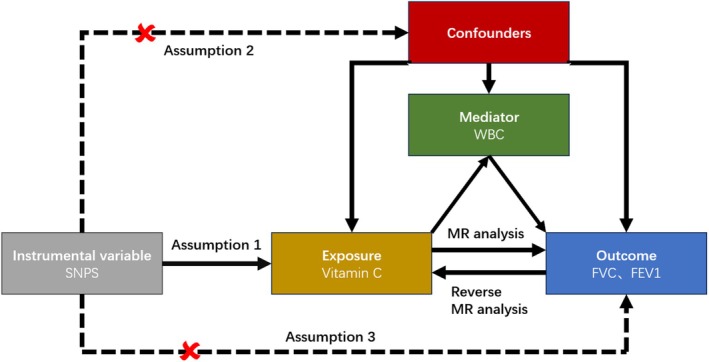
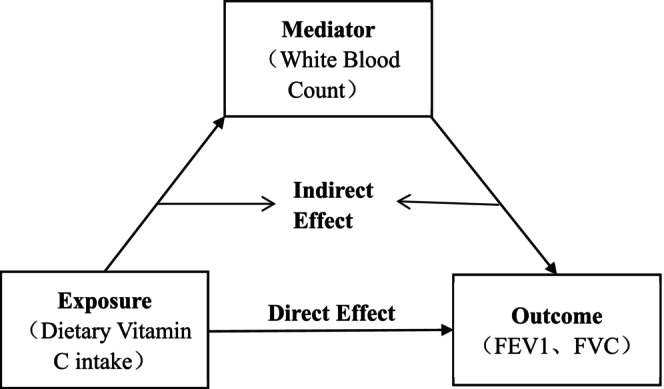
As an antioxidant, vitamin C has been increasingly used in the treatment of various pulmonary diseases in recent years. However, the mechanism by which vitamin C affects lung function remains unclear to this day. Given its low cost and low risk, vitamin C is highly suitable for widespread use as a conventional treatment, making research into its mechanisms of influencing lung function necessary. Considering the potential association between vitamin C and white blood cells (WBCs), it may influence lung function by affecting white blood count (WBC). The potential impacts of WBCs on the lungs may include damage to the lung parenchyma through proteases released by these cells, as well as the effects of inflammatory factors on alveolar epithelial cells, among other mechanisms. This study aims to explore the potential relationship between dietary vitamin C intake, WBC, and lung function through a cross-sectional study. This cross-sectional study included data from 15,738 participants in the National Health and Nutrition Examination Survey (NHANES) from three time periods: 2007-2008, 2009-2010, and 2011-2012. Parallel mediation analysis was conducted using a multivariable logistic regression model to assess the relationships between dietary vitamin C intake, WBC, and lung function. Following the cross-sectional study, we further incorporated Mendelian randomization (MR) analysis to strengthen the validity of the findings. The results of this cross-sectional study showed that dietary vitamin C intake was negatively associated with WBC ( < 0.05, < 0), while WBC was also negatively associated with lung function. In contrast, dietary vitamin C intake was positively associated with lung function, with a significant positive mediation effect ( < 0.05, > 0). These findings suggest that vitamin C may influence lung function by modulating WBC levels. The study may reveal part of the mechanism through which vitamin C affects lung function, specifically through the mediation of WBC. The roles of inflammation and proteases could be potential underlying mechanisms. However, further research is required to clarify the biochemical mechanisms. This study provides a reference for the clinical use of vitamin C in the treatment of related pulmonary diseases and promotes further research into its broader effects.
作为一种抗氧化剂,近年来维生素C已越来越多地用于治疗各种肺部疾病。然而,维生素C影响肺功能的机制至今仍不清楚。鉴于其低成本和低风险,维生素C非常适合作为一种常规治疗方法广泛使用,因此有必要研究其影响肺功能的机制。考虑到维生素C与白细胞(WBC)之间的潜在关联,它可能通过影响白细胞计数(WBC)来影响肺功能。白细胞对肺部的潜在影响可能包括这些细胞释放的蛋白酶对肺实质的损伤,以及炎症因子对肺泡上皮细胞的影响等机制。本研究旨在通过横断面研究探讨饮食中维生素C摄入量、白细胞与肺功能之间的潜在关系。这项横断面研究纳入了来自2007 - 2008年、2009 - 2010年和2011 - 2012年三个时间段的美国国家健康与营养检查调查(NHANES)中15738名参与者的数据。使用多变量逻辑回归模型进行平行中介分析,以评估饮食中维生素C摄入量、白细胞与肺功能之间的关系。在横断面研究之后,我们进一步纳入孟德尔随机化(MR)分析以加强研究结果的有效性。这项横断面研究的结果表明,饮食中维生素C摄入量与白细胞呈负相关(<0.05,<0),而白细胞也与肺功能呈负相关。相比之下,饮食中维生素C摄入量与肺功能呈正相关,具有显著的正向中介效应(<0.05,>0)。这些发现表明维生素C可能通过调节白细胞水平来影响肺功能。该研究可能揭示了维生素C影响肺功能的部分机制,特别是通过白细胞的介导作用。炎症和蛋白酶的作用可能是潜在的机制。然而,需要进一步的研究来阐明其生化机制。本研究为维生素C在治疗相关肺部疾病中的临床应用提供了参考,并促进了对其更广泛作用的进一步研究。