Barnes Peter J
National Heart and Lung Institute, Imperial College London, London SW5 9LH, UK.
Antioxidants (Basel). 2022 May 13;11(5):965. doi: 10.3390/antiox11050965.
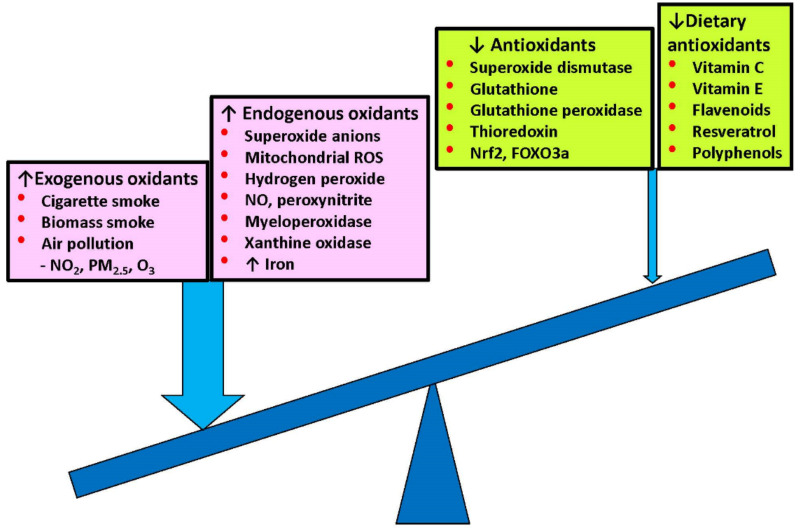
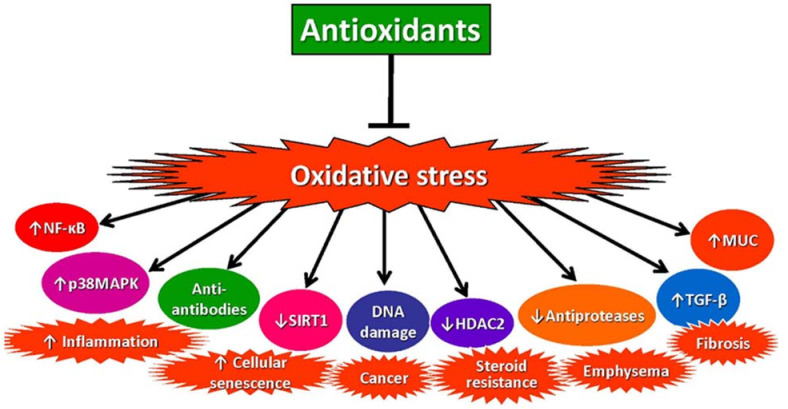
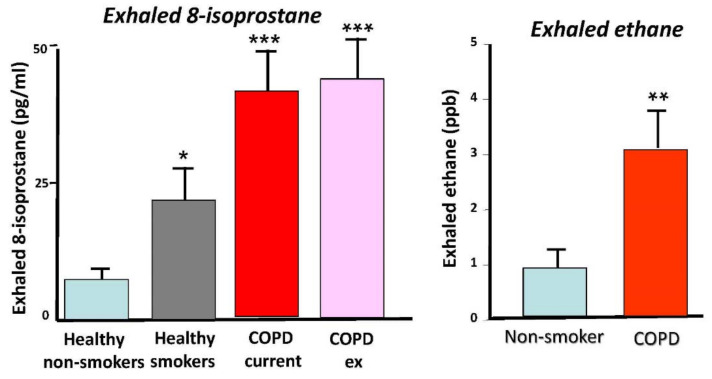
There is a marked increase in oxidative stress in the lungs of patients with COPD, as measured by increased exhaled 8-isoprostane, ethane, and hydrogen peroxide in the breath. The lung may be exposed to exogenous oxidative stress from cigarette smoking and indoor or outdoor air pollution and to endogenous oxidative stress from reactive oxygen species released from activated inflammatory cells, particularly neutrophils and macrophages, in the lungs. Oxidative stress in COPD may be amplified by a reduction in endogenous antioxidants and poor intake of dietary antioxidants. Oxidative stress is a major driving mechanism of COPD through the induction of chronic inflammation, induction of cellular senescence and impaired autophagy, reduced DNA repair, increased autoimmunity, increased mucus secretion, and impaired anti-inflammatory response to corticosteroids. Oxidative stress, therefore, drives the pathology of COPD and may increase disease progression, amplify exacerbations, and increase comorbidities through systemic oxidative stress. This suggests that antioxidants may be effective as disease-modifying treatments. Unfortunately, thiol-based antioxidants, such as N-acetylcysteine, have been poorly effective, as they are inactivated by oxidative stress in the lungs, so there is a search for more effective and safer antioxidants. New antioxidants in development include mitochondria-targeted antioxidants, NOX inhibitors, and activators of the transcription factor Nrf2, which regulates several antioxidant genes.
慢性阻塞性肺疾病(COPD)患者肺部的氧化应激显著增加,呼出气体中的8-异前列腺素、乙烷和过氧化氢含量升高即可证明这一点。肺部可能会受到来自吸烟以及室内或室外空气污染的外源性氧化应激影响,同时也会受到肺部激活的炎症细胞(特别是中性粒细胞和巨噬细胞)释放的活性氧产生的内源性氧化应激影响。COPD中的氧化应激可能会因内源性抗氧化剂减少和膳食抗氧化剂摄入不足而加剧。氧化应激是COPD的主要驱动机制,它可通过诱导慢性炎症、诱导细胞衰老和自噬受损、减少DNA修复、增加自身免疫、增加黏液分泌以及削弱对皮质类固醇的抗炎反应来实现。因此,氧化应激推动了COPD的病理过程,并可能通过全身氧化应激增加疾病进展、加剧病情恶化以及增加合并症。这表明抗氧化剂可能作为疾病改善治疗有效。不幸的是,基于硫醇的抗氧化剂,如N-乙酰半胱氨酸,效果不佳,因为它们在肺部会被氧化应激灭活,所以正在寻找更有效、更安全的抗氧化剂。正在研发的新型抗氧化剂包括线粒体靶向抗氧化剂、NOX抑制剂以及调节多个抗氧化基因的转录因子Nrf2激活剂。