Sampath Chethan, Campbell Michaela, Baptiste Jonathan, Carter Jalah, Greene Mia-Sade, Dhungana Gunaraj, Chukkapalli Sasanka, Gangula Pandu R
Department of Oral Diagnostic Sciences & Research, Department of Periodontology, School of Dentistry, Meharry Medical College, Nashville, TN 37208, USA.
Department of Biomedical Engineering, Texas A & M University, College Station, TX 77843, USA.
J Pharm Pharmacol Res. 2025;9(2):45-53. doi: 10.26502/fjppr.0108. Epub 2025 Apr 19.
Periodontitis (PD) is a highly prevalent inflammatory disease associated with complex microbial infection in the subgingival cavity. We have previously shown that polybacterial periodontal infection led to aortic atherosclerosis and lipid profile modulation; however, the underlying mechanism(s) has not been yet demonstrated.
Primary human aortic endothelial cells (pHAECs) were infected periodically for 48 hours either with (monobacterial infection) or polybacterial periodontal pathogens, (), (), (), and (), using HoxBan coculture technique. Cell viability was assessed using MTT assay. Nitric oxide synthesis was measured in the form of total nitrite released into the media after incubation period. Inflammatory and oxidative gene expression were evaluated in the cell lysate using quantitative real-time polymerase chain reaction (qRT-PCR) at each time point (12-48h). Statistical analysis was performed using two-way ANOVA.
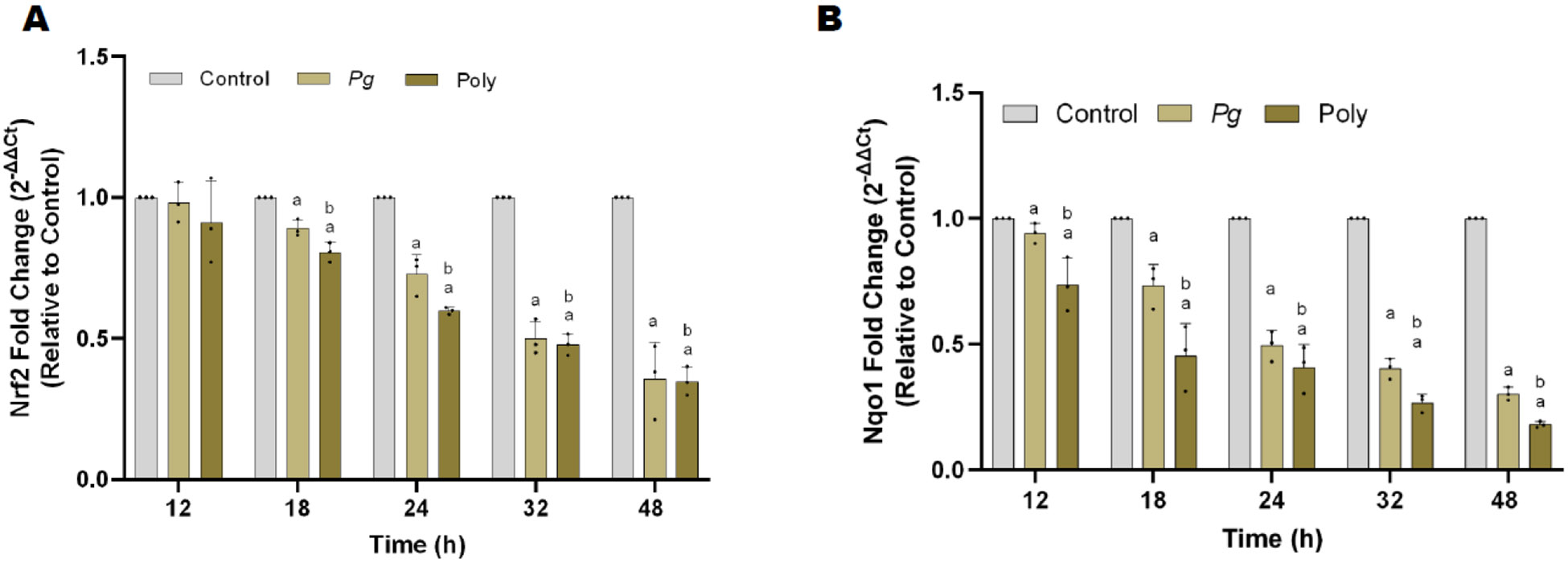
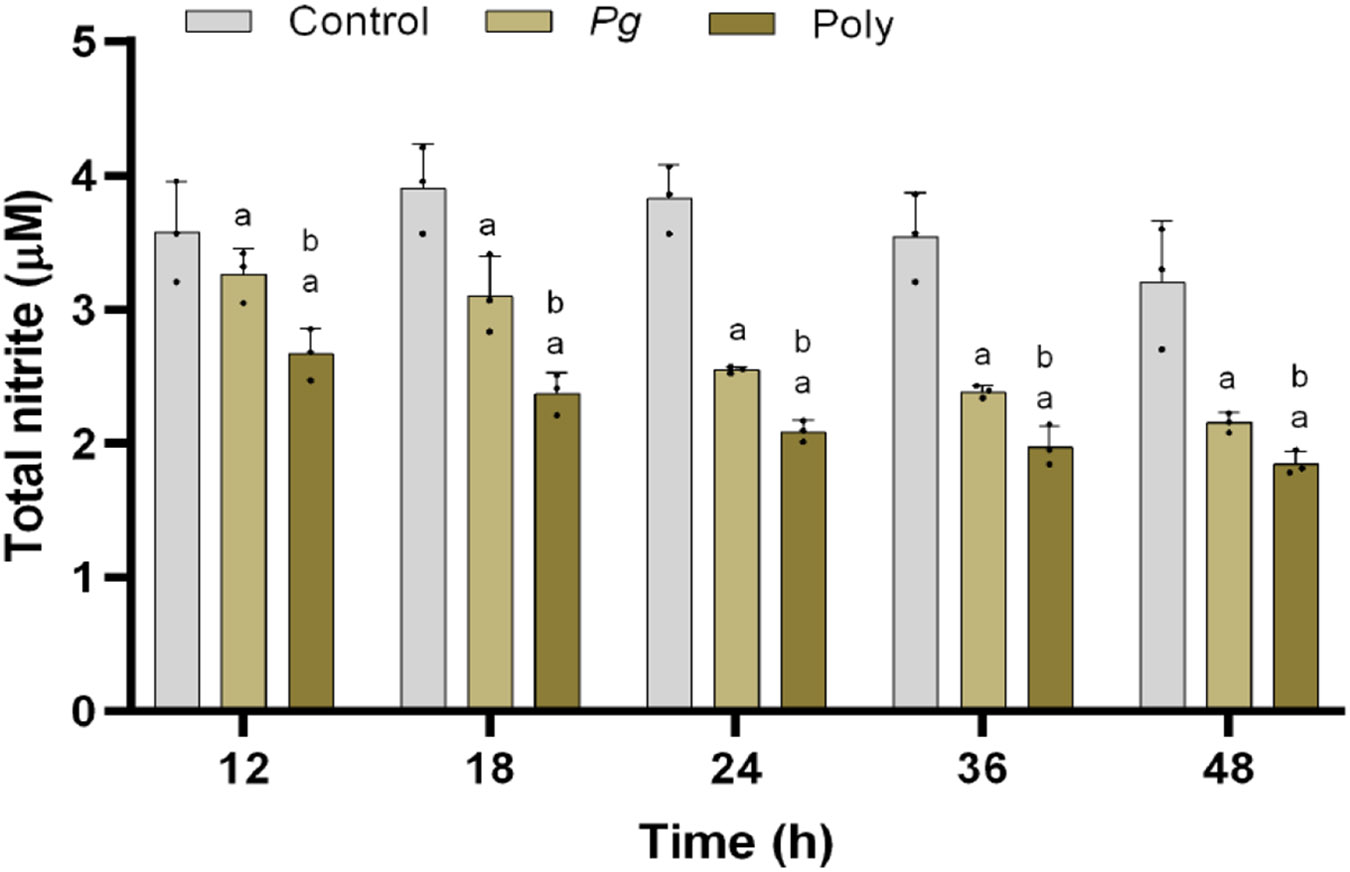
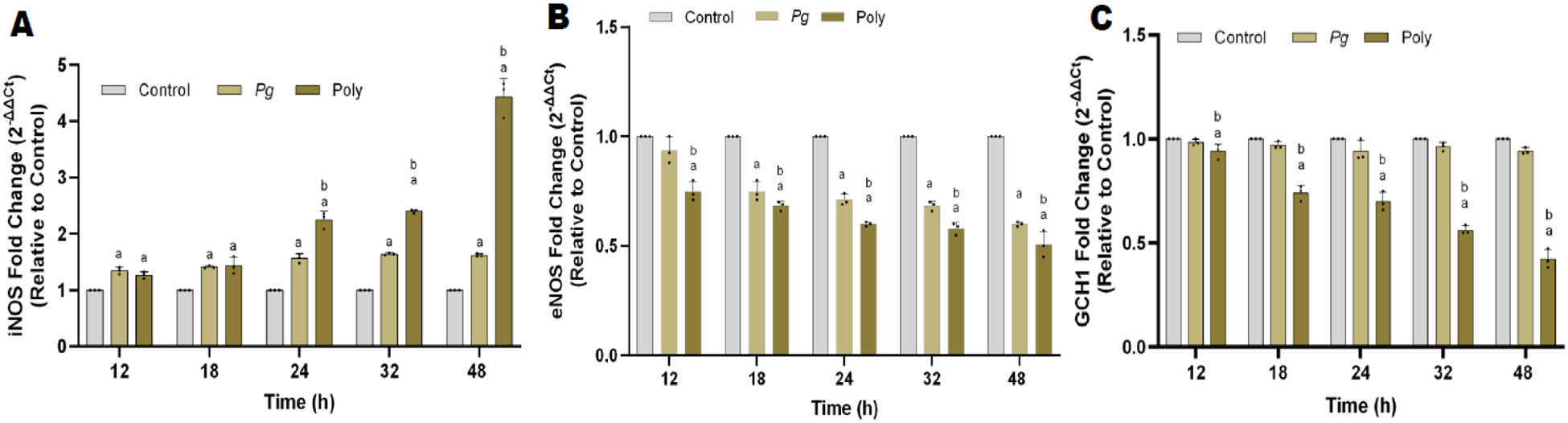
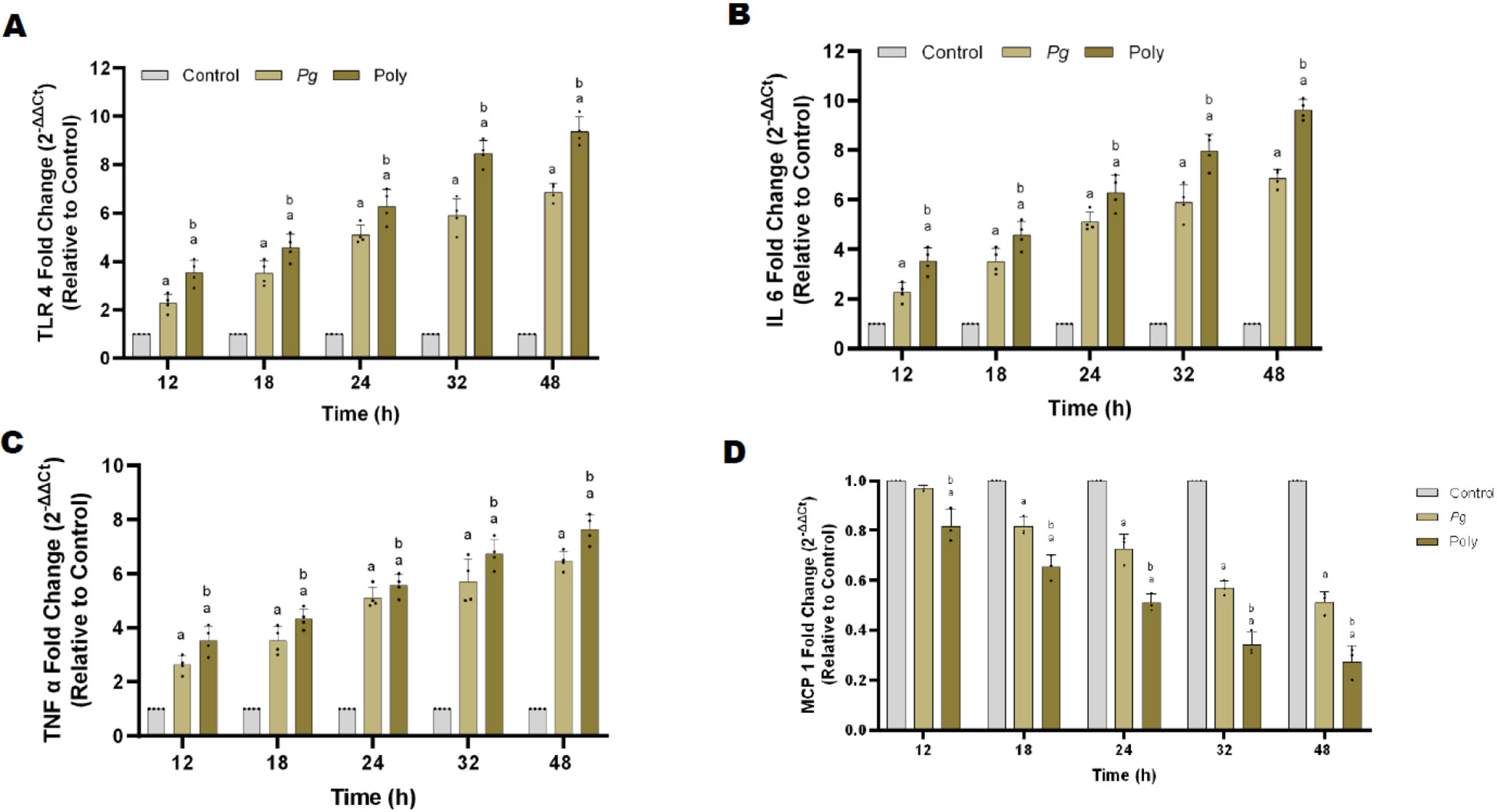
pHAEC cell viability was significantly (p<0.05) reduced in both mono and poly-bacterial infection when compared with non-infected cells in a time dependent manner. Nitrite levels in the media were significantly impaired in both infection groups. mRNA expression for cytokines (TLR-4, IL-6, and TNF-α,) and inducible nitric oxide synthase (iNOS) were significantly (p<0.05) elevated in both experimental groups. In contrast, endothelial (e) NOS, tetrahydrobiopterin (BH) synthesis, GCH -1, Nrf2, and Nqo 1 were significantly (p<0.05) reduced in both experimental groups. Finally, polybacterial infection group showed greater changes in cell viability, nitrite levels, cytokines, eNOS/BH/Nrf2 expression in a time dependent manner.
Our study highlights the adverse effects of PD infection in NO mediated vascular endothelial cell function.
牙周炎(PD)是一种高度流行的炎症性疾病,与龈下腔复杂的微生物感染有关。我们之前已经表明,多菌性牙周感染会导致主动脉粥样硬化和血脂谱调节;然而,其潜在机制尚未得到证实。
使用HoxBan共培养技术,将原代人主动脉内皮细胞(pHAECs)分别用(单菌感染)或多菌性牙周病原体、()、()、()和()周期性感染48小时。使用MTT法评估细胞活力。在孵育期后,以释放到培养基中的总亚硝酸盐形式测量一氧化氮合成。在每个时间点(12 - 48小时),使用定量实时聚合酶链反应(qRT-PCR)评估细胞裂解物中的炎症和氧化基因表达。使用双向方差分析进行统计分析。
与未感染细胞相比,单菌和多菌感染组的pHAEC细胞活力均以时间依赖性方式显著降低(p<0.05)。两个感染组培养基中的亚硝酸盐水平均显著受损。两个实验组中细胞因子(TLR - 4、IL - 6和TNF - α)和诱导型一氧化氮合酶(iNOS)的mRNA表达均显著升高(p<0.05)。相比之下,两个实验组中内皮(e)NOS、四氢生物蝶呤(BH)合成、GCH - 1、Nrf2和Nqo 1均显著降低(p<0.05)。最后,多菌感染组在细胞活力、亚硝酸盐水平、细胞因子、eNOS/BH/Nrf2表达方面随时间呈现出更大的变化。
我们的研究突出了牙周炎感染对NO介导的血管内皮细胞功能的不利影响。