Department of ODS & Research, Meharry Medical College, Nashville, TN.
Department of Microbiology, Immunology & Physiology, Meharry Medical College, Nashville, TN.
J Periodontol. 2021 Jul;92(7):54-65. doi: 10.1002/JPER.20-0444. Epub 2020 Nov 17.
Periodontal disease (PD) is known to be associated with endothelial dysfunction in patients with coronary artery and/or cardiovascular disease. In our study, we sought to explore the virulence of P. gingivalis (Pg) affecting glycogen synthase kinase 3 beta (GSK-3β)/nuclear factor (erythroid-derived 2)-like 2 (Nrf2)/tetrahydrobiopterin (BH )/ nitric oxide synthase (NOS) expression in primary human aortic endothelial cells (pHAECs).
pHAECs were infected for 48 hours with Pg in vitro using the Human oxygen-Bacteria anaerobic coculture technique. Cell viability was determined, and target gene expression changes were evaluated by quantitative real-time polymerase chain reaction at the end of each incubation period.
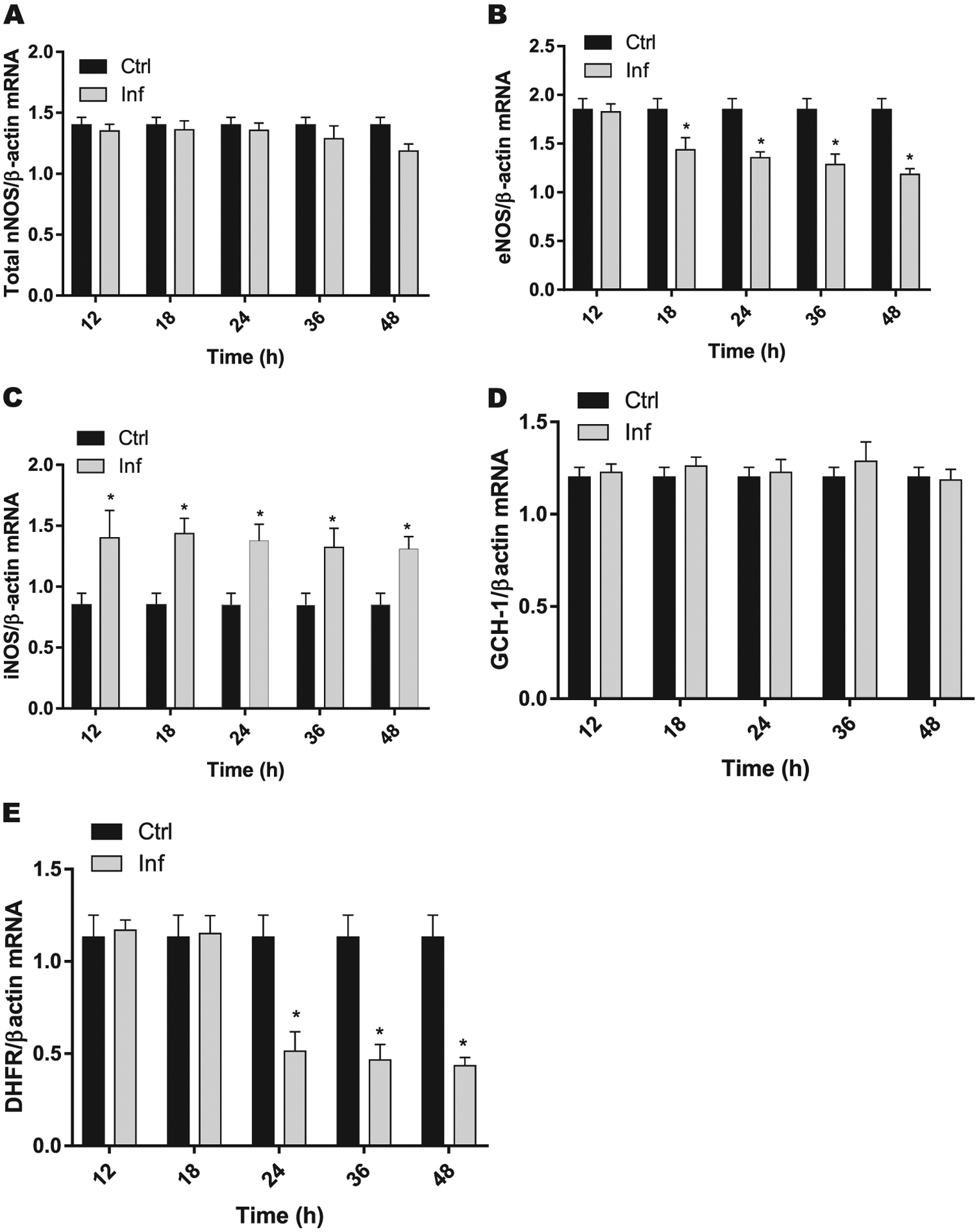
Pg impaired pHAEC viability 24 hours post-infection. Pg infection reduced mRNA expression levels of endothelial NOS (eNOS), Nrf2, and Phase II enzymes (heme oxygenase-1, catalase, superoxide dismutase-1) in a time-dependent manner. Significant (P <0.05) increase in the inflammatory markers (interleukin [IL]-1β, IL-6, and tumor necrosis factor-α) were observed in the medium as well as in the infected cells. Interestingly, inducible NOS mRNA levels showed a significant (P <0.05) increase at 12 hours and 24 hours and were reduced at later time points. BH (cofactor of eNOS) biosynthesis enzyme dihydrofolate reductase (DHFR, salvage pathway) mRNA levels showed a significant (P <0.05) decrease, while mRNA levels of GSK-3β were elevated.
These results suggest that periodontal bacterial infection may cause significant changes in the endothelial GSK-3β/BH /eNOS/Nrf2 pathways, which may lead to impaired vascular relaxation. Greater understanding of the factors that adversely affect endothelial cell function could contribute to the development of new therapeutic compounds to treat PD-induced vascular diseases.
牙周病(PD)已知与冠状动脉和/或心血管疾病患者的内皮功能障碍有关。在我们的研究中,我们试图探讨牙龈卟啉单胞菌(Pg)对原代人主动脉内皮细胞(pHAEC)中糖原合酶激酶 3β(GSK-3β)/核因子(红系衍生 2)样 2(Nrf2)/四氢生物蝶呤(BH)/一氧化氮合酶(NOS)表达的毒力。
使用人氧-细菌厌氧共培养技术,体外将 pHAEC 感染 Pg 48 小时。在每个孵育期结束时,通过定量实时聚合酶链反应测定细胞活力,并评估靶基因表达变化。
Pg 在感染后 24 小时内损害 pHAEC 活力。Pg 感染以时间依赖性方式降低内皮型一氧化氮合酶(eNOS)、Nrf2 和 II 期酶(血红素加氧酶-1、过氧化氢酶、超氧化物歧化酶-1)的 mRNA 表达水平。在培养基和感染细胞中均观察到炎症标志物(白细胞介素[IL]-1β、IL-6 和肿瘤坏死因子-α)显著(P<0.05)增加。有趣的是,诱导型 NOS mRNA 水平在 12 小时和 24 小时显著(P<0.05)增加,而在稍后的时间点则降低。BH(eNOS 的辅助因子)生物合成酶二氢叶酸还原酶(DHFR,补救途径)的 mRNA 水平显著(P<0.05)降低,而 GSK-3β 的 mRNA 水平升高。
这些结果表明,牙周细菌感染可能导致内皮 GSK-3β/BH/eNOS/Nrf2 途径发生显著变化,从而导致血管舒张受损。更好地了解对内皮细胞功能产生不利影响的因素可能有助于开发治疗 PD 引起的血管疾病的新治疗化合物。