Rajendran Remya U, Nayak Baby S, Siva N, Phagdol Tenzin, Pai Mamatha Shivananda, D'Souza Preethy, Noronha Judith Angelitta
Department of Child Health Nursing, Manipal College of Nursing, Manipal Academy of Higher Education, Manipal, Karnataka, India.
Department of Child Health Nursing, SUM Nursing College, Siksha 'O' Anusandhan (SOA) University, Bhubaneswar, Odisha, India.
Health Res Policy Syst. 2025 May 15;23(1):57. doi: 10.1186/s12961-025-01341-9.
Stakeholder engagement is increasingly crucial in healthcare research, particularly in diverse and complex settings such as India. Stakeholder engagement in health research is about collaborating with key parties such as patients, healthcare providers and policymakers to ensure the research is relevant and impactful by addressing real-world needs, thereby enhancing its quality and effect on healthcare practices.
The purpose of this study was to summarize the evidence on stakeholder engagement in healthcare research and its influence on research outcomes and healthcare policies in India.
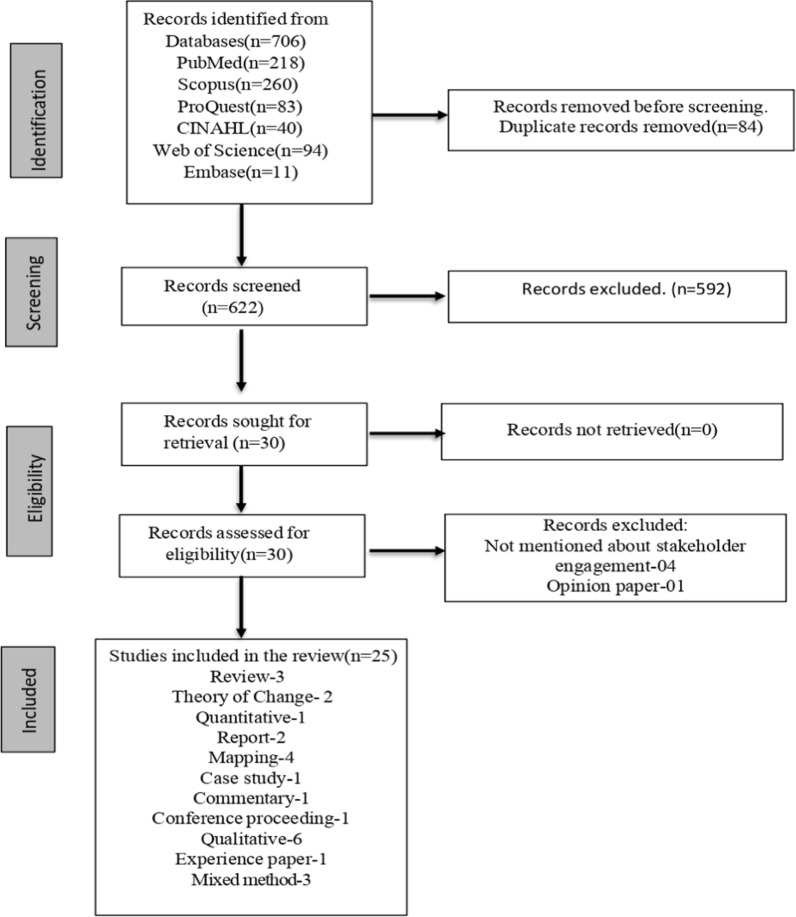
The evaluation was conducted following the Preferred Reporting Items for Systematic Reviews and Meta-Analyses guidelines. A systematic search was conducted in PubMed, SCOPUS, ProQuest, EMBASE, Web of Science, CINAHL Indian Citation Index and J-Gate, focussing on stakeholder involvement in healthcare settings in hospitals and communities in India. Various research methodologies were employed, with studies not centred on healthcare stakeholder engagement or unrelated sectors being excluded. Tools such as the Critical Appraisal Skills Programme checklist for qualitative studies and the mixed methods appraisal tool were used to evaluate the quality of the studies. Data synthesis was carried out using the descriptive/narrative synthesis approach.
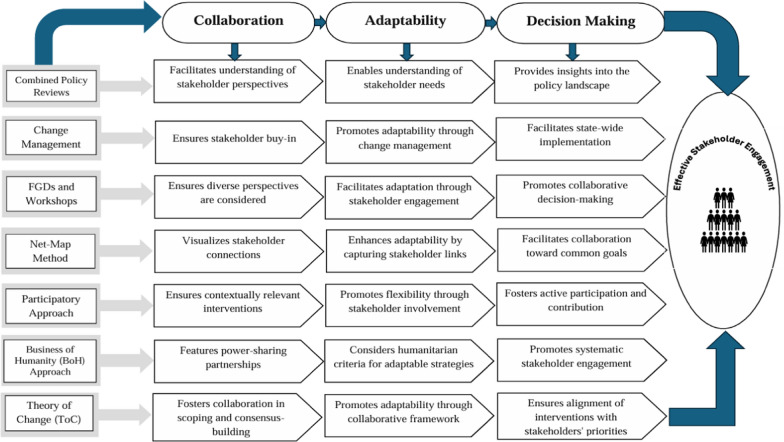
We included 25 articles on the basis of our eligibility criteria. These articles comprised reviews, theories of change, quantitative studies, reports, mapping, commentaries, conference proceedings, qualitative studies, experience papers and mixed methods research. The review examined different types and methods of engaging stakeholders in healthcare research projects, evaluated their influence on evidence-based practice, and investigated their relevance to reaching "hard-to-reach" populations. Overcoming financial, time, knowledge and logistical barriers and gaining support from international and governmental bodies can lead to more inclusive research with a significant impact.
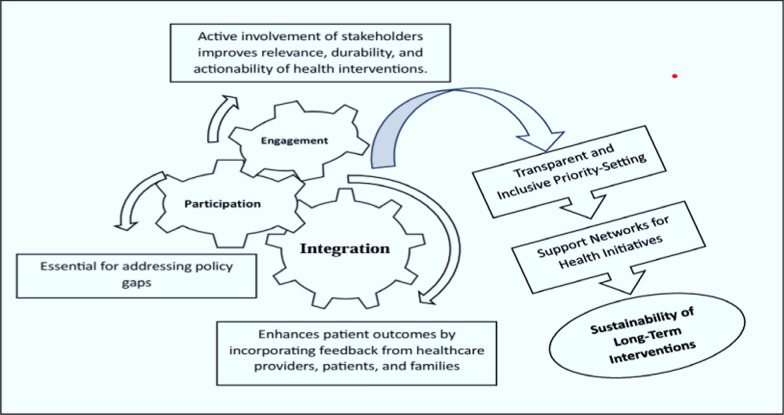
Findings suggest that stakeholder engagement contributes to more contextually relevant and ethically grounded research, though challenges related to power dynamics, resource allocation and inclusivity remain prevalent. The review concludes by providing recommendations for enhancing stakeholder engagement practices in future healthcare research in India, emphasizing the need for capacity-building and inclusive frameworks that ensure diverse voices are represented.
利益相关者的参与在医疗保健研究中日益重要,尤其是在印度这样多样化和复杂的环境中。利益相关者参与健康研究是指与患者、医疗保健提供者和政策制定者等关键方合作,通过满足现实世界的需求来确保研究具有相关性和影响力,从而提高其质量以及对医疗实践的影响。
本研究的目的是总结印度医疗保健研究中利益相关者参与的证据及其对研究结果和医疗政策的影响。
评估遵循系统评价和Meta分析的首选报告项目指南进行。在PubMed、SCOPUS、ProQuest、EMBASE、科学网、CINAHL印度引文索引和J-Gate中进行了系统检索,重点关注印度医院和社区医疗环境中利益相关者的参与情况。采用了各种研究方法,未以医疗保健利益相关者参与为中心或与不相关部门的研究被排除。使用定性研究的批判性评估技能计划清单和混合方法评估工具等工具来评估研究质量。使用描述性/叙述性综合方法进行数据综合。
根据纳入标准,我们纳入了25篇文章。这些文章包括综述、变革理论、定量研究、报告、映射、评论、会议记录、定性研究、经验论文和混合方法研究。该综述研究了在医疗保健研究项目中让利益相关者参与的不同类型和方法,评估了它们对循证实践的影响,并调查了它们与接触“难以接触到的”人群的相关性。克服财务、时间、知识和后勤障碍,并获得国际和政府机构的支持,可以带来更具包容性且具有重大影响的研究。
研究结果表明,利益相关者的参与有助于开展更符合实际情况且基于伦理的研究,尽管与权力动态、资源分配和包容性相关的挑战仍然普遍存在。综述最后为加强印度未来医疗保健研究中的利益相关者参与实践提供了建议,强调了能力建设和包容性框架的必要性,以确保不同声音得到体现。