Zhou Lei, Yao Kun, Li Chao, Xiong Wei, Hou Weibin, Wang Bingzhi, Xu Long, Wang Long
Department of Urology, The Third Xiangya Hospital, Central South University, Changsha, China.
Nursing Department, The Third Xiangya Hospital, Central South University, Changsha, China.
Curr Urol. 2025 May;19(3):230-234. doi: 10.1097/CU9.0000000000000255. Epub 2024 Jul 30.
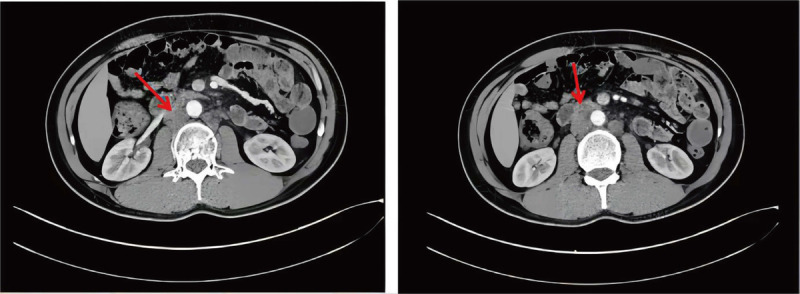
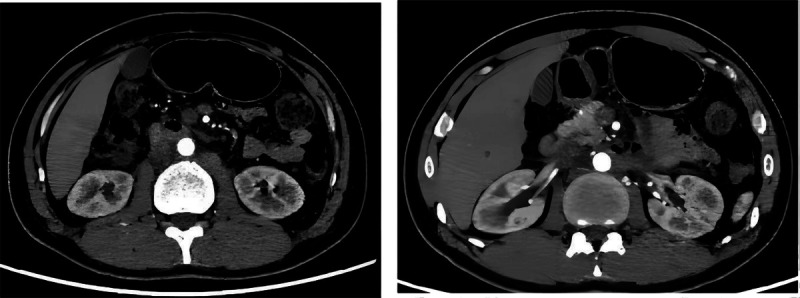
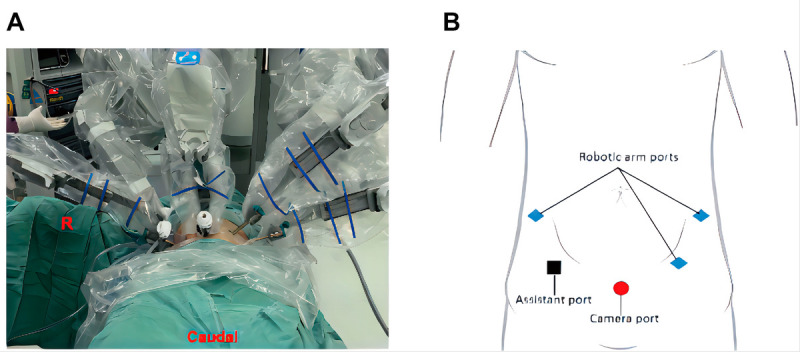
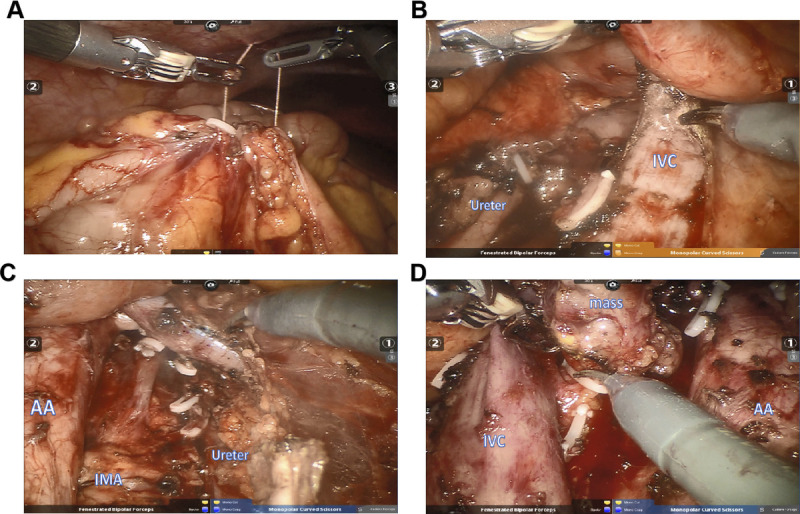
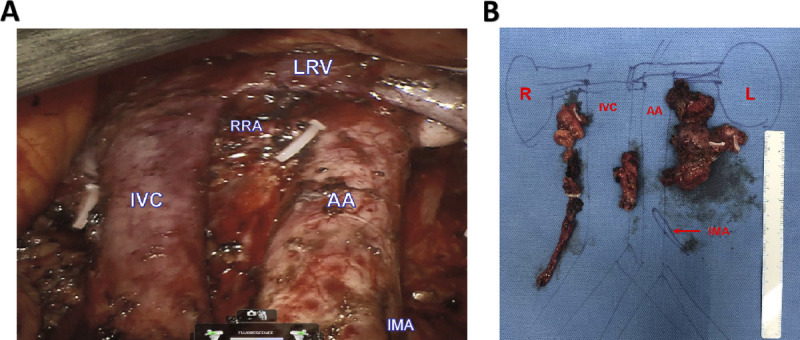
This case study demonstrates a single-position supine approach for robotic retroperitoneal lymph node dissection (R-RPLDN) for the treatment of nonseminomatous germ cell tumors and residual masses after chemotherapy. We performed a bilateral R-RPLDN in a 33-year-old man with nonseminomatous germ cell tumors and residual postchemotherapy masses. For this approach, the patient was placed in a steep Trendelenburg position, and a 5-port transperitoneal technique was used, with the robot docked so that the arms were oriented cephalad. This approach allowed simultaneous access to both sides of the retroperitoneum, thereby eliminating the need for bilateral lymphadenectomy and patient repositioning. Bilateral R-RPLDN was performed using a single-position supine approach. This versatile approach offers a less invasive, more efficient, and safer solution for removing residual postchemotherapy testicular cancer masses.
本病例研究展示了一种用于治疗非精原细胞性生殖细胞肿瘤及化疗后残留肿块的机器人腹膜后淋巴结清扫术(R-RPLDN)的单体位仰卧入路。我们对一名患有非精原细胞性生殖细胞肿瘤及化疗后残留肿块的33岁男性进行了双侧R-RPLDN。对于该入路,患者置于头低脚高位,采用经腹五孔技术,将机器人对接,使臂部朝头侧。这种入路允许同时进入腹膜后两侧,从而无需进行双侧淋巴结切除术和患者重新定位。双侧R-RPLDN采用单体位仰卧入路进行。这种通用的入路为切除化疗后残留的睾丸癌肿块提供了一种侵入性较小、效率更高且更安全的解决方案。