Paschke Ralf, Ghaznavi Sana, Imran Syed Ali, Jacquier Jennifer, Lochnan Heather, Massicotte Marie-Hélène, Mitmaker Elliot, Morrison Deric, Munro Vicki, Sveistrup Michelle, Wiseman Sam M, Zahedi Afshan
Eur Thyroid J. 2025 Jun 5;14(3). doi: 10.1530/ETJ-25-0072. Print 2025 Jun 1.
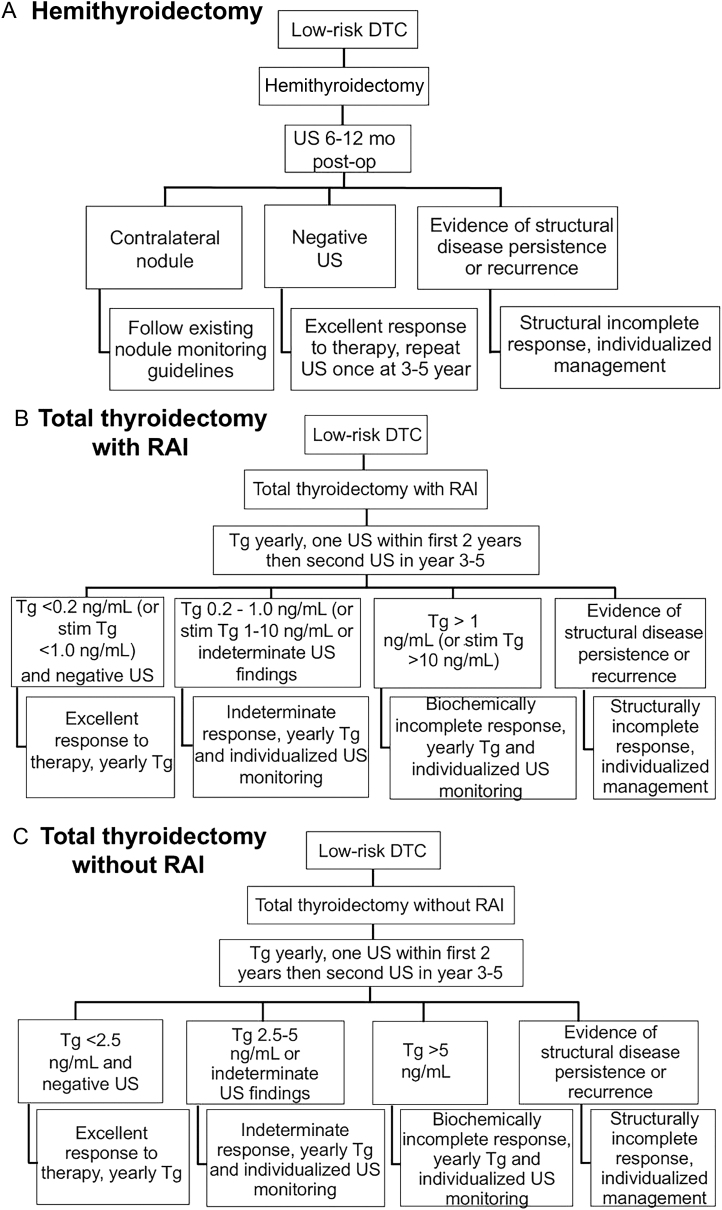
The incidence of differentiated thyroid cancer (DTC) has increased significantly in recent decades. Following initial diagnosis, DTC patients are classified according to the American Thyroid Association (ATA) as low, intermediate, and high risk for recurrence. Patients in the ATA low recurrence-risk category have a recurrence risk of ≤5%, with 20-year disease-specific mortality of <1%. Accordingly, there has been a shift to de-escalating initial treatment, including the relaxation of thyroid-stimulating hormone suppression. In addition, fewer low-risk patients undergo total thyroidectomy or radioactive iodine therapy. However, the optimal long-term surveillance strategy remains unclear, with many patients continuing follow-up in speciality clinics for many years. In addition, emerging evidence suggests that long-term surveillance can be effectively managed in primary care settings. To enhance understanding among Canadian thyroid practitioners and to improve care for Canadian patients diagnosed with low-risk DTC, we developed this consensus statement by collecting feedback from a multidisciplinary team led by one chairperson (endocrinologist), an additional eight endocrinologists, two surgeons, and one patient partner. This consensus statement reflects current evidence and expert opinion regarding initial management and long-term surveillance of low-risk DTC patients. This work is valuable to Canadian thyroid practitioners as it provides standardized guidelines to ensure optimal care and improved outcomes for low-risk DTC patients.
近几十年来,分化型甲状腺癌(DTC)的发病率显著上升。在初次诊断后,DTC患者根据美国甲状腺协会(ATA)被分为低、中、高复发风险类别。ATA低复发风险类别的患者复发风险≤5%,20年疾病特异性死亡率<1%。因此,出现了向降低初始治疗强度的转变,包括放宽促甲状腺激素抑制。此外,接受全甲状腺切除术或放射性碘治疗的低风险患者较少。然而,最佳的长期监测策略仍不明确,许多患者多年来一直在专科诊所接受随访。此外,新出现的证据表明,长期监测可以在初级保健机构中得到有效管理。为了增进加拿大甲状腺从业者之间的了解,并改善对诊断为低风险DTC的加拿大患者的护理,我们通过收集由一位主席(内分泌学家)、另外八位内分泌学家、两位外科医生和一位患者伙伴领导的多学科团队的反馈意见,制定了本共识声明。本共识声明反映了关于低风险DTC患者初始管理和长期监测的当前证据和专家意见。这项工作对加拿大甲状腺从业者很有价值,因为它提供了标准化指南,以确保为低风险DTC患者提供最佳护理并改善治疗结果。