Hosseini Fahimeh Alsadat, Shaygan Maryam, Shayegan Maryam
Community Based Psychiatric Care Research Center, School of Nursing and Midwifery, Shiraz University of Medical Sciences, Shiraz, Iran.
Department of Nursing, School of Nursing and Midwifery, Kazerun, Islamic Azad University, Kazerun, Iran.
Sci Rep. 2025 May 17;15(1):17136. doi: 10.1038/s41598-025-02040-9.
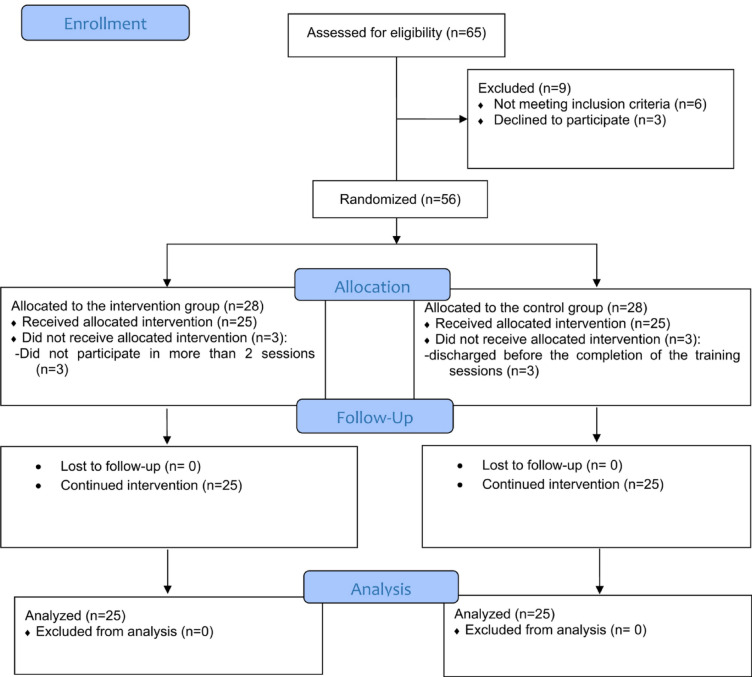
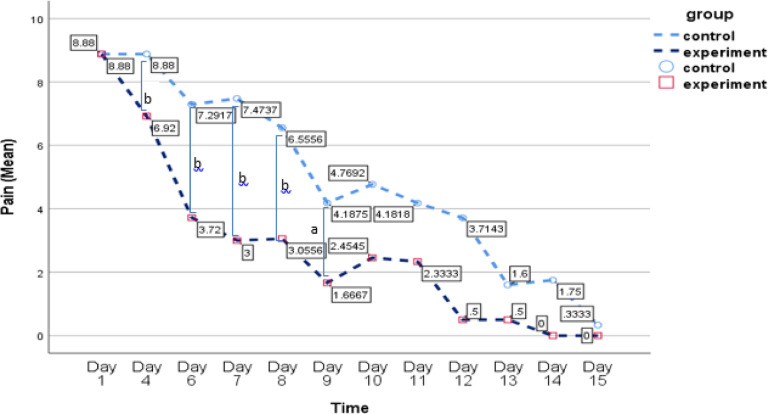
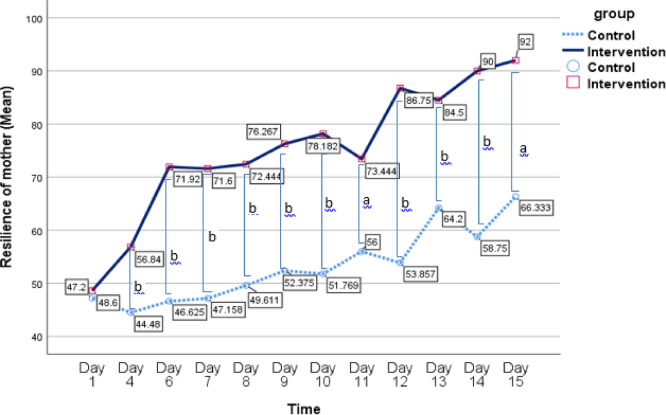
Mothers of children with burn injuries often experience psychological distress, affecting their well-being and children's pain. This study evaluates the impact of resilience training on maternal resilience and child pain. This randomized clinical trial was conducted at Amir Al-Momenin Burn Hospital, Shiraz, Iran, with 50 mothers in 2021-2022. Participants were assigned to an intervention group (six-day resilience training) or a control group (standard care). Outcomes were measured at multiple time points using the Connor-Davidson Resilience Scale and the Visual Analog Scale. Data were analyzed using SPSS v.22. The analysis revealed significant time effects on child pain intensity (B = - 0.84, p < 0.001) and maternal resilience (B = 3.99, p < 0.001). Significant group effects revealed greater improvements in the intervention group for child pain intensity (B = 2.85, p < 0.001) and maternal resilience (B = - 3.05, p < 0.001). The intervention group showed significant improvement in maternal resilience over time compared to the control group (B= - 2.06, p = 0.001), with no significant difference in child pain intensity over time compared to the control group (B = - 0.05, p = 0.69). Resilience training enhances maternal resilience and children's pain over time. However, its impact on child pain intensity is limited compared to standard care. Therefore, integrating resilience training for mothers into pediatric burn care is recommended.
烧伤儿童的母亲常常经历心理困扰,这会影响她们自身的幸福感以及孩子的疼痛状况。本研究评估了复原力训练对母亲复原力和孩子疼痛的影响。这项随机临床试验于2021年至2022年在伊朗设拉子的阿米尔·穆民宁烧伤医院开展,共有50位母亲参与。参与者被分为干预组(为期六天的复原力训练)或对照组(标准护理)。使用康纳-戴维森复原力量表和视觉模拟量表在多个时间点测量结果。数据使用SPSS v.22进行分析。分析显示,时间对孩子的疼痛强度(B = - 0.84,p < 0.001)和母亲的复原力(B = 3.99,p < 0.001)有显著影响。显著的组间效应表明,干预组在孩子疼痛强度(B = 2.85,p < 0.001)和母亲复原力(B = - 3.05,p < 0.001)方面有更大改善。与对照组相比,干预组母亲的复原力随时间有显著改善(B = - 2.06,p = 0.001),而与对照组相比,孩子的疼痛强度随时间无显著差异(B = - 0.05,p = 0.69)。随着时间推移,复原力训练可增强母亲的复原力并减轻孩子的疼痛。然而,与标准护理相比,其对孩子疼痛强度的影响有限。因此,建议将针对母亲的复原力训练纳入小儿烧伤护理中。