Bankah Aliu Zanzeh, Tagoe Thomas Amatey, Darko Emmanuel, Agoha Righteous, Ametefe Elmer Nayra, Kukuia Kennedy Kwami Edem, Adjei Samuel
Department of Physiology, University of Ghana, Legon, Ghana.
Department of Biochemistry, Cell and Molecular Biology, University of Ghana, Legon, Ghana.
Brain Behav. 2025 May;15(5):e70564. doi: 10.1002/brb3.70564.
Gut microbiota is strongly linked to the activity of the bidirectional gut-brain axis, which influences neuropsychological processes at multiple levels. Changes in the gut microbiota have been implicated in mood disorders, and probiotics have been explored for their ability to mitigate the effects of stress on mental health. Here, we investigated the therapeutic benefits of different concentrations and combinations of Lactobacillus and Bifidobacterium in a mouse model of stress induced depression and anxiety.
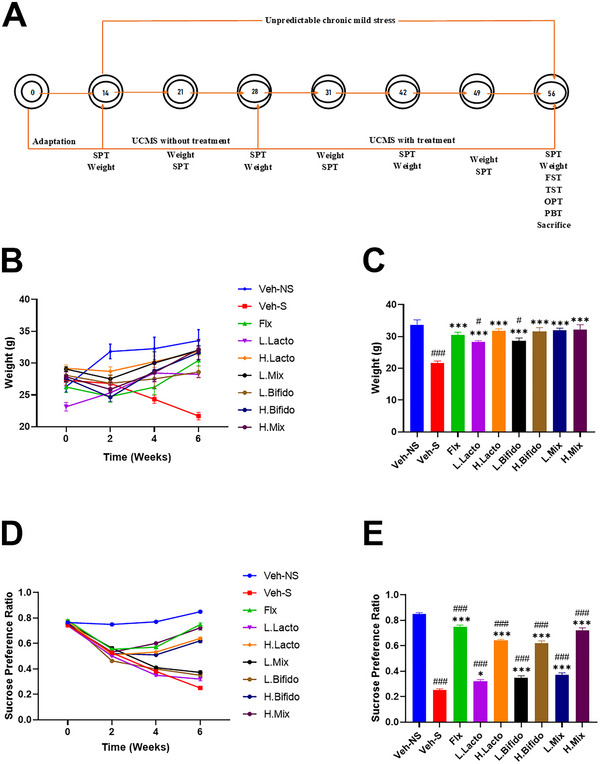
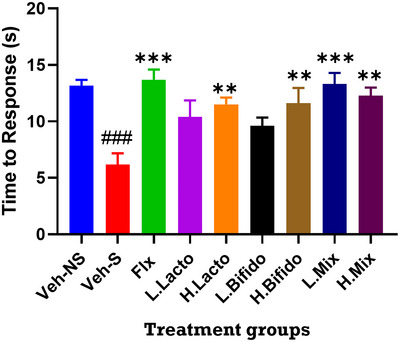
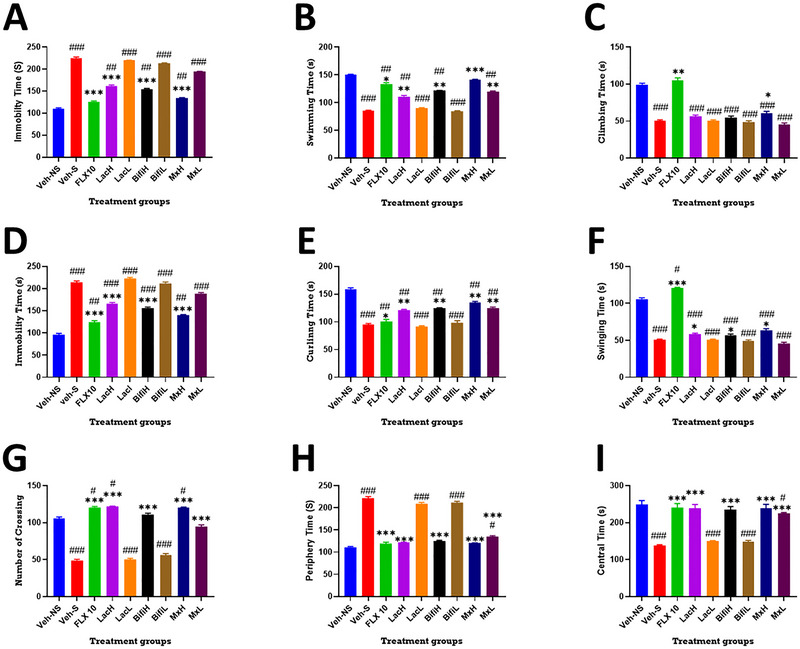
Sixty-three male ICR mice (6-8 weeks old; 20-25g) divided into nine groups were used for this study. The test groups underwent chronic unpredictable mild stress protocols for two weeks before receiving low (10 CFU/ml) or high (10 CFU/ml) doses of either monotherapy (Lactobacillus or Bifidobacterium) or a combination therapy (Lactobacillus and Bifidobacterium) for four weeks. The antidepressant, fluoxetine, served as the positive control. Measurements of weight and sucrose preference were performed at four time points in addition to a battery of behavioral tests (open field tests, forced swim test, tail suspension test, and hot plate test) at the endpoint to assess depression and anxiety-like behavior.
Low doses of the probiotic formulation (mono- or combined therapy) reversed weight loss but not anhedonia. In contrast, high doses of probiotic formulations (mono- or combined therapy), along with fluoxetine, were effective in reversing the weight loss and anhedonia caused by chronic unpredictable mild stress. Probiotics ameliorated stress-induced immobility as measured by both the forced swim and tail suspension tests, while also reducing anxiety-like behavior (increased peripheral activity) in the open field test. High doses of mono- or combined therapy increased curling behavior in the tail suspension test, whereas fluoxetine failed to do so.
This study indicates the species- and dose-dependent beneficial effects of probiotics on behavioral outcomes associated with depression while also reversing weight loss. Evidence suggests that probiotics and fluoxetine may exert antidepressant activity via different mechanisms.
肠道微生物群与双向肠-脑轴的活动密切相关,该轴在多个层面影响神经心理过程。肠道微生物群的变化与情绪障碍有关,益生菌因其减轻压力对心理健康影响的能力而受到研究。在此,我们在应激诱导的抑郁和焦虑小鼠模型中研究了不同浓度及组合的乳酸杆菌和双歧杆菌的治疗益处。
本研究使用63只雄性ICR小鼠(6-8周龄;20-25克),分为9组。测试组在接受低剂量(10CFU/ml)或高剂量(10CFU/ml)的单一疗法(乳酸杆菌或双歧杆菌)或联合疗法(乳酸杆菌和双歧杆菌)治疗四周前,先进行两周的慢性不可预测轻度应激方案。抗抑郁药氟西汀作为阳性对照。除了在终点进行一系列行为测试(旷场试验、强迫游泳试验、悬尾试验和热板试验)以评估抑郁和焦虑样行为外,还在四个时间点测量体重和蔗糖偏好。
低剂量的益生菌制剂(单一疗法或联合疗法)可逆转体重减轻,但不能逆转快感缺失。相比之下,高剂量的益生菌制剂(单一疗法或联合疗法)以及氟西汀可有效逆转慢性不可预测轻度应激导致的体重减轻和快感缺失。益生菌改善了强迫游泳和悬尾试验中测量的应激诱导的不动行为,同时还减少了旷场试验中的焦虑样行为(外周活动增加)。高剂量的单一疗法或联合疗法在悬尾试验中增加了蜷缩行为,而氟西汀则没有。
本研究表明益生菌对与抑郁相关的行为结果具有物种和剂量依赖性的有益影响,同时还能逆转体重减轻。有证据表明益生菌和氟西汀可能通过不同机制发挥抗抑郁活性。