Phan Paul, Blum Alexander J, Price Matthew D, Rafiq Mohamed Y, Juma Omar, Manyama Frank, Ngude Hilary, Sakran Joseph V, Bachani Abdulgafoor M, Stevens Kent A, Rhee Daniel S, Enumah Zachary O
Johns Hopkins University School of Medicine.
Brigham and Women's Hospital.
Res Sq. 2025 May 8:rs.3.rs-6406297. doi: 10.21203/rs.3.rs-6406297/v1.
In global health, the three-delays framework helps assess barriers associated with seeking (D1), reaching (D2), and receiving health care (D3). This study applies this model to identify factors contributing to delays in surgical care among children living in a Tanzanian refugee camp.
A validated surgical needs survey was administered to parents/guardians of children (0-18 years) living in Tanzania's Nyarugusu refugee camp. We quantified the number of children seeking, reaching, and receiving care for surgically-amendable concerns according to the three-delays framework. Multivariate logistic regression models identified significantly associated predictors with each delay.
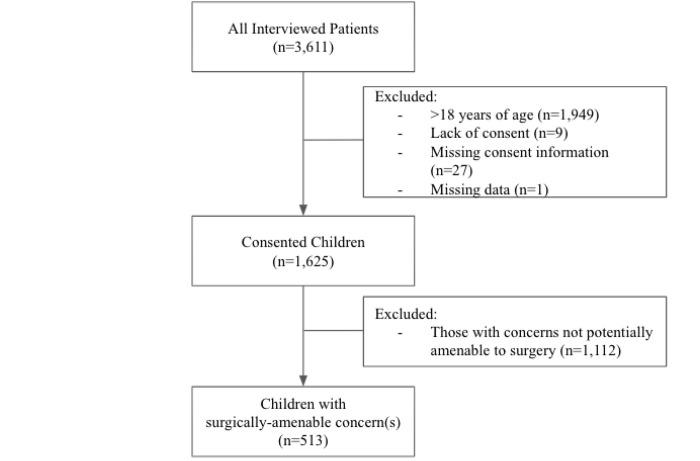
721 patient surgically-amendable concerns were identified among 513 children, with 247 children (48.1%) experiencing a delay for at least one problem. Characteristics associated with delays in seeking care included older age, self-perception of good health, and not previously using a primary health center. Burns were also associated with delays in seeking and reaching care, while Congolese nationality and self-perceptions of good health were statistically significant predictors for delays in receiving care.
Children in a Tanzanian refugee camp experience unmet surgical needs complicated by multifactorial delays to seeking, reaching, and receiving surgical care. Future interventions that reduce delays are essential to improve outcomes for refugee children.
在全球卫生领域,三延误框架有助于评估与寻求(D1)、到达(D2)和接受医疗保健(D3)相关的障碍。本研究应用该模型来确定导致坦桑尼亚难民营中儿童手术治疗延误的因素。
对居住在坦桑尼亚尼亚鲁古苏难民营的0至18岁儿童的父母/监护人进行了一项经过验证的手术需求调查。我们根据三延误框架对寻求、到达和接受手术可矫正问题治疗的儿童数量进行了量化。多变量逻辑回归模型确定了与每次延误显著相关的预测因素。
在513名儿童中确定了721例患者的手术可矫正问题,其中247名儿童(48.1%)至少有一个问题出现延误。与寻求治疗延误相关的特征包括年龄较大、自我感觉健康状况良好以及以前未使用过初级卫生中心。烧伤也与寻求和到达治疗的延误有关,而刚果国籍和自我感觉健康状况良好是接受治疗延误的统计学显著预测因素。
坦桑尼亚难民营中的儿童存在未满足的手术需求,因寻求、到达和接受手术治疗的多因素延误而变得复杂。未来减少延误的干预措施对于改善难民儿童的结局至关重要。