Farahani Aryan, Farahani Arman, Kashfi Khosrow, Ghasemi Asghar
Endocrine Physiology Research Center, Research Institute for Endocrine Molecular Biology, Research Institute for Endocrine Sciences, Shahid Beheshti University of Medical Sciences, Tehran, Iran.
Department of Molecular, Cellular and Biomedical Sciences, Sophie Davis School of Biomedical Education, City University of New York School of Medicine, New York, NY, USA; Graduate Program in Biology, City University of New York Graduate Center, New York 10091, USA.
Pharmacol Res. 2025 Jun;216:107781. doi: 10.1016/j.phrs.2025.107781. Epub 2025 May 17.
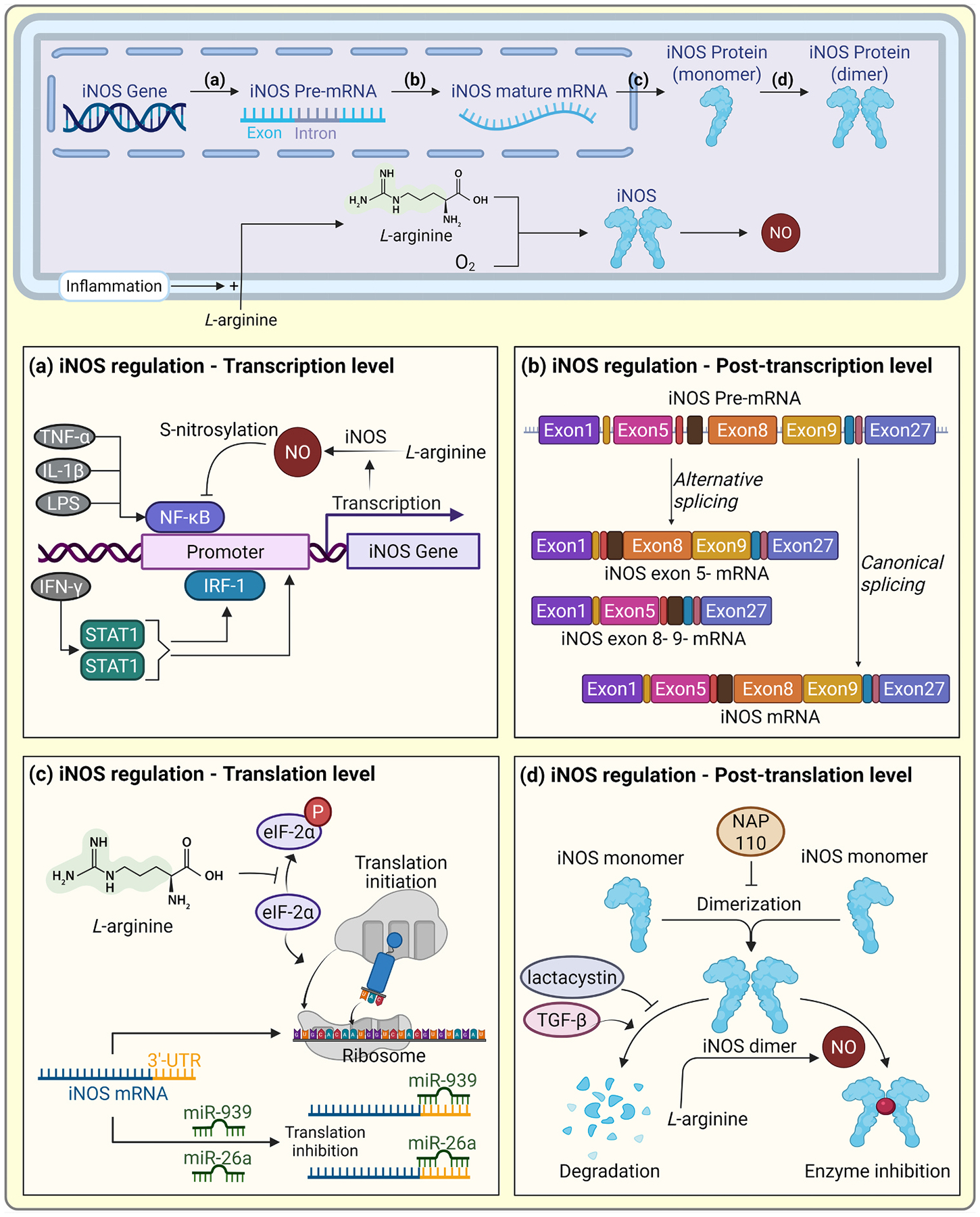
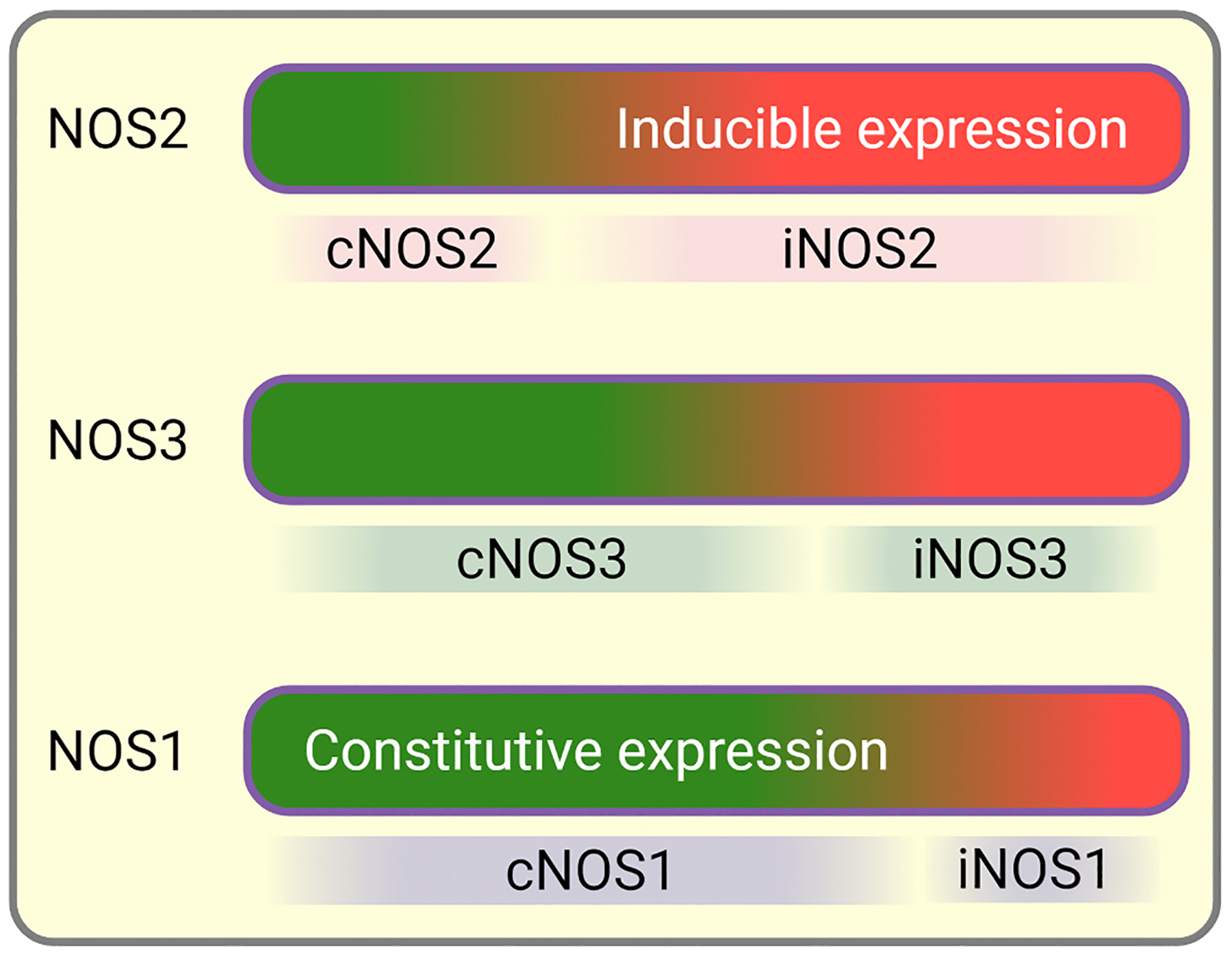
Nitric oxide (NO) is a critical signaling molecule synthesized from L-arginine by nitric oxide synthase (NOS). The three NOS isoforms-neuronal NOS (nNOS; NOS1), inducible NOS (iNOS; NOS2), and endothelial NOS (eNOS; NOS3)-have traditionally been classified as either constitutive (nNOS and eNOS) or inducible (iNOS). However, this binary classification oversimplifies their functions, particularly by neglecting the physiological roles of iNOS and misrepresenting its involvement in pathological processes. Increasing evidence demonstrates that all three isoforms can exhibit both constitutive and inducible expression. Notably, iNOS is constitutively expressed at low levels in several tissues, including blood, heart, bone marrow, lung, brain, spinal cord, retina, colonic mucosa, liver, ileum, skeletal muscle, epidermis, adipose tissue, endometrium, ovary, and kidney under normal physiological conditions, a form we refer to as constitutive iNOS (ciNOS). This basal expression contributes to essential functions such as heart rate regulation, respiratory exchange, and microbiome balance in the gut. Moreover, in certain pathological contexts, iNOS may exert protective rather than harmful effects, challenging the prevailing view that it is solely a pro-inflammatory mediator. Current drug development strategies targeting NOS are largely based on the outdated dichotomy of constitutive "physiologic" versus inducible "pathologic" isoforms, focusing primarily on iNOS inhibition. The failure of iNOS inhibitors in most clinical trials highlights the limitations of this approach. To address these gaps, we propose a revised nomenclature that incorporates both gene expression mode (constitutive vs. inducible) and discovery order, offering a more nuanced framework for understanding NOS isoforms in both health and disease.
一氧化氮(NO)是一种由一氧化氮合酶(NOS)从L-精氨酸合成的关键信号分子。三种NOS亚型——神经元型NOS(nNOS;NOS1)、诱导型NOS(iNOS;NOS2)和内皮型NOS(eNOS;NOS3)——传统上被分类为组成型(nNOS和eNOS)或诱导型(iNOS)。然而,这种二元分类过于简化了它们的功能,特别是忽略了iNOS的生理作用,并错误地描述了其在病理过程中的参与情况。越来越多的证据表明,所有三种亚型都可以表现出组成型和诱导型表达。值得注意的是,在正常生理条件下,iNOS在包括血液、心脏、骨髓、肺、脑、脊髓、视网膜、结肠黏膜、肝脏、回肠、骨骼肌、表皮、脂肪组织、子宫内膜、卵巢和肾脏在内的几种组织中以低水平组成型表达,我们将这种形式称为组成型iNOS(ciNOS)。这种基础表达有助于诸如心率调节、呼吸交换和肠道微生物群平衡等重要功能。此外,在某些病理情况下,iNOS可能发挥保护作用而非有害作用,这对其仅仅是一种促炎介质的普遍观点提出了挑战。目前针对NOS的药物开发策略很大程度上基于过时的组成型“生理”与诱导型“病理”亚型二分法,主要侧重于抑制iNOS。大多数临床试验中iNOS抑制剂的失败凸显了这种方法的局限性。为了填补这些空白,我们提出了一种修订的命名法,该命名法结合了基因表达模式(组成型与诱导型)和发现顺序,为理解健康和疾病状态下的NOS亚型提供了一个更细致入微的框架。