Siame Lukundo, Kabeta Mbulazi B, Chama Gift C, Muchaili Lweendo, Silumbwe Ceaser Wankumbu, Hamooya Benson M, Mweene Bislom C, Liweleya Situmbeko, Mulamfu Sydney, Povia Joreen P, Masenga Sepiso K
Department of Cardiovascular Science and Metabolic Diseases, Livingstone Center for Prevention and Translational Science, Livingstone, Zambia.
Department of Pharmacy, Lusaka Apex Medical University, Lusaka, Zambia.
PLOS Glob Public Health. 2025 May 20;5(5):e0004649. doi: 10.1371/journal.pgph.0004649. eCollection 2025.
Hypertensive crisis, including hypertensive emergency (with target organ damage) and hypertensive urgency (without target organ damage), is a critical public health condition at Livingstone University Teaching Hospital (LUTH). Hypertensive crisis has been linked to severe complications, including stroke, renal failure, and heart disease, leading to increased mortality, morbidity, and healthcare costs due to intensive treatment, prolonged hospital stays, and long-term care. This study aimed to determine the prevalence and factors associated with hypertensive crisis among patients presenting at the adult medical emergency department at LUTH.
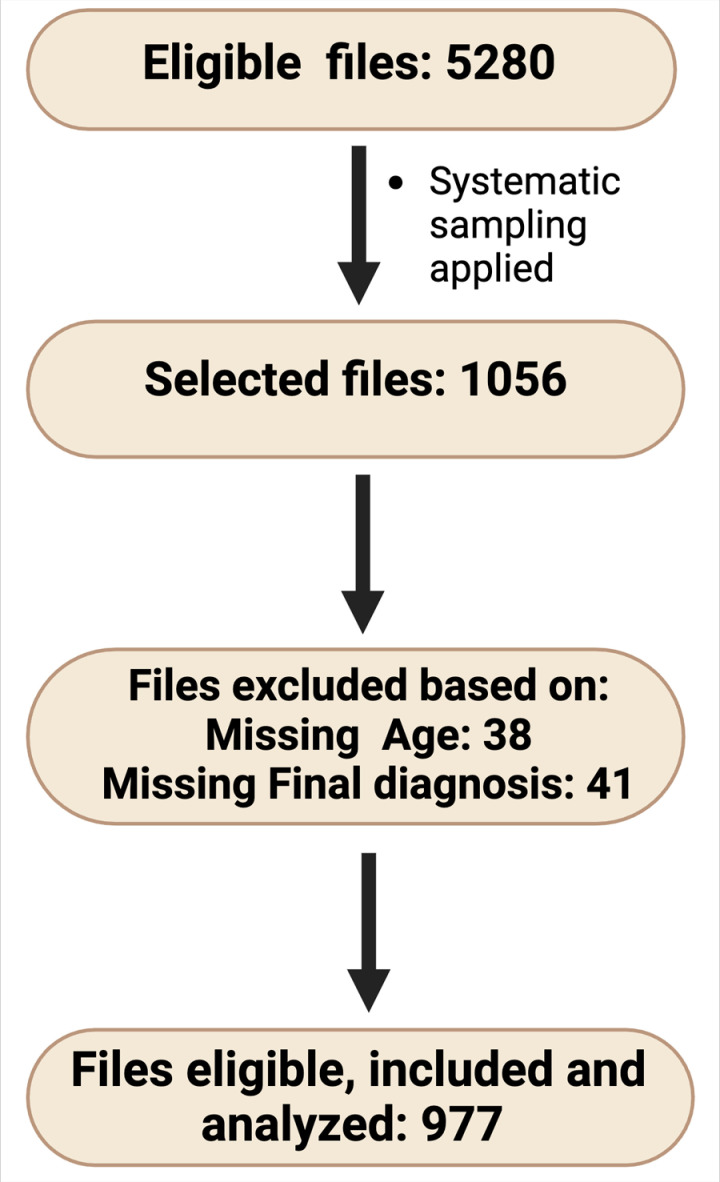
This was a retrospective cross-sectional study conducted among 977 individuals aged ≥ 18 years who visited the facility between 1st January and 31st December 2021. Hypertensive crisis was defined as systolic BP ≥ 180 mmHg and diastolic BP ≥ 120 mmHg, with or without target organ damage by the attending clinician. Multivariable logistic regression was used to evaluate factors associated with hypertensive crisis. Statistical significance was set at p < 0.05.
The prevalence of hypertensive crisis was 18.9% (95% CI: 17%, 21%) [(n = 185/977)], with 1.1% (n = 11) diagnosed with hypertensive emergency and 17.8% (n = 174) with hypertensive urgency. The most affected group was under 45 years old (n = 89, 48.1%), and Males [50.8%, (n = 94)] and females [49.2%, (n = 92)] were equally affected. Individuals who did not adhere to their hypertension medication were 6.3 times more likely to experience a hypertensive crisis compared to those who adhered (AOR: 6.3; 95% CI: 2.78-13.01; p < 0.001). Individuals in employment were 3.94 times more likely to experience a hypertensive crisis compared to those who were unemployed (AOR: 3.94; 95% CI: 1.52-10.21; p = 0.005). Similarly, individuals diagnosed with a hypertensive crisis had 3.43 times higher odds of being hospitalized than those who were not diagnosed (AOR: 3.43; 95% CI: 1.61-7.34; p < 0.001).
Hypertensive crisis represents a significant burden on our emergency department, which may lead to severe complications such as stroke, renal failure, and cardiovascular events. These complications, in turn, result in increased healthcare costs and patient morbidity in resource-limited settings like ours. Therefore, there is a need to enhance public awareness about hypertension and adopt a patient-centered approach to medication adherence.
高血压急症,包括高血压危象(伴有靶器官损害)和高血压急症(不伴有靶器官损害),是利文斯通大学教学医院(LUTH)的一种严重公共卫生状况。高血压急症与严重并发症相关,包括中风、肾衰竭和心脏病,由于强化治疗、延长住院时间和长期护理,导致死亡率、发病率和医疗费用增加。本研究旨在确定LUTH成人急诊科患者中高血压急症的患病率及其相关因素。
这是一项回顾性横断面研究,对2021年1月1日至12月31日期间到该机构就诊的977名年龄≥18岁的个体进行了研究。高血压急症被主治医生定义为收缩压≥180 mmHg和舒张压≥120 mmHg,无论是否伴有靶器官损害。采用多变量逻辑回归评估与高血压急症相关的因素。设定统计学显著性为p<0.05。
高血压急症的患病率为18.9%(95%置信区间:17%,21%)[(n=185/977)],其中1.1%(n=11)被诊断为高血压危象,17.8%(n=174)为高血压急症。受影响最严重的群体是45岁以下人群(n=89,48.1%),男性[50.8%,(n=94)]和女性[49.2%,(n=92)]受影响程度相同。与坚持服药的人相比,不坚持服用高血压药物的人发生高血压急症的可能性高6.3倍(调整后比值比:6.3;95%置信区间:2.78-13.01;p<0.001)。就业人员发生高血压急症的可能性是失业人员的3.94倍(调整后比值比:3.94;95%置信区间:1.52-10.21;p= 0.005)。同样,被诊断为高血压急症的人住院几率比未被诊断的人高3.43倍(调整后比值比:3.43;95%置信区间:1.61-7.34;p<0.001)。
高血压急症给我们的急诊科带来了沉重负担,可能导致中风、肾衰竭和心血管事件等严重并发症。反过来,这些并发症在我们这样资源有限的环境中会导致医疗费用增加和患者发病率上升。因此,有必要提高公众对高血压的认识,并采取以患者为中心的方法来坚持服药。