Wang Yaopu, Guo Yu, Li Chenglong, Su Xinyu, Yang Mengxue, Li Wanyu, Xu Hongjun, Li Hong
College of Horticulture, Xinjiang Agricultural University, Urumqi, 830052, China.
BMC Plant Biol. 2025 May 20;25(1):670. doi: 10.1186/s12870-025-06699-0.
Soil salinization is a formidable challenge for vegetable production, primarily because of the detrimental effects of ion toxicity. Rhizosphere microorganisms promote plant growth and bolster salt tolerance, but the extent to which microbial communities can increase plant resilience by regulating ion homeostasis under salt stress remains underexplored. The goal of this study was to enrich microbial communities from the rhizosphere of salt-stressed cucumber seedlings and identify their impact on ion balance and plant growth under saline conditions.
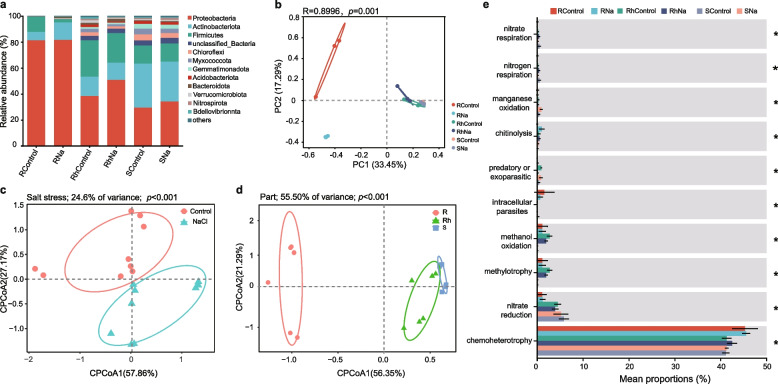
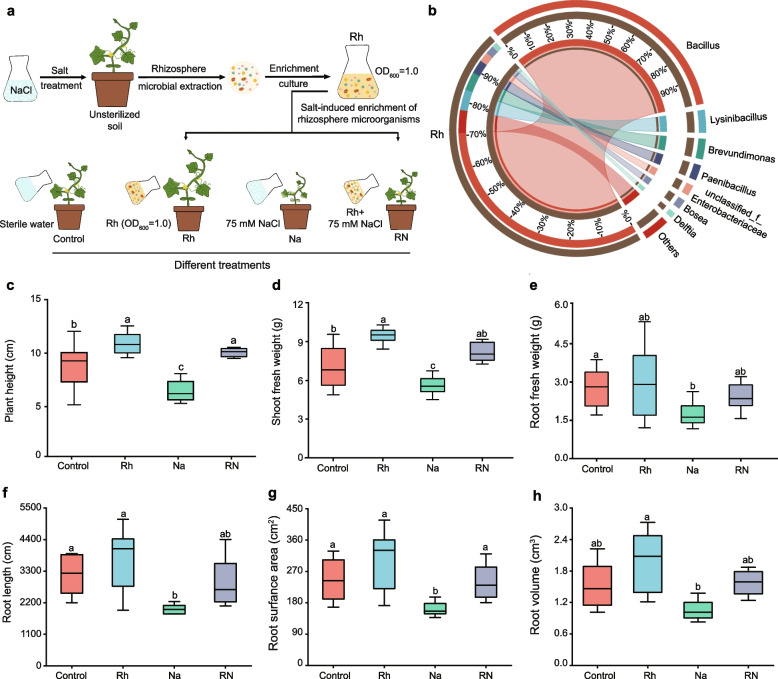
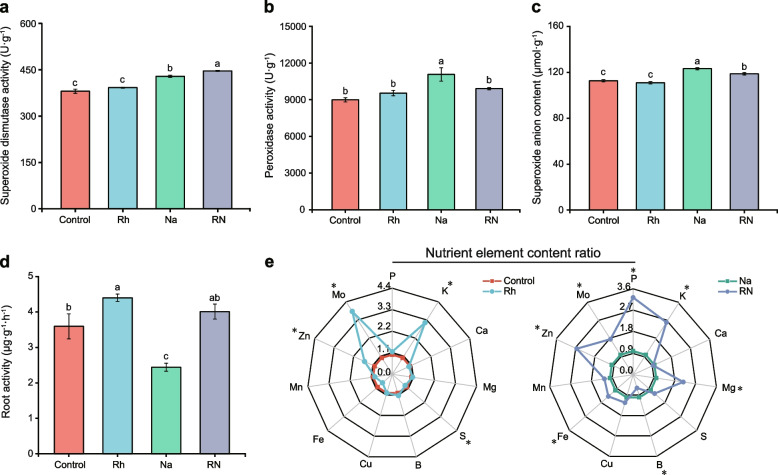
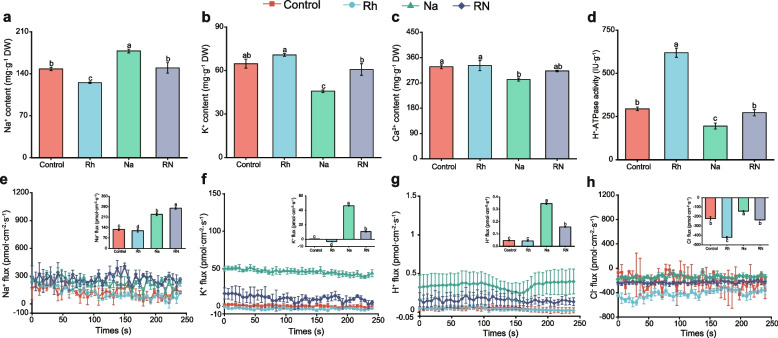
Salt stress induced significant alterations in the composition, structure, and function of the root-associated microbial community. Compared with a 75 mM NaCl treatment alone, inoculation with salt-induced rhizosphere microorganisms (SiRMs) under the same conditions significantly increased the growth of cucumber seedlings; plant height increased by 61.3%, and the fresh weights of the shoots and roots increased by 45.3% and 38.9%, respectively. Moreover, superoxide dismutase (SOD) activity increased by 4.1%, and peroxidase (POD) activity and superoxide anion (O·) content decreased by 10.5% and 3.7%, respectively. In the roots, stems, and leaves of cucumber seedlings treated with SiRMs and 75 mM NaCl, the Na content was significantly reduced by 15.8%, 18.9%, and 9.7%, respectively. Conversely, the K content significantly increased by 32.7%, 16.9%, and 28.8%, respectively. Under salt stress conditions, inoculation with SiRMs significantly increased the rate of Na expulsion in the roots of cucumber seedlings by 18.3%, but the K expulsion rate decreased by 76.7%. These dynamic changes are attributed to the upregulation of genes such as CsHKT1, CsHAK5, and CsCHX18;4.
Enrichment with SiRMs played a pivotal role in maintaining ion homeostasis and significantly enhanced the salt tolerance of cucumber seedlings. These findings highlight the potential for microbial-assisted strategies to mitigate the adverse effects of soil salinity and provide valuable insights into the complex interplay between the microbial community and plant resilience from the perspective of ion balance.
土壤盐渍化是蔬菜生产面临的一项艰巨挑战,主要是因为离子毒性的有害影响。根际微生物促进植物生长并增强耐盐性,但在盐胁迫下微生物群落通过调节离子稳态来提高植物恢复力的程度仍未得到充分研究。本研究的目的是从盐胁迫黄瓜幼苗的根际富集微生物群落,并确定它们在盐胁迫条件下对离子平衡和植物生长的影响。
盐胁迫导致根际相关微生物群落的组成、结构和功能发生显著变化。与单独的75 mM NaCl处理相比,在相同条件下接种盐诱导根际微生物(SiRMs)显著增加了黄瓜幼苗的生长;株高增加了61.3%,地上部和根部鲜重分别增加了45.3%和38.9%。此外,超氧化物歧化酶(SOD)活性增加了4.1%,过氧化物酶(POD)活性和超氧阴离子(O·)含量分别降低了10.5%和3.7%。在接种SiRMs和75 mM NaCl处理的黄瓜幼苗的根、茎和叶中,Na含量分别显著降低了15.8%、18.9%和9.7%。相反,K含量分别显著增加了32.7%、16.9%和28.8%。在盐胁迫条件下,接种SiRMs显著提高了黄瓜幼苗根部Na排出率18.3%,但K排出率降低了76.7%。这些动态变化归因于CsHKT1、CsHAK5和CsCHX18;4等基因的上调。
SiRMs富集在维持离子稳态方面发挥了关键作用,并显著增强了黄瓜幼苗的耐盐性。这些发现突出了微生物辅助策略减轻土壤盐渍化不利影响的潜力,并从离子平衡的角度为微生物群落与植物恢复力之间的复杂相互作用提供了有价值的见解。