Belay Aklilu K, Asale Abebe, Sole Catherine L, Yusuf Abdullahi A, Torto Baldwyn, Abro Zewdu, Kassie Menale, Mutero Clifford M, Tchouassi David P
International Centre of Insect Physiology and Ecology, P.O. Box 30772-00100, Nairobi, Kenya.
Department of Zoology and Entomology, University of Pretoria, Private Bag X0028, Pretoria, South Africa.
Sci Rep. 2025 May 21;15(1):17709. doi: 10.1038/s41598-025-02943-7.
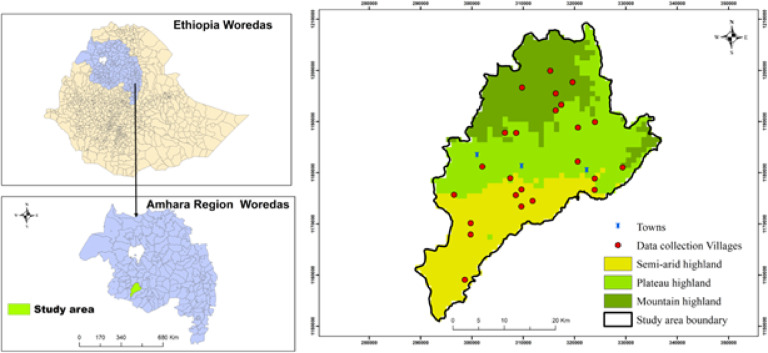
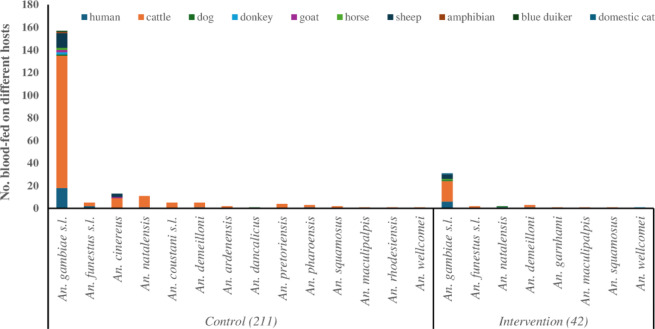
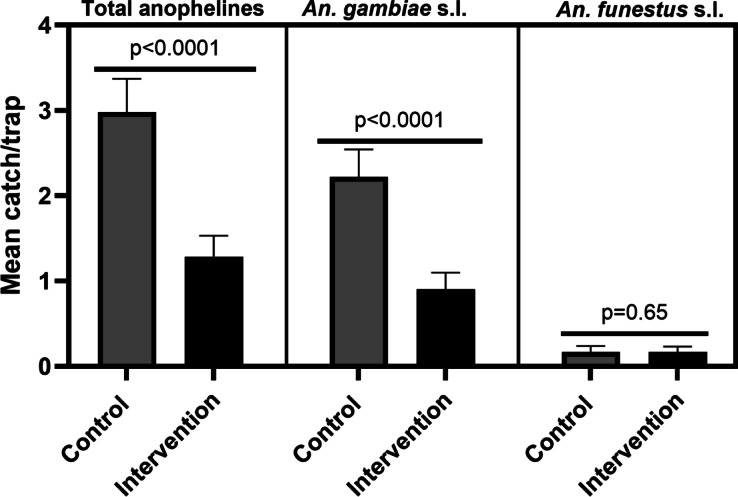
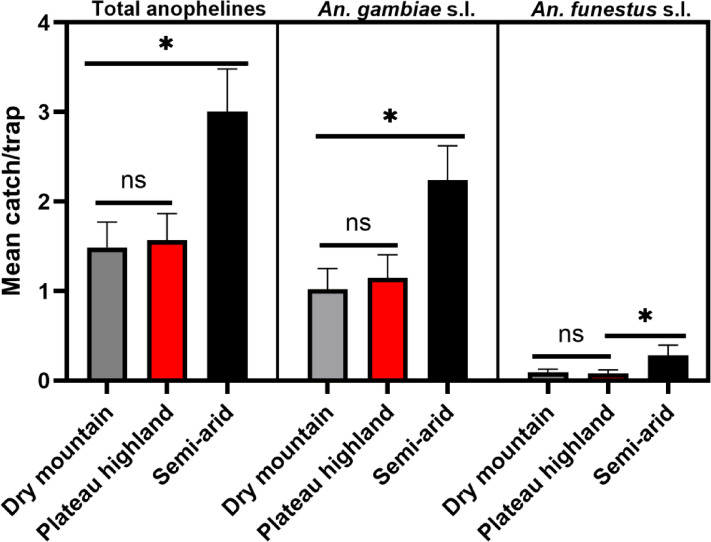
House screening (HS) of doors, eaves, and windows using wire-mesh has demonstrated potential in the integrated vector management of malaria. However, limited epidemiological data are available to guide its implementation across different ecological settings. In a 16-month randomized controlled trial (follow-up period) conducted across three agroecological areas (dry mountain, plateau highland, and semi-arid) in Jabi Tehnan district, northwestern Ethiopia, treatment houses were equipped with HS combined with insecticide-treated nets (ITNs), while control houses received ITNs only. The intervention led to a significant 2.3-fold reduction in indoor malaria vector density, the primary entomologic outcome, largely influenced by An. gambiae s.l. mosquitoes. Fewer blood-fed mosquitoes were found in screened houses, indicating reduced human bites, which translated to six-fold decline in malaria prevalence (0.7%), the primary epidemiologic outcome, compared to control houses (4.3%). In contrast, Plasmodium sporozoite infection rates showed no differences between screened and control houses or agroecological zones, with An. arabiensis and An. funestus s.l. identified as the primary vectors. A modest protective effectiveness (22.6%) was observed, based on the estimated entomological inoculation rate of 0.24 and 0.31 infectious bites/person/night in screened and control houses, respectively, with no variation by agroecology. Despite the synergistic impact of HS with existing ITNs in reducing vector densities, human bite rates, and household malaria prevalence, sustained transmission persisted, partly due to the presence of highly competent vectors such as An. funestus s.l. which had an overall sporozoite rate of 68%. Future research should explore the interactions between vector behavioral adaptations, ecological and social factors contributing to residual transmission, even with seemingly effective control measures.
使用金属丝网对房屋的门、屋檐和窗户进行房屋筛查(HS)已在疟疾的综合病媒管理中显示出潜力。然而,可用于指导其在不同生态环境中实施的流行病学数据有限。在埃塞俄比亚西北部贾比·泰南地区的三个农业生态区(干旱山区、高原高地和半干旱地区)进行的一项为期16个月的随机对照试验(随访期)中,处理组房屋配备了房屋筛查与杀虫剂处理蚊帐(ITN)相结合的措施,而对照组房屋仅接受杀虫剂处理蚊帐。该干预措施使室内疟疾媒介密度显著降低了2.3倍,这是主要的昆虫学结果,主要受冈比亚按蚊复合种蚊子的影响。在经过筛查的房屋中发现的吸血蚊子较少,表明人类被叮咬的情况减少,这使得疟疾患病率(0.7%)与对照组房屋(4.3%)相比下降了6倍,这是主要的流行病学结果。相比之下,疟原虫子孢子感染率在经过筛查的房屋与对照房屋之间或农业生态区之间没有差异,阿拉伯按蚊和嗜人按蚊复合种被确定为主要病媒。根据估计的昆虫学接种率,分别在经过筛查的房屋和对照房屋中为0.24和0.31次感染性叮咬/人/夜,观察到适度的保护效果(22.6%),且在不同农业生态环境中无差异。尽管房屋筛查与现有的杀虫剂处理蚊帐在降低媒介密度、人类被叮咬率和家庭疟疾患病率方面具有协同作用,但仍存在持续传播,部分原因是存在如嗜人按蚊复合种这样具有高传播能力的病媒,其总体子孢子率为68%。未来的研究应探索病媒行为适应性、生态和社会因素之间的相互作用,这些因素导致了即使采取了看似有效的控制措施后仍存在残余传播。