Aktas Pepe Nihan, Acar Busra, Erturk Zararsiz Gozde, Ayaz Guner Serife, Sen Alaattin
Department of Molecular Biology and Genetics, Faculty of Life and Natural Sciences, Abdullah Gul University, Kayseri 38080, Türkiye.
Department of Biostatistics, Faculty of Medicine, Erciyes University, Kayseri 38039, Türkiye.
Noncoding RNA. 2025 Apr 29;11(3):31. doi: 10.3390/ncrna11030031.
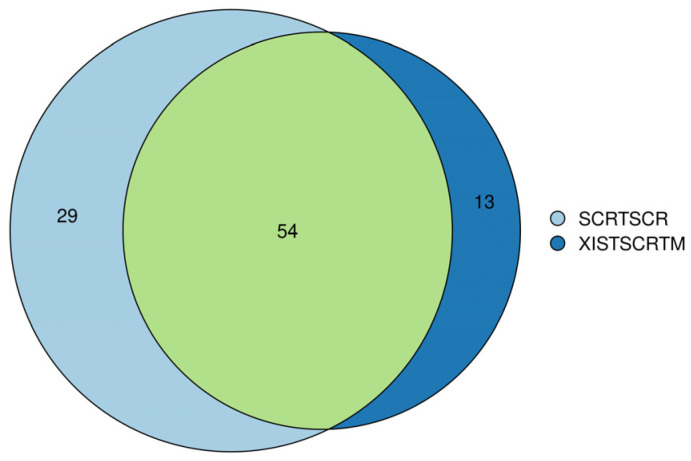
: X-inactive-specific transcript () is a factor that plays a role in neuroinflammation. This study investigated the role of in neuronal development, neuroinflammation, myelination, and therapeutic responses within cerebral organoids in the context of Multiple Sclerosis (MS) pathogenesis. : Human cerebral organoids with oligodendrocytes were produced from -silenced H9 cells, and the mature organoids were subsequently treated with either FTY720 or DMF. Gene expression related to inflammation and myelination was subsequently analyzed via qRT-PCR. Immunofluorescence staining was used to assess the expression of proteins related to inflammation, myelination, and neuronal differentiation. Alpha-synuclein protein levels were also checked via ELISA. Finally, transcriptome analysis was conducted on the organoid samples. : -silenced organoids presented a 2-fold increase in the expression of neuronal stem cells, excitatory neurons, microglia, and mature oligodendrocyte markers. In addition, silencing increased IL-10 mRNA expression by 2-fold and MBP and PLP1 expression by 2.3- and 0.6-fold, respectively. Although silencing tripled IBA1 protein expression, it did not affect organoid MBP expression. FTY720, but not DMF, distinguished MBP and IBA1 expression in -silenced organoids. Furthermore, silencing reduced the concentration of alpha-synuclein from 300 to 100 pg/mL, confirming its anti-inflammatory role. Transcriptomic and gene enrichment analyses revealed that the differentially expressed genes are involved in neural development and immune processes, suggesting the role of in neuroinflammation. The silencing of XIST modified the expression of genes associated with inflammation, myelination, and neuronal growth in cerebral organoids, indicating a potential involvement in the pathogenesis of MS. : may contribute to the MS pathogenesis as well as neuroinflammatory diseases such as and Alzheimer's and Parkinson's diseases and may be a promising therapeutic target.
X染色体失活特异性转录本(XIST)是一种在神经炎症中起作用的因子。本研究在多发性硬化症(MS)发病机制的背景下,探讨了XIST在脑类器官的神经元发育、神经炎症、髓鞘形成和治疗反应中的作用。方法:从XIST沉默的H9细胞中产生具有少突胶质细胞的人脑类器官,随后用FTY720或二甲基富马酸盐(DMF)处理成熟的类器官。随后通过定量逆转录聚合酶链反应(qRT-PCR)分析与炎症和髓鞘形成相关的基因表达。免疫荧光染色用于评估与炎症、髓鞘形成和神经元分化相关的蛋白质表达。还通过酶联免疫吸附测定(ELISA)检测α-突触核蛋白的蛋白水平。最后,对类器官样本进行转录组分析。结果:XIST沉默的类器官中神经元干细胞、兴奋性神经元、小胶质细胞和成熟少突胶质细胞标志物的表达增加了2倍。此外,XIST沉默使白细胞介素-10(IL-10)信使核糖核酸(mRNA)表达增加2倍,髓鞘碱性蛋白(MBP)和髓鞘蛋白脂蛋白1(PLP1)表达分别增加2.3倍和0.6倍。虽然XIST沉默使离子钙接头蛋白1(IBA1)蛋白表达增加了两倍,但它不影响类器官中MBP的表达。FTY720而非DMF可区分XIST沉默类器官中MBP和IBA1的表达。此外,XIST沉默使α-突触核蛋白浓度从300皮克/毫升降至100皮克/毫升,证实了其抗炎作用。转录组和基因富集分析表明,差异表达基因参与神经发育和免疫过程,提示XIST在神经炎症中的作用。XIST的沉默改变了脑类器官中与炎症、髓鞘形成和神经元生长相关基因的表达,表明其可能参与MS的发病机制。结论:XIST可能促成MS以及阿尔茨海默病和帕金森病等神经炎症性疾病的发病机制,可能是一个有前景的治疗靶点。