Alsabhan Jawza F, Aljadeed Rana, Aljuffali Lobna, Alshememry Abdullah K, Alhazzani Khalid, Almuqbil Mansour, BinHazzaa Wedad M, Almalki Nawal M, Alkohaiz Abdullah A, Binjumah Manal, Albogami Safra, Alsubay Moody, Almutairi Abdullah R, Alanazi Ahmed Z
Department of Clinical Pharmacy, College of Pharmacy, King Saud University, Riyadh, Saudi Arabia.
Department of Pharmaceutics, College of Pharmacy, King Saud University, Riyadh, Saudi Arabia.
Saudi Pharm J. 2025 May 23;33(3):10. doi: 10.1007/s44446-025-00015-5.
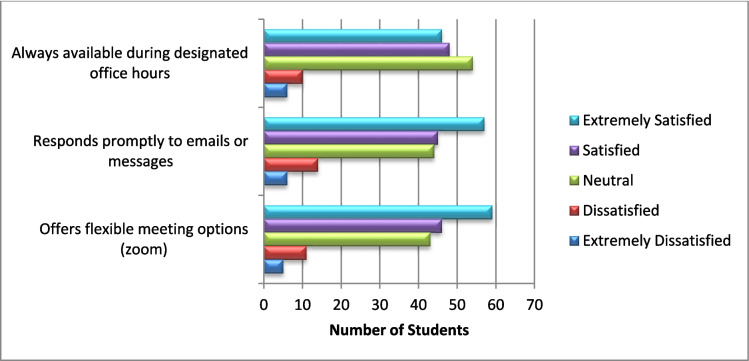
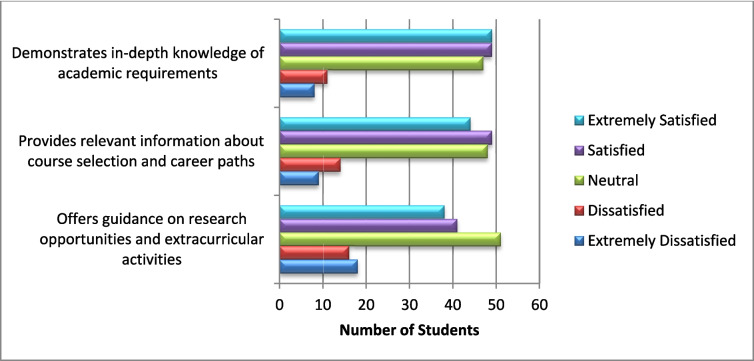
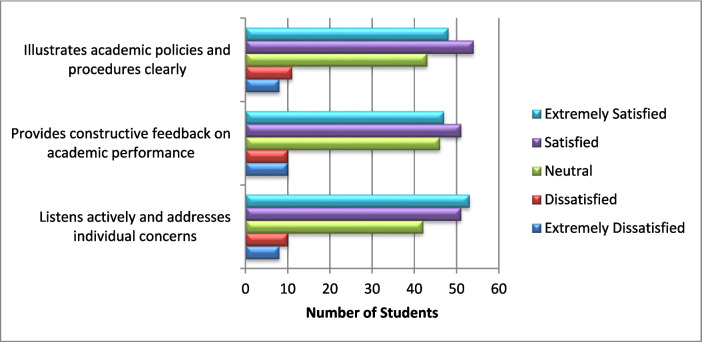
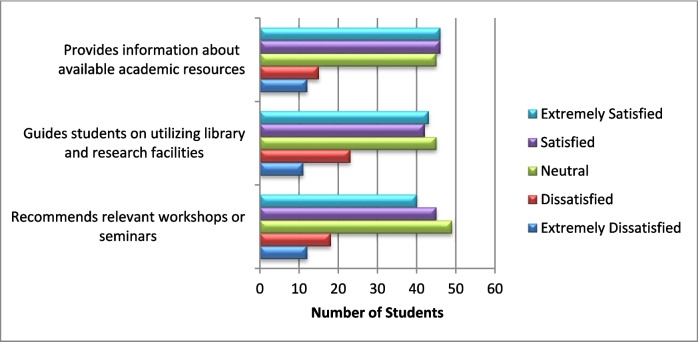
The current study investigated how students at King Saud University's College of Pharmacy perceive the effectiveness of the Academic Advising Unit and their experiences with academic advisors. Our study examined responses gathered from 164 participants, including 97 female and 67 male students, representing various academic years (2 to 6). The survey assessed several key aspects, including the availability of advisors, their knowledge and expertise, communication effectiveness, level of support and encouragement, ability to assist with goal setting, integration of feedback, accessibility of resources, and overall student satisfaction. The results of our study revealed that while the majority of students in the College of Pharmacy expressed satisfaction with and support for academic advising, a notable proportion of students exhibited ambivalence or dissatisfaction with the advising services. Regarding advisor availability, 57% of students expressed satisfaction, while 32% were indifferent, reflecting unmet needs. Similarly, in terms of communication, 62% were satisfied, but 28% were neutral, again suggesting an inconsistency in advisor responses. A similar trend was observed concerning advisor knowledge and expertise, with 58% satisfied and 31% neutral. Specifically, when questioned about guidance on research and extracurricular activities, only 48% expressed satisfaction. Overall, 61% felt that communication was beneficial in resolving their issues. Students were below-average in their satisfaction with the support provided during challenging times. Findings suggest that an average level of academic advising functioning and emphasized the need for more individualized and consistent academic advising to better meet student expectations.
当前的研究调查了沙特国王大学药学院的学生如何看待学术咨询部门的有效性以及他们与学术顾问的经历。我们的研究考察了从164名参与者收集的反馈,其中包括97名女生和67名男生,代表了不同的学年(2至6年级)。该调查评估了几个关键方面,包括顾问的可及性、他们的知识和专业技能、沟通效果、支持和鼓励的程度、协助设定目标的能力、反馈的整合、资源的可获取性以及学生的总体满意度。我们研究的结果显示,虽然药学院的大多数学生对学术咨询表示满意并给予支持,但仍有相当一部分学生对咨询服务表现出矛盾心理或不满。关于顾问的可及性,57%的学生表示满意,而32%的学生持中立态度,这反映出需求未得到满足。同样,在沟通方面,62%的学生满意,但28%的学生持中立态度,这再次表明顾问的回应存在不一致。在顾问的知识和专业技能方面也观察到类似的趋势,58%的学生满意,31%的学生持中立态度。具体而言,当被问及有关研究和课外活动的指导时,只有48%的学生表示满意。总体而言,61%的学生认为沟通有助于解决他们的问题。学生对在困难时期提供的支持的满意度低于平均水平。研究结果表明学术咨询的运作处于平均水平,并强调需要更个性化和一致的学术咨询,以更好地满足学生的期望。