Parreño Carlos Millán, Giles Dominic, Corletto Federico
Dick White Referrals, part of Linnaeus Veterinary Limited, Cambridgeshire, UK.
North Downs Specialist Referrals, part of Linnaeus Veterinary Limited, Surrey, UK.
Sci Rep. 2025 May 23;15(1):18009. doi: 10.1038/s41598-025-01991-3.
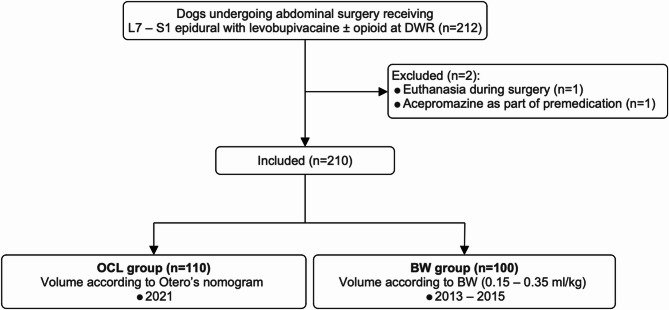
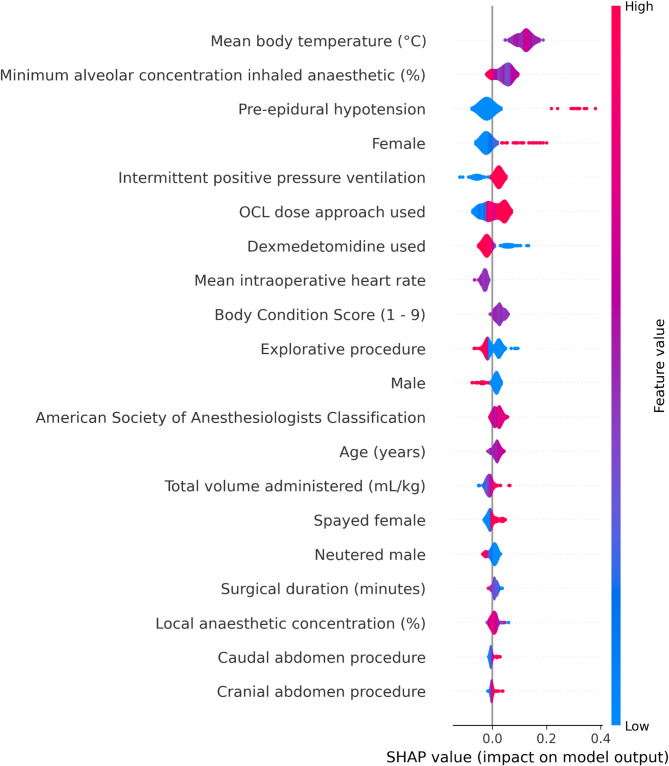
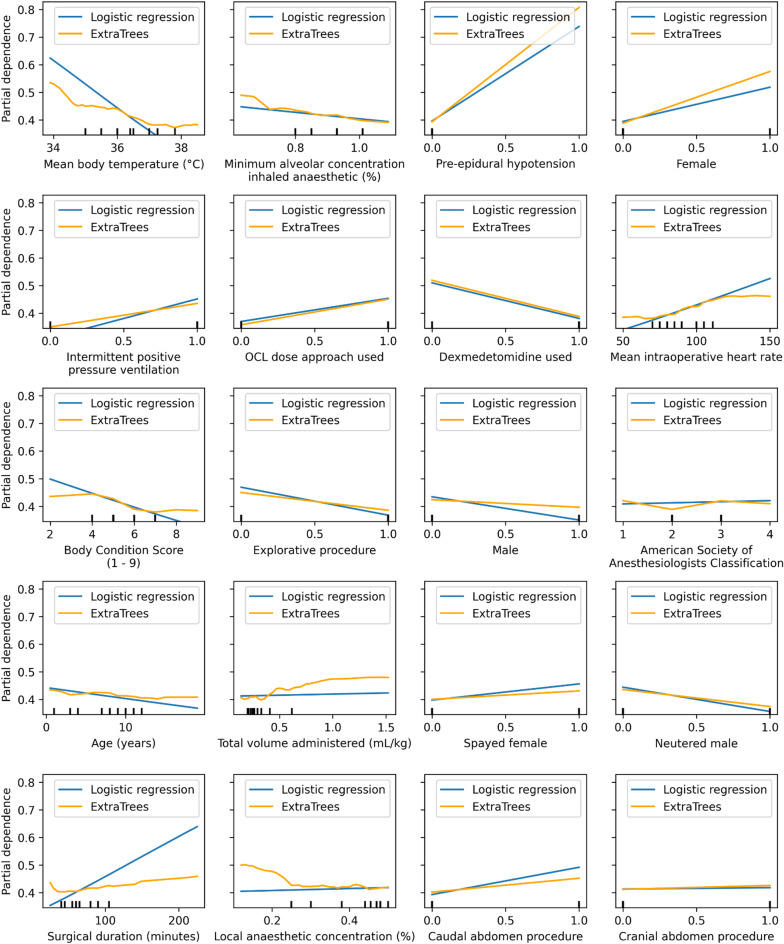
The incidence of hypotension after a lumbosacral epidural in dogs depends on the volume of local anaesthetic administered. So far, there are no reports comparing both methods used to calculate this volume-body weight (BW) and occipito-coccygeal length (OCL)-in veterinary medicine. In this study, we evaluated the effect of these two common dosing strategies on risk of intraoperative hypotension in dogs undergoing abdominal surgery. Data were collected retrospectively from 210 dogs in a veterinary specialist hospital, with 110 receiving OCL-based dosing and 100 receiving BW-based dosing. Comparing logistic regression and ExtraTrees machine learning models (both demonstrating strong predictive performance, with AUROC 0.78 and 0.79, respectively, and supported by external validation on an independent dataset), we identified additional factors associated with post-epidural hypotension, including body temperature, minimum alveolar concentration, sex, and premedication. Our findings revealed that post-epidural hypotension occurred more frequently in the OCL group compared to the BW group (49.1% vs. 33%, respectively, p = 0.025). Despite both dosing strategies being considered effective, the OCL method resulted in a greater incidence of post-epidural hypotension. Our findings highlight the importance of careful individualized risk-benefit analyses for epidural dosing strategy.
犬腰骶部硬膜外麻醉后低血压的发生率取决于局部麻醉药的给药量。迄今为止,在兽医学中,尚无比较两种计算该给药量方法(体重(BW)和枕尾长度(OCL))的报告。在本研究中,我们评估了这两种常用给药策略对接受腹部手术犬术中低血压风险的影响。数据来自一家兽医专科医院的210只犬,回顾性收集,其中110只接受基于OCL的给药,100只接受基于BW的给药。比较逻辑回归和ExtraTrees机器学习模型(两者均显示出强大的预测性能,AUROC分别为0.78和0.79,并得到独立数据集外部验证的支持),我们确定了与硬膜外麻醉后低血压相关的其他因素,包括体温、最低肺泡浓度、性别和术前用药。我们的研究结果显示,与BW组相比,OCL组硬膜外麻醉后低血压的发生率更高(分别为49.1%和33%,p = 0.025)。尽管两种给药策略都被认为是有效的,但OCL方法导致硬膜外麻醉后低血压的发生率更高。我们的研究结果强调了对硬膜外给药策略进行仔细的个体化风险效益分析的重要性。