Kayiranga Dieudonne, Gishoma Darius, Rwibasira Gallican, Remera Eric, Mukamana Donatilla, Relf Michael V, Pan Wei
School of Nursing and Midwifery, University of Rwanda, Remera Campus, 11 KG 47, Kigali, Rwanda.
Division of Mental Health, Rwanda Biomedical Center, Kigali, Rwanda.
BMC Public Health. 2025 May 23;25(1):1909. doi: 10.1186/s12889-025-23138-9.
HIV remains a major public health concern globally, and 85% of adolescents with HIV (AWH) live in Sub-Saharan Africa (SSA). Despite advances in treatment and prevention efforts, adolescents continue to be disproportionately affected by HIV and are a group with poor adherence to antiretroviral medication. We identified phenotypes of successful living among adolescents with HIV in Rwanda.
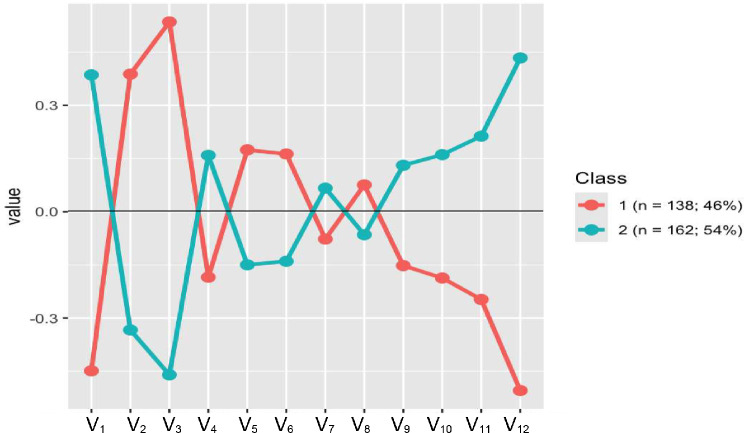
A multi-stage stratified random sampling was used to collect data from 300 AWH using a validated and piloted questionnaire from four provinces and Kigali City in Rwanda. Data were collected in August 2023 and were analyzed using latent profile analysis (LPA). The following variables were computed to measure their associations and determine the latent profiles (or phenotypes) of successful living: viral load, number of sex partners in a lifetime, condom use during sex, adherence to HIV antiretroviral therapy, HIV stigma, depressive symptoms, state of hope, self-esteem, resilience, disclosure, HIV quality of life, and perceived social support.
The two distinct profiles of successful living among adolescents with HIV were identified through LPA: 46% of adolescents struggled to live with HIV (the first profile) while 54% of adolescents lived successfully with HIV (the second profile). There are several factors associated with successful living among AWH. Successful living was positively associated with spirituality, residing with family members, a stable home environment, psychological well-being, social support, and acquiring HIV through vertical transmission. The adherence to ART, HIV-related stigma, levels of depression, hope, self-esteem, resilience, availability of social support, and patterns of disclosure of HIV status are determinants of adolescents' experiences of living with HIV. Additionally, adolescents tend to struggle to live with HIV in late adolescence, especially when the factors associated with successful living are not met.
This study identified two profiles of Successful Living among AWH. Our results suggest developing profile-oriented, tailored interventions to improve the quality of life and health outcomes of AWH.
艾滋病病毒(HIV)仍然是全球主要的公共卫生问题,85%的感染HIV的青少年(AWH)生活在撒哈拉以南非洲(SSA)。尽管在治疗和预防方面取得了进展,但青少年仍然受到HIV的影响尤为严重,并且是对抗逆转录病毒药物依从性较差的群体。我们在卢旺达确定了感染HIV的青少年成功生活的表型。
采用多阶段分层随机抽样方法,使用经过验证和预试验的问卷,从卢旺达四个省和基加利市的300名AWH中收集数据。数据于2023年8月收集,并使用潜在类别分析(LPA)进行分析。计算以下变量以衡量它们之间的关联并确定成功生活的潜在类别(或表型):病毒载量、一生中性伴侣的数量、性行为期间使用避孕套的情况、对HIV抗逆转录病毒治疗的依从性、HIV污名化、抑郁症状、希望状态、自尊、恢复力、披露情况、HIV生活质量以及感知到的社会支持。
通过LPA确定了感染HIV的青少年成功生活的两种不同类别:46%的青少年在与HIV共存方面挣扎(第一类别),而54%的青少年成功地与HIV共存(第二类别)。有几个因素与AWH的成功生活相关。成功生活与精神性、与家庭成员同住、稳定的家庭环境、心理健康、社会支持以及通过垂直传播感染HIV呈正相关。对抗逆转录病毒治疗的依从性、与HIV相关的污名化、抑郁水平、希望、自尊、恢复力、社会支持的可获得性以及HIV感染状况的披露模式是青少年HIV生活经历的决定因素。此外,青少年在青春期后期往往在与HIV共存方面挣扎,尤其是当与成功生活相关的因素未得到满足时。
本研究确定了AWH成功生活的两种类别。我们的结果表明,应制定以类别为导向的、量身定制的干预措施,以改善AWH的生活质量和健康结果。