Qi Liqin, Kang Huimin, Zeng Feihui, Zhan Menglan, Huang Cuihua, Huang Qintao, Lin Lijing, He Guanlian, Liu Xiaoying, Liu Xiaohong, Liu Libin
Department of Endocrinology, Fujian Institute of Endocrinology, Fujian Medical University Union Hospital, Fuzhou, Fujian, People's Republic of China.
Department of Pediatrics, Fujian Medical University Union Hospital, Fuzhou, Fujian, People's Republic of China.
Neurotherapeutics. 2025 Sep;22(5):e00615. doi: 10.1016/j.neurot.2025.e00615. Epub 2025 May 23.
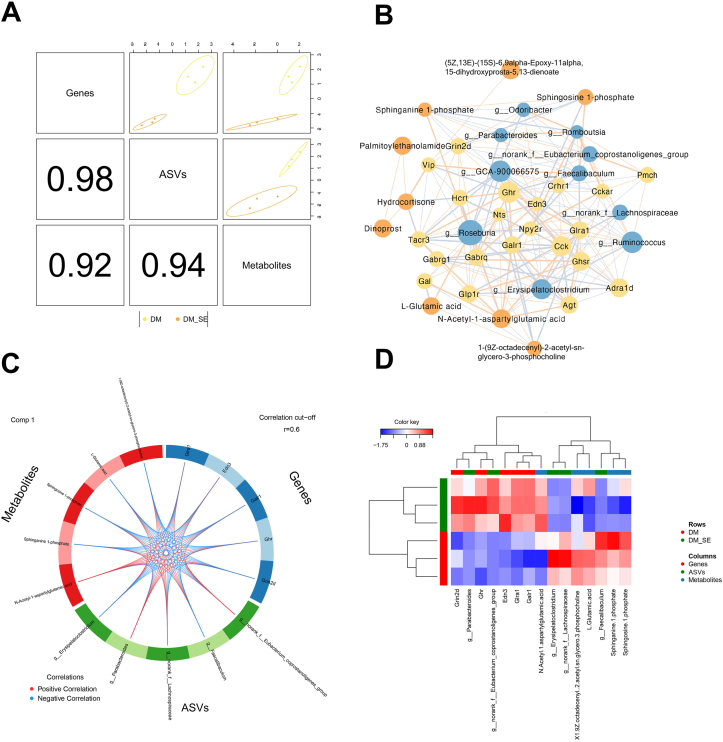
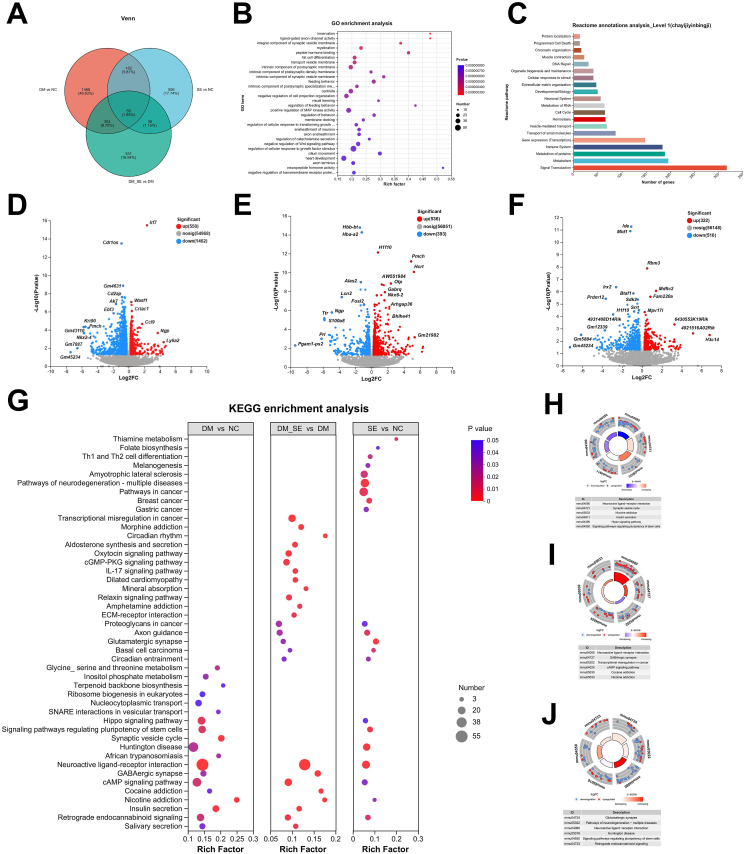
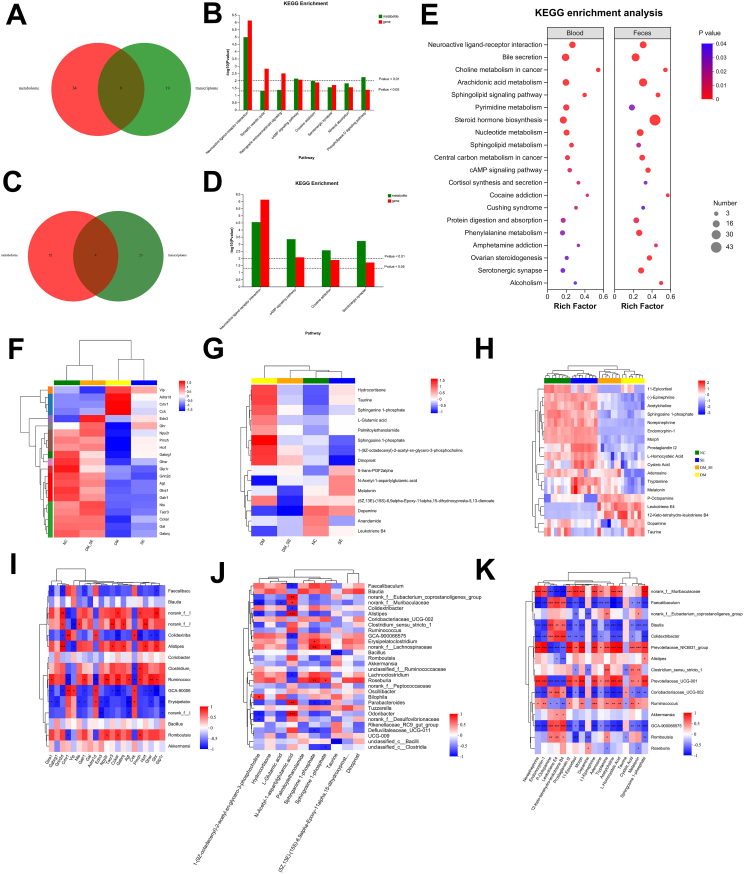
Diabetes-associated cognitive decline (DACD), characterized by cognitive impairment, is a serious complication of diabetes mellitus (DM). Research has shown that semaglutide, a novel glucagon-like peptide-1 receptor agonist, has neurotrophic and neuroprotective properties. However, a comprehensive understanding of the specific effects and underlying mechanisms of semaglutide treatment in patients with DACD remains lacking. In this study, we evaluated the potential of semaglutide to alleviate DACD in mice with DM. Eight-week-old mice fed a high-fat diet with streptozotocin-induced DM were subcutaneously injected with semaglutide (30 nmol/kg qd) for 12 weeks. Semaglutide administration significantly alleviated cognitive impairment, inhibited hippocampal neuron loss, improved the hippocampal synaptic ultrastructure, and effectively mitigated neuroinflammation. Furthermore, semaglutide treatment increased the relative abundances of g_Alistipes, g_norank_f_Eubacterium_coprostanoligenes, g_Bacteroides, and g_Parabacteroides, while decreasing the relative abundances of g_ faecalibaculum, g_Colodertribacter, g_GCA-900066575, g_Erysipelatoclostridium, and g_norank_f_Lachnospiraceae. Semaglutide also induced alterations in fecal and serum metabolites, as well as transcriptomic changes in brain tissue, with significant common enrichment in neuroactive ligand-receptor interactions. Furthermore, strong correlations were observed among semaglutide-affected genes, metabolites, and microbiota, as assessed by correlation analysis and integrative modeling. In conclusion, these findings suggest a correlation between the protective effects of semaglutide against DACD and the microbiota-gut-brain axis.
糖尿病相关认知功能下降(DACD)以认知障碍为特征,是糖尿病(DM)的一种严重并发症。研究表明,新型胰高血糖素样肽-1受体激动剂司美格鲁肽具有神经营养和神经保护特性。然而,对于司美格鲁肽治疗DACD患者的具体效果和潜在机制仍缺乏全面了解。在本研究中,我们评估了司美格鲁肽减轻糖尿病小鼠DACD的潜力。给8周龄高脂饮食并用链脲佐菌素诱导糖尿病的小鼠皮下注射司美格鲁肽(30 nmol/kg,每日一次),持续12周。给予司美格鲁肽可显著减轻认知障碍,抑制海马神经元丢失,改善海马突触超微结构,并有效减轻神经炎症。此外,司美格鲁肽治疗增加了g_Alistipes、g_norank_f_Eubacterium_coprostanoligenes、g_拟杆菌属和g_副拟杆菌属的相对丰度,同时降低了g_粪便杆菌属、g_科洛德氏杆菌属、g_GCA-900066575、g_丹毒丝菌属和g_norank_f_毛螺菌科的相对丰度。司美格鲁肽还引起粪便和血清代谢物的改变以及脑组织的转录组变化,在神经活性配体-受体相互作用中存在显著的共同富集。此外,通过相关性分析和综合建模评估发现,司美格鲁肽影响的基因、代谢物和微生物群之间存在强相关性。总之,这些发现表明司美格鲁肽对DACD的保护作用与微生物群-肠-脑轴之间存在关联。