Chamberlain Heather R, Pollard Derek, Winters Anna, Renn Silvia, Borkovska Olena, Musuka Chisenga Abel, Membele Garikai, Lazar Attila N, Tatem Andrew J
WorldPop, School of Geography and Environmental Science, University of Southampton, University Road, Southampton, SO17 1BJ, UK.
Akros Research, 45 A Roan Road, Kabulonga, Lusaka, Zambia.
Int J Health Geogr. 2025 May 24;24(1):13. doi: 10.1186/s12942-025-00398-7.
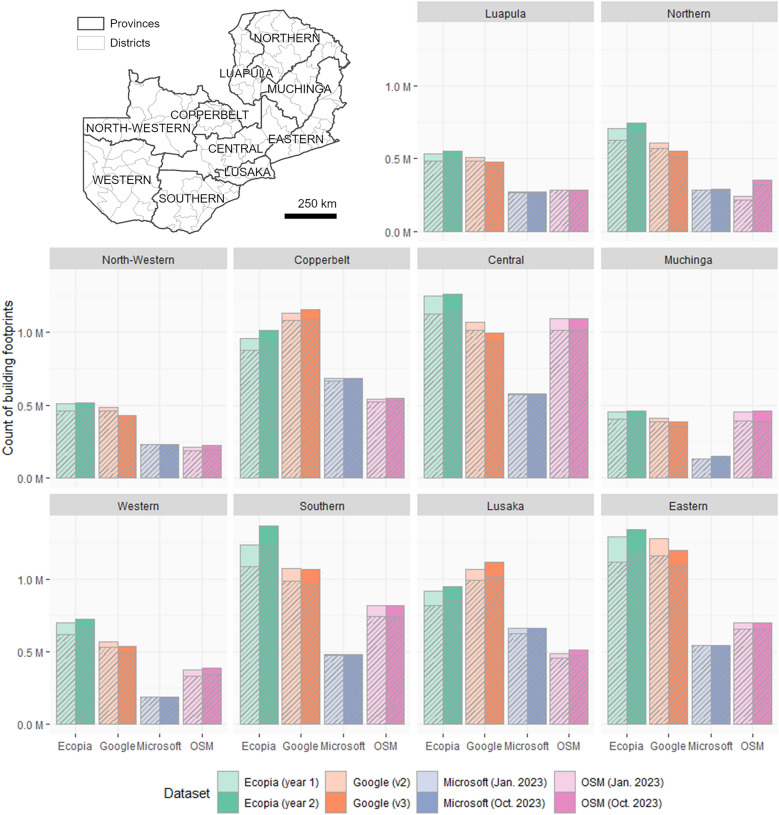
The increasing availability globally of building footprint datasets has brought new opportunities to support a geographic approach to health programme planning. This is particularly acute in settings with high disease burdens but limited geospatial data available to support targeted planning. The comparability of building footprint datasets has recently started to be explored, but the impact of utilising a particular dataset in analyses to support decision making for health programme planning has not been studied. In this study, we quantify the impact of utilising four different building footprint datasets in analyses to support health programme planning, with an example of malaria vector control initiatives in Zambia.
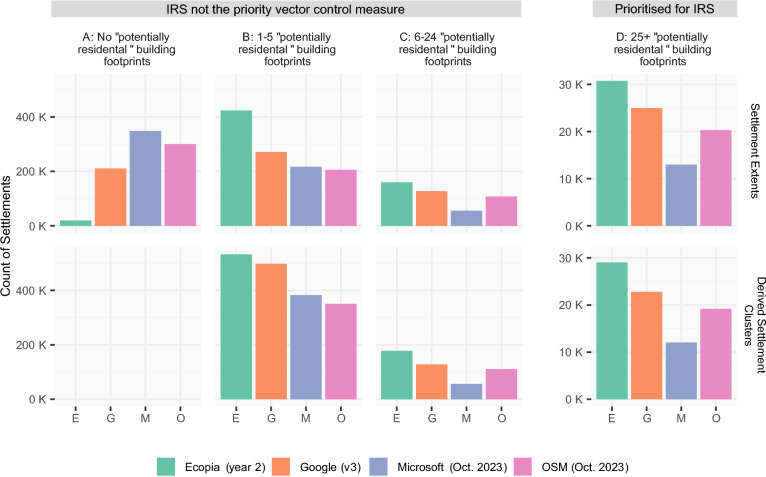
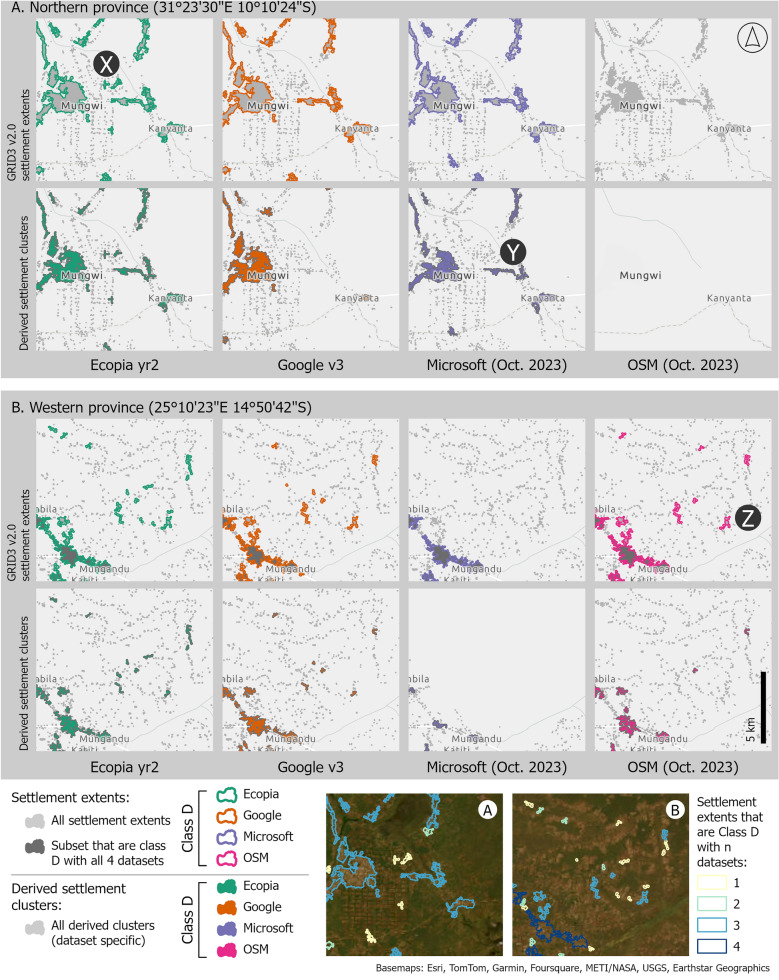
Using the example of planning indoor residual spraying (IRS) campaigns in Zambia, we identify priority locations for deployment of this intervention based on criteria related to the area, proximity and counts of building footprints per settlement. We apply the same criteria to four different building footprint datasets and quantify the count and geographic variability in the priority settlements that are identified.
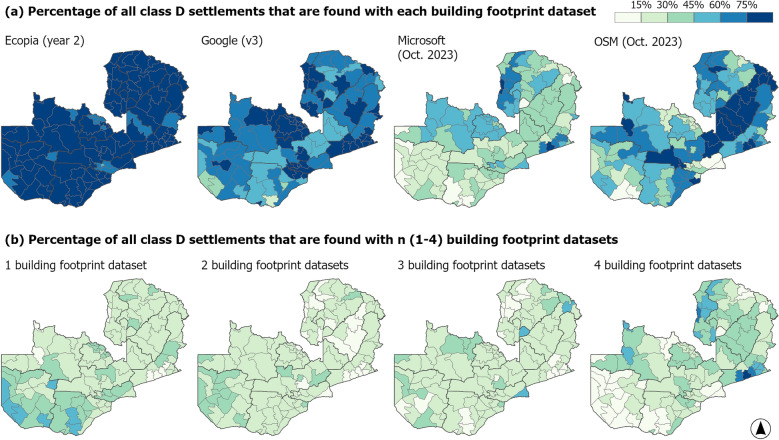
We show that nationally the count of potential priority settlements for IRS varies by over 230% with different building footprint datasets, considering a minimum threshold of 25 sprayable buildings per settlement. Differences are most pronounced for rural settlements, indicating that the choice of dataset may bias the selection to include or exclude settlements, and consequently population groups, in some areas.
The results of this study show that the choice of building footprint dataset can have a considerable impact on the potential settlements identified for IRS, in terms of (i) their location and count, and (ii) the count of building footprints within priority settlements. The choice of dataset potentially has substantial implications for campaign planning, implementation and coverage assessment. Given the magnitude of the differences observed, further work should more broadly assess the sensitivity of health programme planning metrics to different building footprint datasets, and across a range of geographic contexts and health campaign types.
全球范围内建筑占地面积数据集的可用性不断提高,为支持以地理方法进行卫生项目规划带来了新机遇。在疾病负担高但可用于支持针对性规划的地理空间数据有限的环境中,这一情况尤为突出。建筑占地面积数据集的可比性最近已开始得到探索,但尚未研究在分析中使用特定数据集以支持卫生项目规划决策的影响。在本研究中,我们以赞比亚的疟疾媒介控制举措为例,量化了在分析中使用四种不同建筑占地面积数据集以支持卫生项目规划的影响。
以赞比亚规划室内滞留喷洒(IRS)活动为例,我们根据与每个定居点的面积、距离和建筑占地面积数量相关的标准,确定该干预措施的优先部署地点。我们将相同的标准应用于四个不同的建筑占地面积数据集,并量化所确定的优先定居点中的数量和地理变异性。
我们表明,在全国范围内,考虑到每个定居点至少25座可喷洒建筑的阈值,不同建筑占地面积数据集下IRS潜在优先定居点的数量相差超过230%。农村定居点的差异最为明显,这表明数据集的选择可能会使某些地区定居点(以及相应人群)的纳入或排除选择产生偏差。
本研究结果表明,建筑占地面积数据集的选择可能会对为IRS确定的潜在定居点产生重大影响,具体体现在:(i)其位置和数量;(ii)优先定居点内的建筑占地面积数量。数据集的选择可能对活动规划、实施和覆盖评估具有重大影响。鉴于观察到的差异程度,应进一步开展工作,更广泛地评估卫生项目规划指标对不同建筑占地面积数据集的敏感性,并涵盖一系列地理背景和卫生活动类型。