Hassan Suad M, Montaser Ayat G, Sharkawy Zinab R El, Gad Nevin A, Alrafee Shaimaa A, Gabal Zahraa A
Crowns and Bridges, Faculty of Dental Medicine for Girls, Al-Azhar University, Cairo, Egypt.
Operative Dentistry, Faculty of Dental Medicine for Girls, Al-Azhar University, Cairo, Egypt.
BMC Oral Health. 2025 May 25;25(1):793. doi: 10.1186/s12903-025-05889-4.
To assess marginal fit and fracture resistance of CAD/CAM glass ceramic occlusal veneers with different preparation designs.
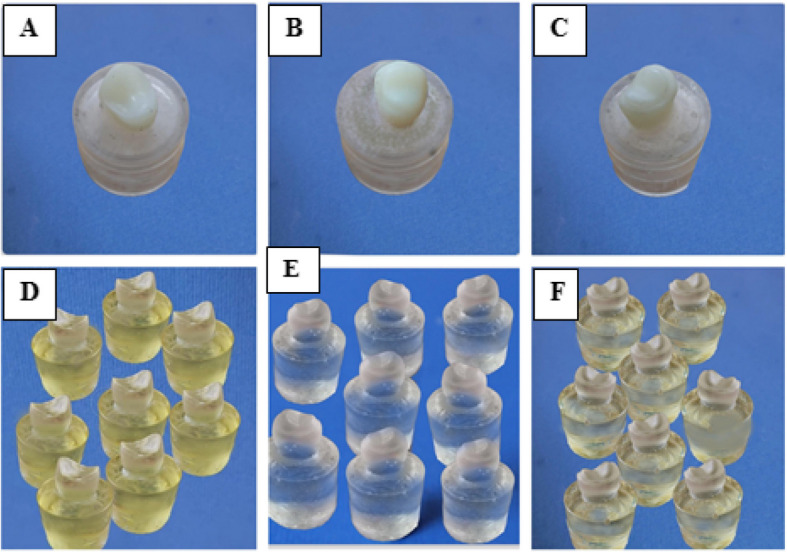
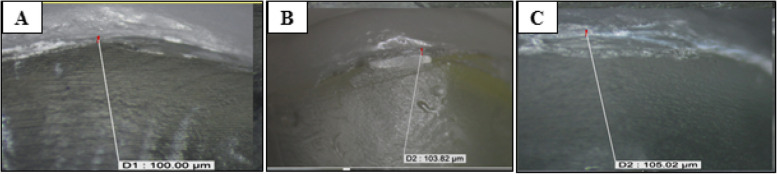
First premolar typodont maxillary was chosen. Standard IPS E.max CAD occlusal veneer preparations were carried out using Exocad software using three distinct designs: the first design involved a minimally invasive preparation (butt joint"BJ"group); the second design involved an occlusal veneer preparation with a circumferential hollow chamfer finish line"HC"group; and the third design involved a deep chamfer finish line"DC"group. To create a total of 24 epoxy resin replicas, each prepared design was reproduced eight times ("n = 8"for each prepared design). Every sample was made using IPS E.max CAD ceramics. Every occlusal veneer was firmly attached to the matching epoxy resin using adhesive resin cement. A computerized stereomicroscope was used to measure the vertical marginal gap. Ultimately, the fracture resistance was measured using a universal testing apparatus.
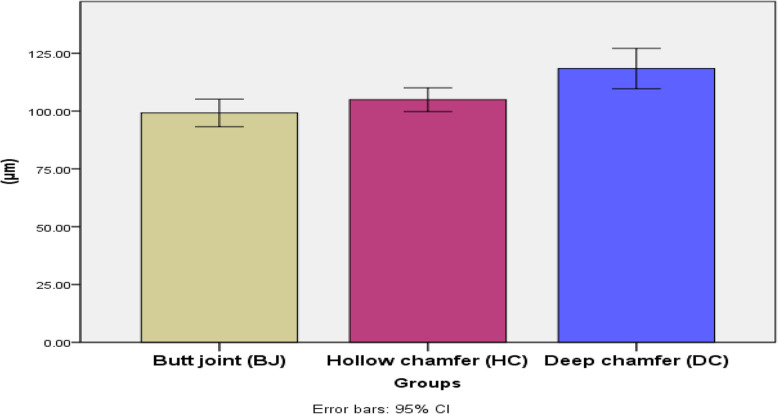
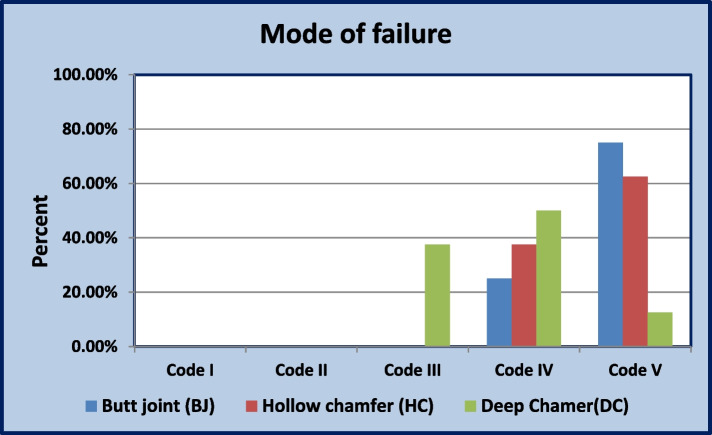
Deep chamfer occlusal veneer design, group"DC", registered statistically significant the highest mean value of vertical marginal gap (118.38 ± 10.43 μm) as well as the lowest mean value of failure load (549.97 ± 56.66 N). While butt joint occlusal veneer design"BJ"registered a statistically significant lowest mean value of vertical marginal gap (99.2 ± 7.15 μm) as well as the highest mean value of failure load (1107.25 ± 93.09 N).
Although different preparation designs of IPS E.max CAD occlusal veneer restorations would significantly affect the marginal fit and fracture resistance, all groups were within the clinically accepted range.
评估不同预备设计的CAD/CAM玻璃陶瓷咬合面贴面的边缘适合性和抗折性。
选取上颌第一前磨牙模型。使用Exocad软件进行标准的IPS E.max CAD咬合面贴面预备,采用三种不同设计:第一种设计为微创预备(对接接头“BJ”组);第二种设计为带有圆周空心倒角终印线的咬合面贴面预备(“HC”组);第三种设计为深倒角终印线(“DC”组)。为制作总共24个环氧树脂复制品,每种预备设计复制8次(每种预备设计“n = 8”)。每个样本均使用IPS E.max CAD陶瓷制作。每个咬合面贴面均使用粘结树脂水门汀牢固地粘结到匹配的环氧树脂上。使用计算机化体视显微镜测量垂直边缘间隙。最终,使用万能试验机测量抗折性。
深倒角咬合面贴面设计组“DC”,垂直边缘间隙的平均最高值(118.38±10.43μm)具有统计学意义,同时破坏载荷的平均最低值(549.97±56.66 N)也具有统计学意义。而对接接头咬合面贴面设计“BJ”的垂直边缘间隙平均最低值(99.2±7.15μm)具有统计学意义,破坏载荷的平均最高值(1107.25±93.09 N)也具有统计学意义。
尽管IPS E.max CAD咬合面贴面修复体的不同预备设计会显著影响边缘适合性和抗折性,但所有组均在临床可接受范围内。