Kong Runzhou, Cao Lei, Li Dongyu
Guangzhou Sport University, Guangzhou, China.
Central South University, School of Humanities, Changsha, China.
PeerJ. 2025 May 20;13:e19416. doi: 10.7717/peerj.19416. eCollection 2025.
This systematic review and meta-analysis aimed to compare the effects of repeated sprint training with one change of direction (RS-OCOD) and multidirectional changes of direction (RS-MCOD) on players' jumping, sprinting, and change-of-direction (COD) ability.
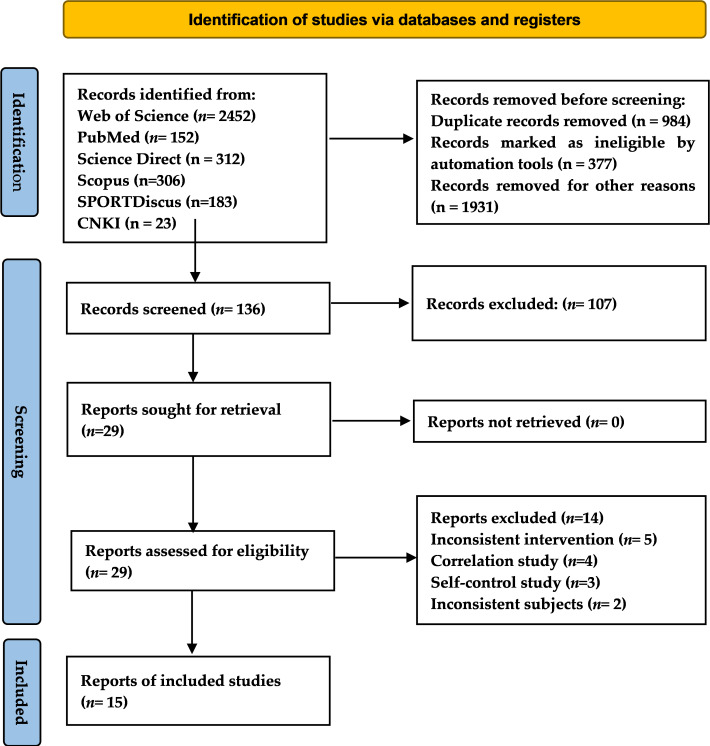
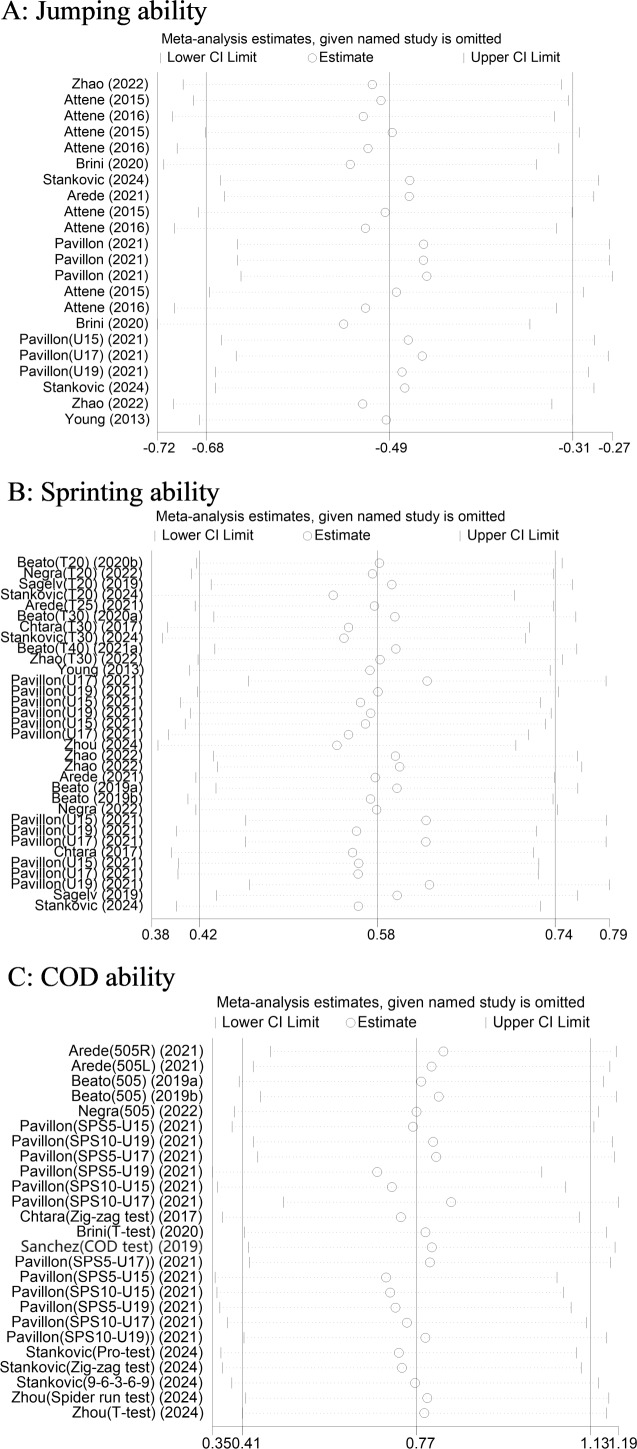
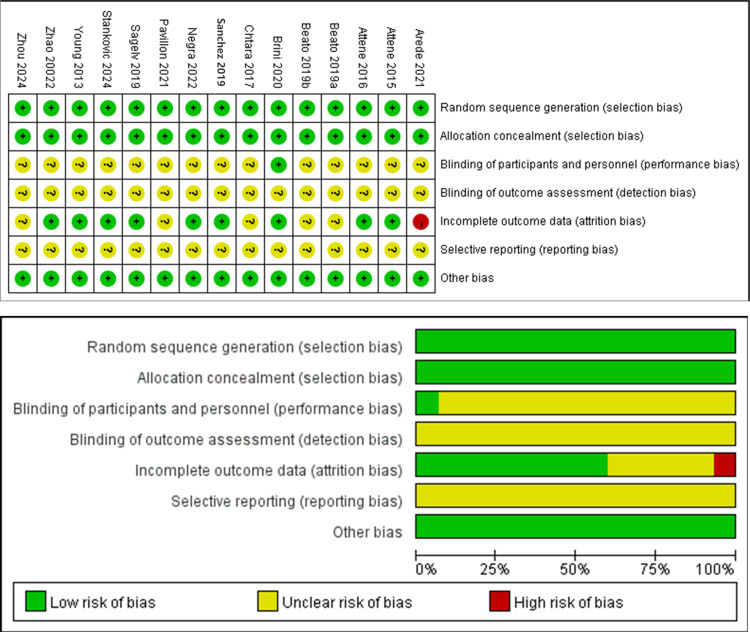
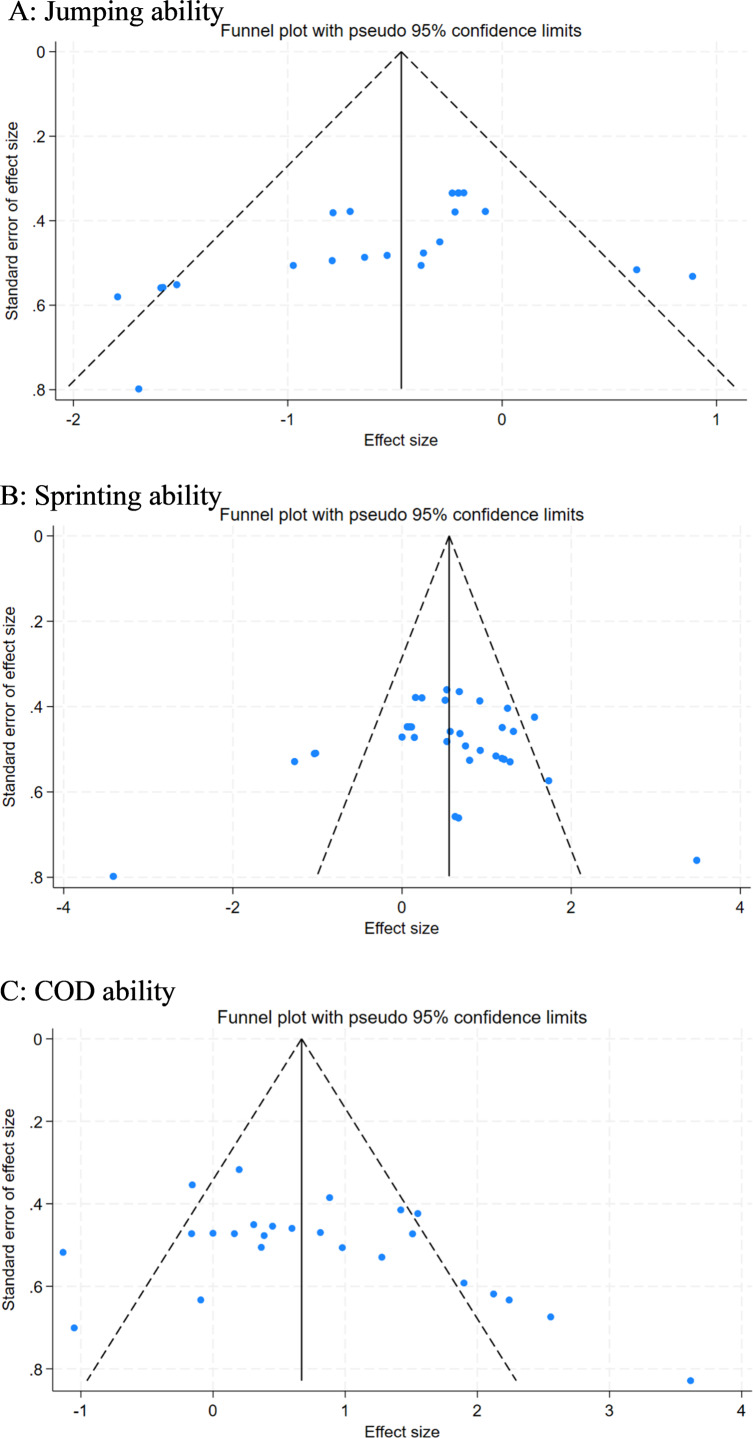
Following PRISMA guidelines, 15 randomized controlled trials involving 223 players were analyzed. Standardized mean differences (SMD) and 95% confidence intervals (CI) were calculated using fixed- or random-effects models. Heterogeneity ( statistic), publication bias (funnel plots and Egger's test), and sensitivity analyses were conducted. Subgroup analyses differentiated RS-OCOD and RS-MCOD outcomes.
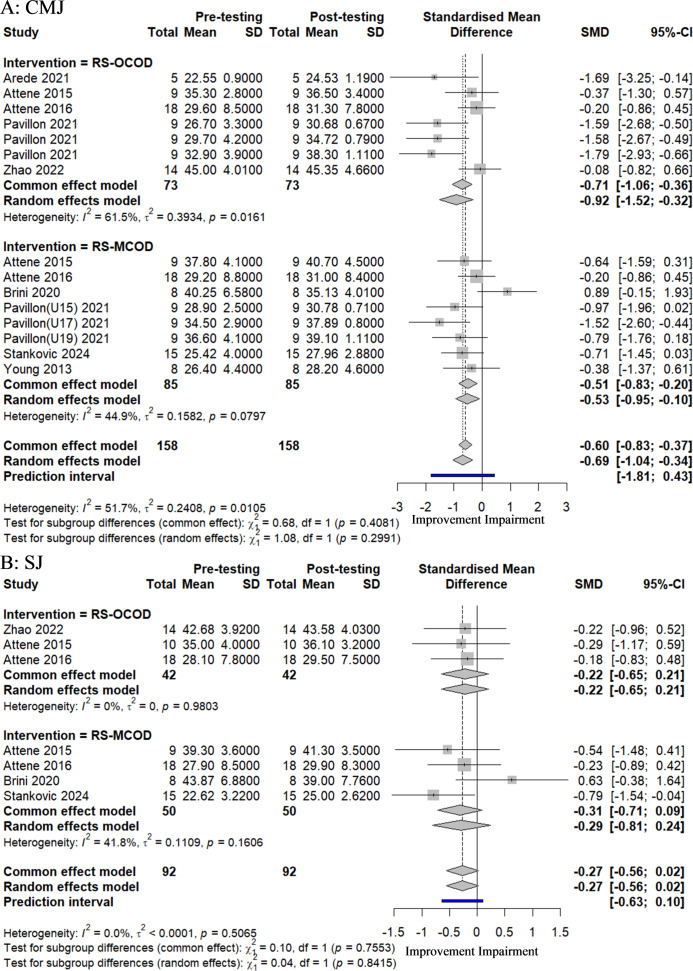
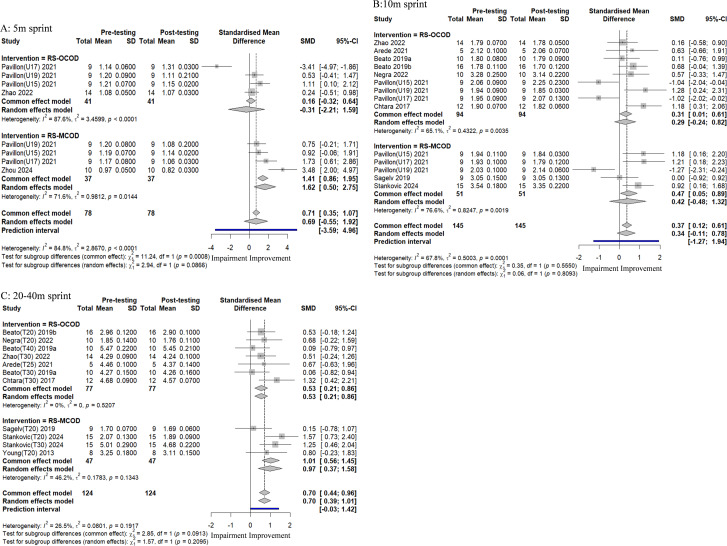
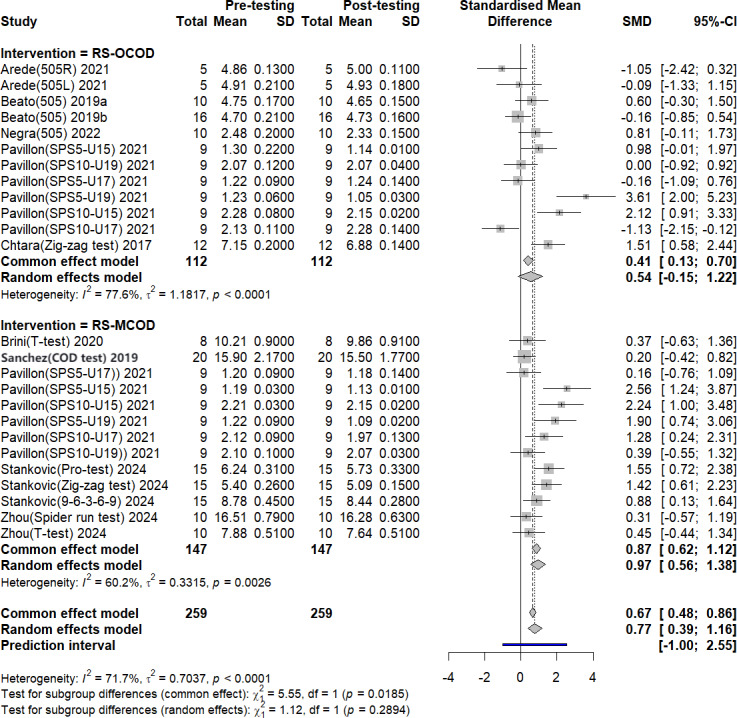
RS-COD training significantly improved countermovement jump (CMJ) (SMD = -0.68, 95% CI [-1.04 to -0.34]), 20-40 m sprinting ability (SMD = 0.70 [0.39, 1.01]), and COD ability (SMD = 0.77 [0.39, 1.16]). RS-MCOD demonstrated superior effects on 20-40 m sprinting ability (large effect: SMD = 0.97) and COD ability (large effect: SMD = 0.97), while RS-OCOD showed greater benefits for CMJ (large effect: SMD = -0.92). High heterogeneity ( > 70%) was observed in 5 m/10 m sprint analyses, attributed to methodological diversity and age variability. Prediction intervals indicated potential overestimation of RS-MCOD effects.
RS-OCOD can significantly enhance a player's CMJ ability, while RS-MCOD can notably improve sprinting and COD abilities. These findings advocate for the incorporation of RS-COD into training programs to boost competitive performance. However, the effectiveness of RS-COD may vary based on the number and complexity of directional changes incorporated into the training regimen. Among them, RS-MCOD is prioritized for sports requiring frequent directional changes, whereas RS-OCOD enhances vertical jump performance in explosive sports.
本系统评价和荟萃分析旨在比较单次变向重复冲刺训练(RS - OCOD)和多向变向重复冲刺训练(RS - MCOD)对运动员跳跃、冲刺和变向(COD)能力的影响。
遵循PRISMA指南,对15项涉及223名运动员的随机对照试验进行分析。使用固定效应或随机效应模型计算标准化平均差(SMD)和95%置信区间(CI)。进行异质性(统计量)、发表偏倚(漏斗图和Egger检验)及敏感性分析。亚组分析区分RS - OCOD和RS - MCOD的结果。
RS - COD训练显著提高了反向纵跳(CMJ)(SMD = -0.68,95% CI [-1.04至-0.34])、20 - 40米冲刺能力(SMD = 0.70 [0.39, 1.01])和COD能力(SMD = 0.77 [0.39, 1.16])。RS - MCOD对20 - 40米冲刺能力(大效应:SMD = 0.97)和COD能力(大效应:SMD = 0.97)显示出更优效果,而RS - OCOD对CMJ显示出更大益处(大效应:SMD = -0.92)。在5米/10米冲刺分析中观察到高异质性(>70%),这归因于方法学多样性和年龄变异性。预测区间表明RS - MCOD效果可能被高估。
RS - OCOD可显著增强运动员的CMJ能力,而RS - MCOD可显著提高冲刺和COD能力。这些发现主张将RS - COD纳入训练计划以提升竞技表现。然而,RS - COD的有效性可能因训练方案中纳入的变向次数和复杂性而异。其中,对于需要频繁变向的运动,优先选择RS - MCOD,而RS - OCOD可增强爆发性运动中的垂直跳跃表现。