Sanlier Nevin, Baltacı Serra
Department of Nutrition and Dietetics, School of Health Sciences, Ankara Medipol University, 06050, Altındag, Ankara, Turkey.
Curr Obes Rep. 2025 May 26;14(1):49. doi: 10.1007/s13679-025-00642-y.
Lipedema is an abnormal accumulation of adipose tissue, predominantly observed in women, characterised by symmetrical fat deposition and tactile sensitivity in the extremities, affecting both sides of the body. This condition can lead to significant pain, impairing daily activities and causing substantial discomfort.
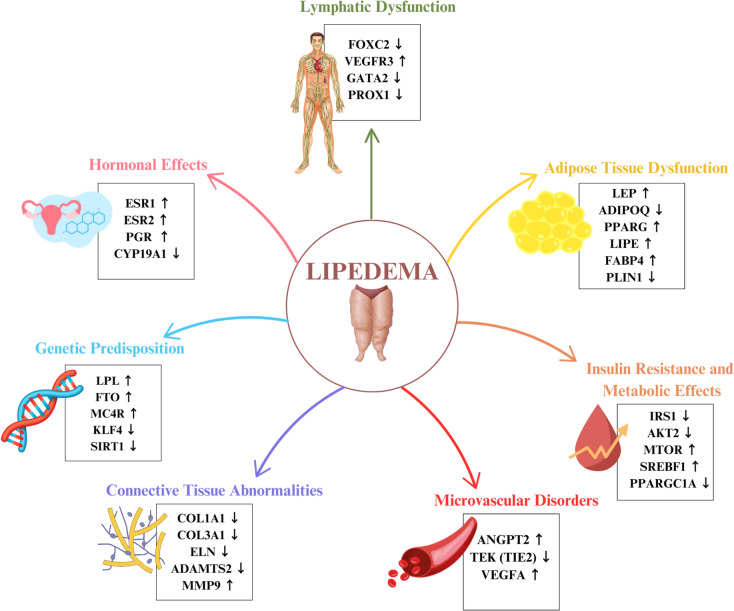
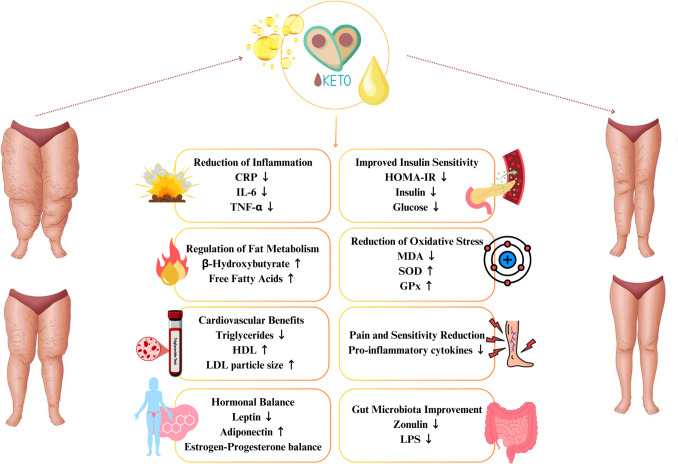
While the etiology of the disease is not yet fully understood, genetic predisposition, hormonal fluctuations, a stressful lifestyle, as well as traumatic events are considered potential triggers. Lipedema remains a condition with low diagnostic awareness as well as is frequently misdiagnosed as obesity or lymphedema. While obesity is a risk factor for lipedema, the abnormal fat deposition characteristic of the disease can occur across a wide spectrum of body weights, from underweight to overweight individuals. Specific patterns of adipose tissue distribution may be associated with signs of inflammation as well as heightened pain perception, as well as individuals with eating disorders, such as anorexia, may additionally be affected. Ketogenic diets have emerged as a promising therapeutic option for lipedema. Characterized by low carbohydrate as well as high fat content, ketogenic diets facilitate metabolic improvements by reducing insulin resistance as well as supporting weight loss. Furthermore, they may mitigate tissue damage associated with lipedema by decreasing inflammation as well as oxidative stress levels.Nevertheless, current scientific data regarding the mechanisms of action as well as therapeutic efficacy of ketogenic diets are limited, necessitating further research to expand their clinical application.
脂肪性水肿是一种脂肪组织异常蓄积的疾病,主要见于女性,其特征为对称性脂肪沉积以及四肢触觉敏感,累及身体双侧。这种情况可导致严重疼痛,影响日常活动并引起极大不适。
虽然该疾病的病因尚未完全明确,但遗传易感性、激素波动、压力大的生活方式以及创伤性事件被认为是潜在诱因。脂肪性水肿仍然是一种诊断意识较低且经常被误诊为肥胖或淋巴水肿的疾病。虽然肥胖是脂肪性水肿的一个危险因素,但该疾病特有的异常脂肪沉积可发生在从体重过轻到超重的广泛体重范围内。脂肪组织分布的特定模式可能与炎症迹象以及疼痛感知增强有关,此外,患有饮食失调症(如厌食症)的个体可能也会受到影响。生酮饮食已成为一种有前景的脂肪性水肿治疗选择。生酮饮食以低碳水化合物和高脂肪含量为特征,通过降低胰岛素抵抗以及支持体重减轻来促进代谢改善。此外,它们可能通过降低炎症和氧化应激水平来减轻与脂肪性水肿相关的组织损伤。然而,目前关于生酮饮食作用机制和治疗效果的科学数据有限,需要进一步研究以扩大其临床应用。