Chen Na, Gong Leilei, Zhang Li, Li Yali, Bai Yunya, Gao Dan, Zhang Lan
Department of Pharmacy, Xuanwu Hospital Capital Medical University, Beijing 100053, China.
Beijing Obstetrics and Gynecology Hospital, Capital Medical University, Beijing 100026, China.
Biomedicines. 2025 Apr 23;13(5):1022. doi: 10.3390/biomedicines13051022.
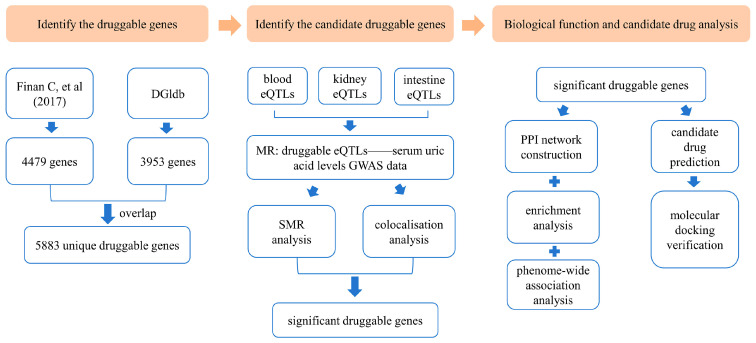
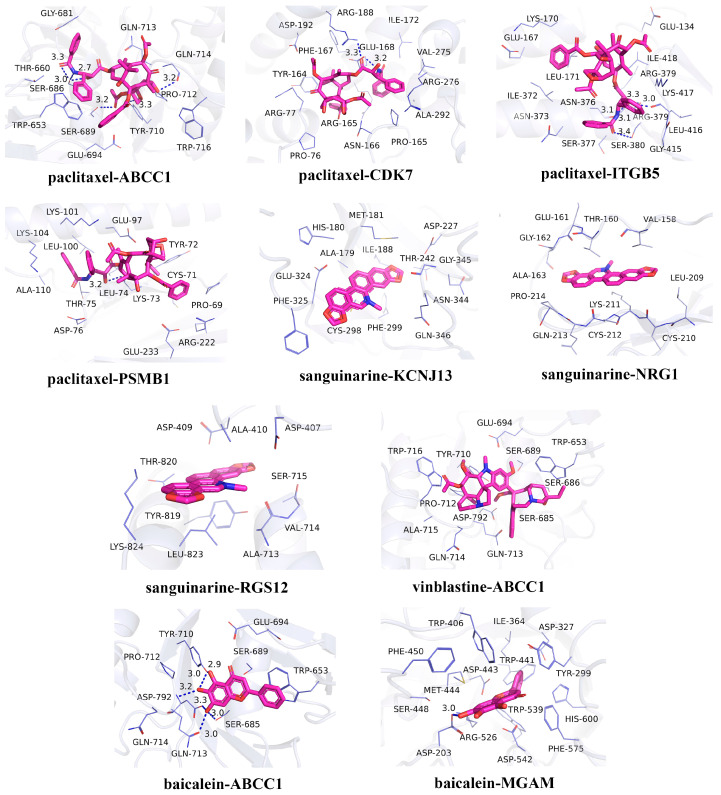
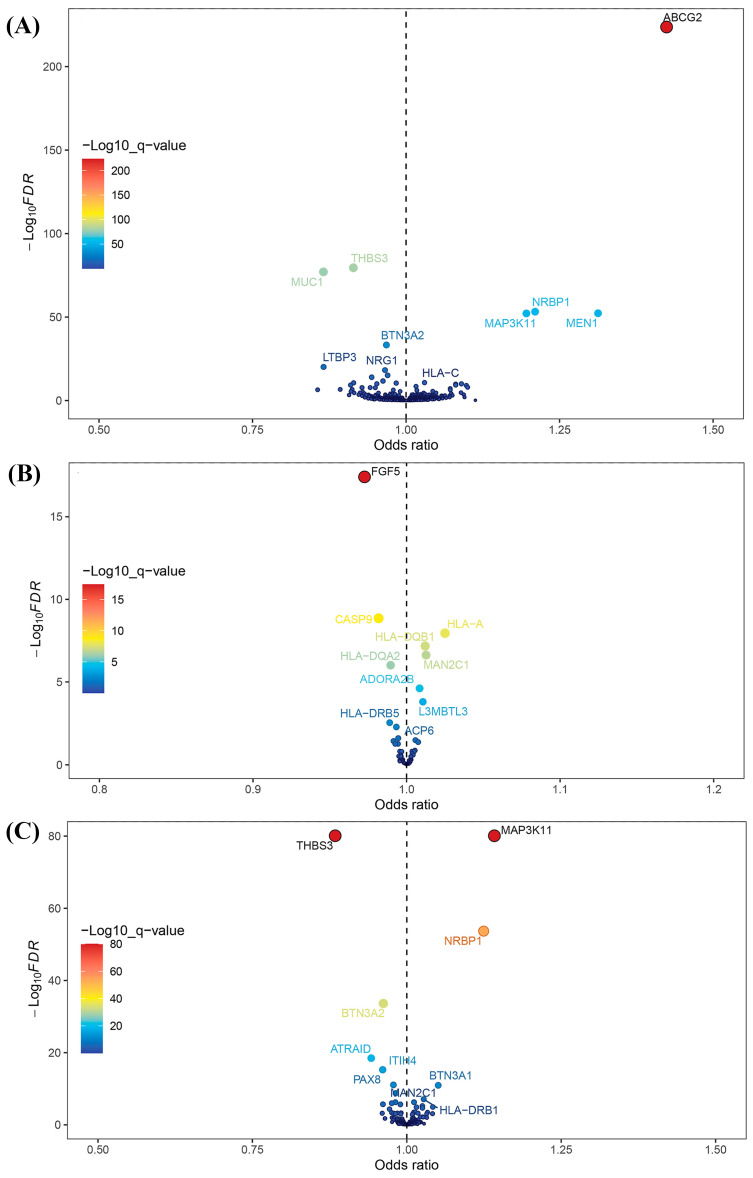
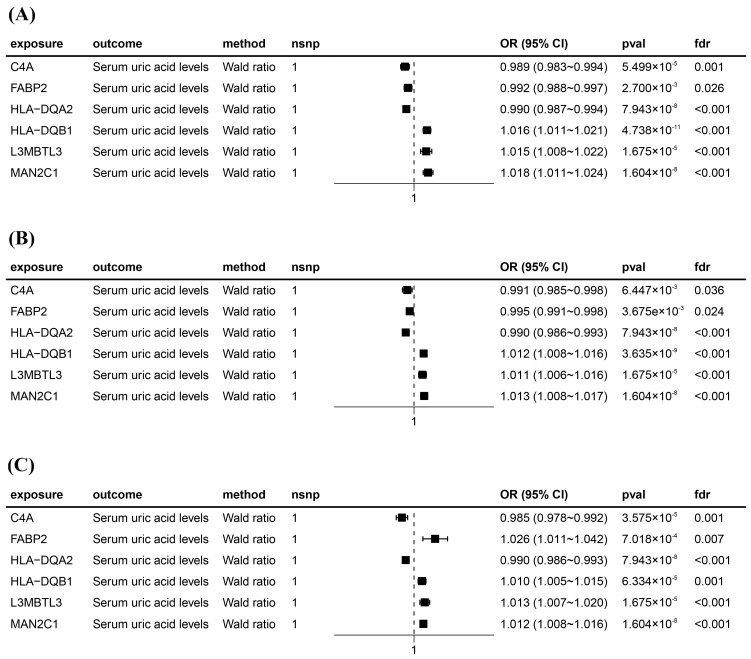
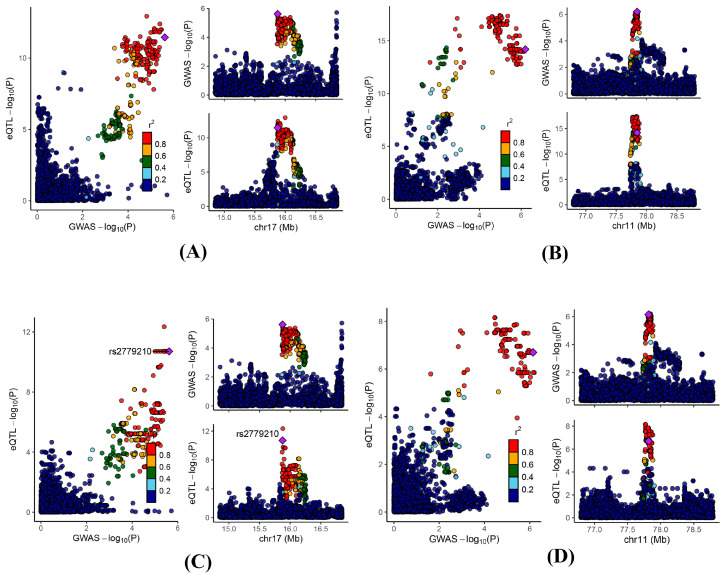
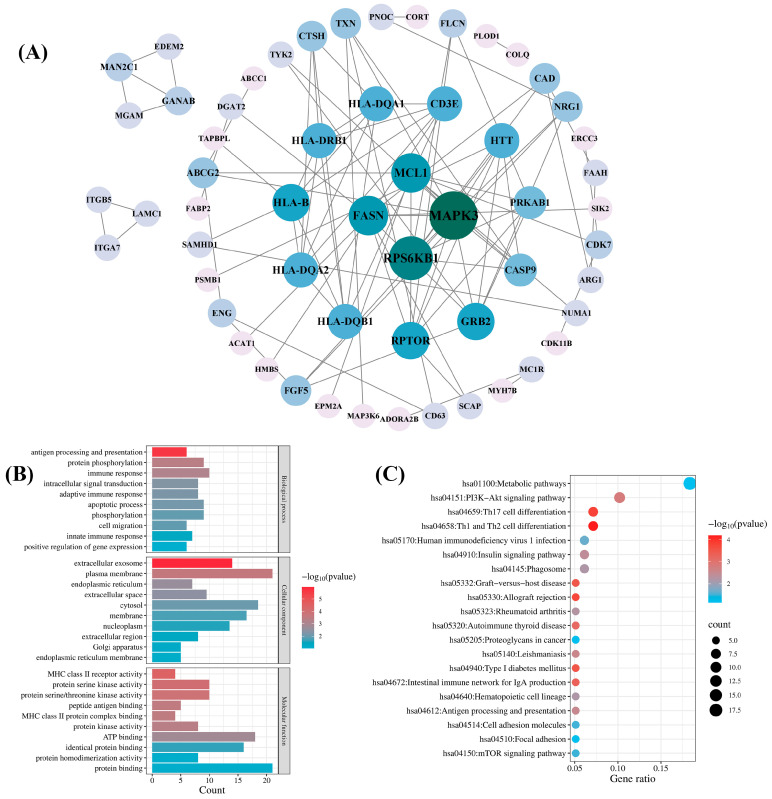
: At present, there are still limitations and challenges in the treatment of hyperuricemia (HUA). Mendelian randomization (MR) has been widely used to identify new therapeutic targets. Therefore, we conducted a systematic druggable genome-wide MR to explore potential therapeutic targets and drugs for HUA. : We integrated druggable genome data; blood, kidney, and intestinal expression quantitative trait loci (eQTLs); and HUA-associated genome-wide association study (GWAS) data to analyze the potential causal relationships between drug target genes and HUA using the MR method. Summary-data-based MR (SMR) analysis and Bayesian colocalization were used to assess causality. In addition, we conducted phenome-wide association studies, protein network construction, and enrichment analysis of significant targets to evaluate their biological functions and potential side effects. Finally, we performed drug prediction and molecular docking to identify potential drugs targeting these genes for HUA treatment. : Overall, we identified 22 druggable genes significantly associated with HUA through MR, SMR, and colocalization analyses. Among them, two prior druggable genes ( and ) reached statistically significant levels in at least two tissues in the blood, kidney, and intestine. Further results from phenome-wide studies revealed that there were no potential side effects of or . Moreover, we screened 15 potential drugs targeting the 22 druggable genes that could serve as candidates for HUA drug development. : This study provides genetic evidence supporting the potential benefits of targeting 22 druggable genes for HUA treatment, offering new insights into the development of targeted drugs for HUA.
目前,高尿酸血症(HUA)的治疗仍存在局限性和挑战。孟德尔随机化(MR)已被广泛用于确定新的治疗靶点。因此,我们进行了一项全基因组可成药孟德尔随机化研究,以探索HUA的潜在治疗靶点和药物。
我们整合了可成药基因组数据、血液、肾脏和肠道表达定量性状位点(eQTL)以及与HUA相关的全基因组关联研究(GWAS)数据,使用MR方法分析药物靶基因与HUA之间的潜在因果关系。基于汇总数据的MR(SMR)分析和贝叶斯共定位用于评估因果关系。此外,我们进行了全表型关联研究、蛋白质网络构建以及对显著靶点的富集分析,以评估其生物学功能和潜在副作用。最后,我们进行了药物预测和分子对接,以确定针对这些基因治疗HUA的潜在药物。
总体而言,通过MR、SMR和共定位分析,我们确定了22个与HUA显著相关的可成药基因。其中,两个先前已知的可成药基因在血液、肾脏和肠道的至少两个组织中达到了统计学显著水平。全表型研究的进一步结果显示,这两个基因没有潜在副作用。此外,我们筛选了15种针对这22个可成药基因的潜在药物,它们可作为HUA药物开发的候选药物。
本研究提供了遗传证据,支持靶向22个可成药基因治疗HUA的潜在益处,为HUA靶向药物的开发提供了新的见解。