
儿童肥胖与哮喘——共存还是病理生理联系?
Obesity and Asthma in Children-Coexistence or Pathophysiological Connections?
作者信息
Mazzotta Clarissa, Barkai László
机构信息
Azienda Sanitaria Locale della Provincia di Lecce, 73100 Lecce, Italy.
Department of Paediatrics and Adolescent Medicine, Faculty of Medicine, Pavol Jozef Šafárik University, 04001 Kosice, Slovakia.
出版信息
Biomedicines. 2025 May 4;13(5):1114. doi: 10.3390/biomedicines13051114.
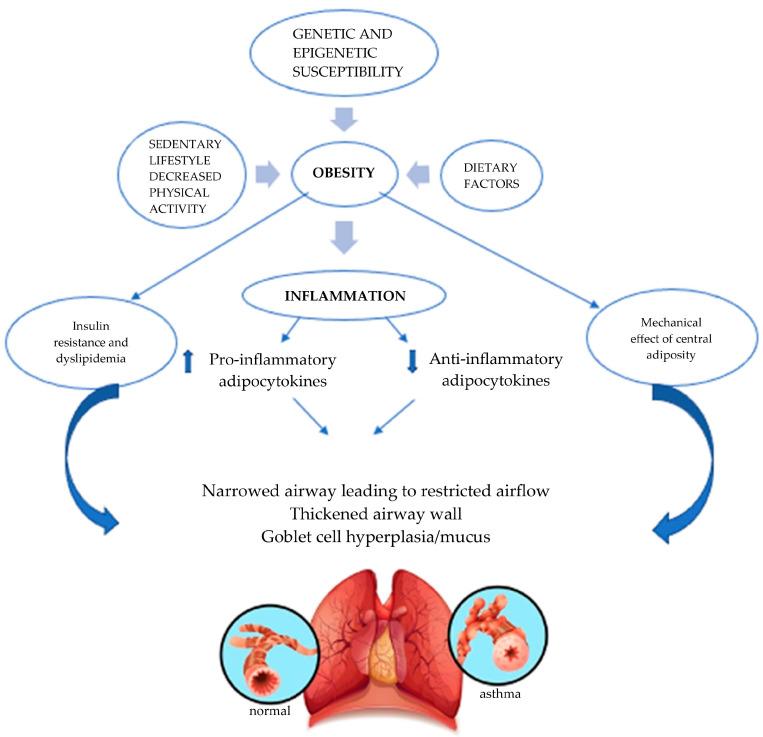
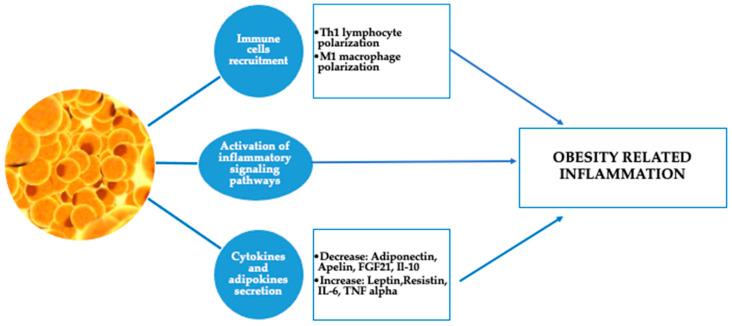
The aim of this narrative review is to explore possible connections that might lead to both obesity and asthma; it will explain factors and mechanisms involved in disease pathogenesis, focusing particularly on diet and nutrients, the microbiome, inflammatory and metabolic dysregulation, lung function, the genetics/genomics of obese asthma, risk of exacerbation, atopy, and response to treatment. It highlights the role that obesity plays as a risk factor for and disease modifier of asthma, understanding the evidence supporting lifestyle changes in influencing disease progression. Pathophysiological mechanisms in obesity-related asthma have influences on the course of disease pathology. Due to these factors, the child with obese asthma needs a specific therapeutic approach taking into account the common unresponsiveness to bronchodilators, increased requirements for controller medications, poorer steroid effectiveness, and better response to leukotriene receptor (LTR) inhibitors. Therapeutic strategies centered on prevention are suggested and the development of resources to assist families with weight loss strategies and lifestyle changes is shown to be useful for effective weight control and optimal asthma management. Obese children with asthma generally should receive interventions that encourage daily physical activity, weight loss, and normalization of nutrient levels, and monitoring of common obesity-related sequelae should be considered by healthcare providers managing obese children with difficult to control asthma. Recognizing and identifying an asthmatic patient is not always easy and a detailed medical history of the patient, with particular attention paid to their presenting and past symptoms, and a complete physical examination play pivotal and fundamental roles in determining the final diagnosis.
本叙述性综述的目的是探索可能导致肥胖和哮喘的潜在联系;它将解释疾病发病机制中涉及的因素和机制,特别关注饮食和营养、微生物群、炎症和代谢失调、肺功能、肥胖性哮喘的遗传学/基因组学、病情加重风险、特应性以及对治疗的反应。它强调了肥胖作为哮喘的危险因素和疾病调节因素所起的作用,理解支持生活方式改变对疾病进展影响的证据。肥胖相关性哮喘的病理生理机制会影响疾病病理过程。由于这些因素,肥胖性哮喘患儿需要一种特定的治疗方法,要考虑到对支气管扩张剂普遍无反应、控制药物需求增加、类固醇疗效较差以及对白三烯受体(LTR)抑制剂反应较好等情况。建议采取以预防为中心的治疗策略,并且开发资源以协助家庭制定减肥策略和改变生活方式,这对于有效控制体重和优化哮喘管理是有用的。患有哮喘的肥胖儿童一般应接受鼓励日常体育活动、减肥和使营养水平正常化的干预措施,管理难以控制哮喘的肥胖儿童的医疗保健人员应考虑监测常见的肥胖相关后遗症。识别和确诊哮喘患者并不总是容易的,患者详细的病史,尤其要特别关注其当前和过去的症状,以及全面的体格检查在确定最终诊断中起着关键和根本的作用。


 Zotero 插件