Jamilan Mohd Azerulazree, Kamarudin Balqis, Mohd Zain Zainiharyati, Sambasevam Kavirajaa Pandian, Mehamod Faizatul Shimal, Md Noh Mohd Fairulnizal
Nutrition, Metabolism & Cardiovascular Research Centre, Institute for Medical Research, National Institute of Health, Ministry of Health Malaysia, No. 1, Jalan Setia Murni U13/52, Setia Alam, Shah Alam 40170, Selangor, Malaysia.
Electrochemical Material and Sensors (EMaS) Research Group, Faculty of Applied Sciences, Universiti Teknologi MARA, Shah Alam 40450, Selangor, Malaysia.
Polymers (Basel). 2025 May 21;17(10):1415. doi: 10.3390/polym17101415.
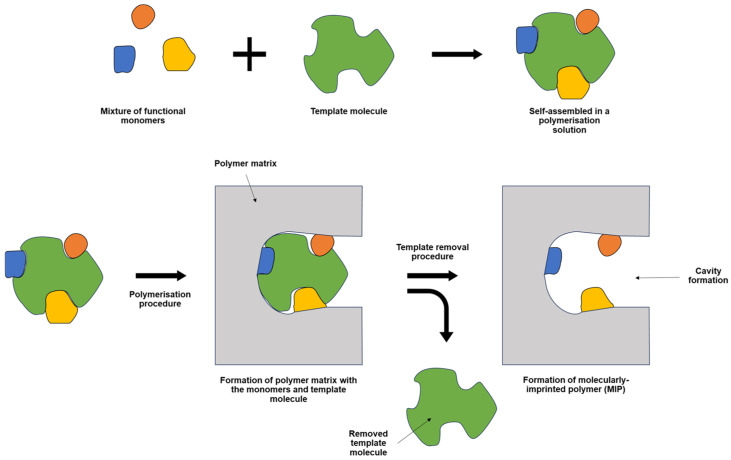
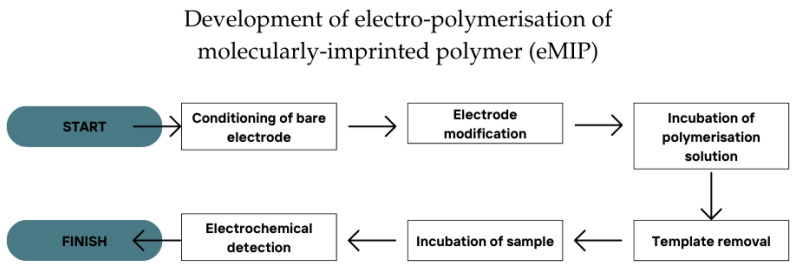
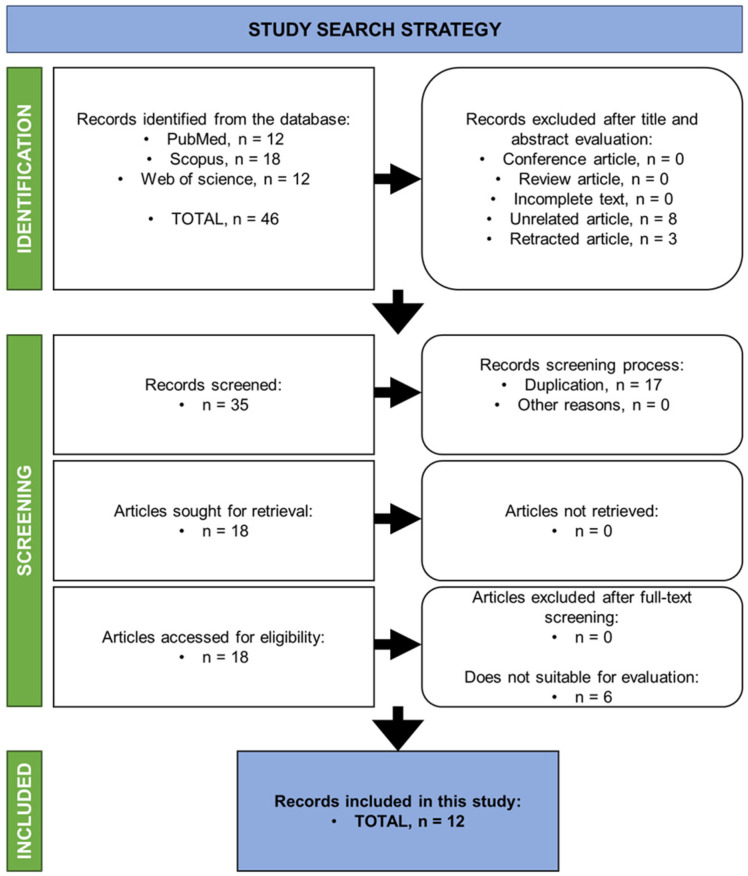
Vitamins are crucial micro-nutrients for overall well-being, making continuous monitoring essential. There are demands to provide an alternative detection, especially using a portable detection or a point-of-care-testing (POCT) device. One promising approach is employing an in situ electro-polymerised MIP (eMIP), which offers a straightforward polymerisation technique on screen-printed electrodes (SPEs). Here, we report a review based on three databases (PubMed, Scopus, and Web of Science) from 2014 to 2024 using medical subject heading (MeSH) terms "electrochemical polymerisation" OR "electropolymerisation" crossed with the terms "molecularly imprinted polymer" AND "vitamin A" OR "vitamin D" OR "vitamin E" OR "vitamin K" OR "fat soluble vitamin" OR "vitamin B" OR "vitamin C" OR "water soluble vitamin". The resulting 12 articles covered the detection of vitamins in ascorbic acid, riboflavin, cholecalciferol, calcifediol, and menadione using monomers of catechol (CAT), 3,4-ethylenedioxythiophene (EDOT), o-aminophenol (oAP), o-phenylenediamine (oPD), pyrrole, p-aminophenol (pAP), p-phenylenediamine (pPD), or resorcinol (RES), using common bare electrodes including graphite rod electrode (GRE), glassy carbon electrode (GCE), gold electrode (GE), and screen-printed carbon electrode (SPCE). The most common electrochemical detections were differential pulse voltammetry (DPV) and linear sweep voltammetry (LSV). The imprinting factor (IF) of the eMIP-modified electrodes were from 1.6 to 21.0, whereas the cross-reactivity was from 0.0% to 29.9%. Several types of food and biological samples were tested, such as supplement tablets, poultry and pharmaceutical drugs, soft drinks, beverages, milk, infant formula, human and calf serum, and human plasma. However, more discoveries and development of detection methods needs to be performed, especially for the vitamins that have not been studied yet. This will allow the improvement in the application of eMIPs on portable-based detection and POCT devices.
维生素是维持整体健康至关重要的微量营养素,因此持续监测必不可少。人们需要提供一种替代检测方法,特别是使用便携式检测设备或即时检测(POCT)设备。一种很有前景的方法是采用原位电聚合分子印迹聚合物(eMIP),它在丝网印刷电极(SPE)上提供了一种简单的聚合技术。在此,我们报告一项基于2014年至2024年三个数据库(PubMed、Scopus和Web of Science)的综述,使用医学主题词(MeSH)“电化学聚合”或“电聚合”与“分子印迹聚合物”以及“维生素A”或“维生素D”或“维生素E”或“维生素K”或“脂溶性维生素”或“维生素B”或“维生素C”或“水溶性维生素”交叉检索。由此得到的12篇文章涵盖了使用邻苯二酚(CAT)、3,4 - 乙撑二氧噻吩(EDOT)、邻氨基酚(oAP)、邻苯二胺(oPD)、吡咯、对氨基酚(pAP)、对苯二胺(pPD)或间苯二酚(RES)单体检测抗坏血酸、核黄素、胆钙化醇、骨化二醇和甲萘醌中的维生素,使用的常见裸电极包括石墨棒电极(GRE)、玻碳电极(GCE)、金电极(GE)和丝网印刷碳电极(SPCE)。最常见的电化学检测方法是差分脉冲伏安法(DPV)和线性扫描伏安法(LSV)。eMIP修饰电极的印迹因子(IF)为1.6至21.0,而交叉反应性为0.0%至29.9%。测试了几种类型的食品和生物样品,如补充剂片剂、家禽和药品、软饮料、饮料、牛奶、婴儿配方奶粉、人血清和小牛血清以及人血浆。然而,还需要进行更多检测方法的发现和开发,特别是针对尚未研究的维生素。这将有助于改进eMIP在便携式检测和POCT设备上的应用。