Wallace M D, Herrtage M E, Gostelow R, Owen L, Rutherford L, Hughes K, Denyer A, Catchpole B, O'Callaghan C A, Davison L J
Department of Clinical Science and Services, Royal Veterinary College, Hatfield, UK.
Department of Physiology, Anatomy and Genetics, University of Oxford, Oxford, UK.
Vet Oncol. 2025;2(1):13. doi: 10.1186/s44356-025-00026-3. Epub 2025 May 26.
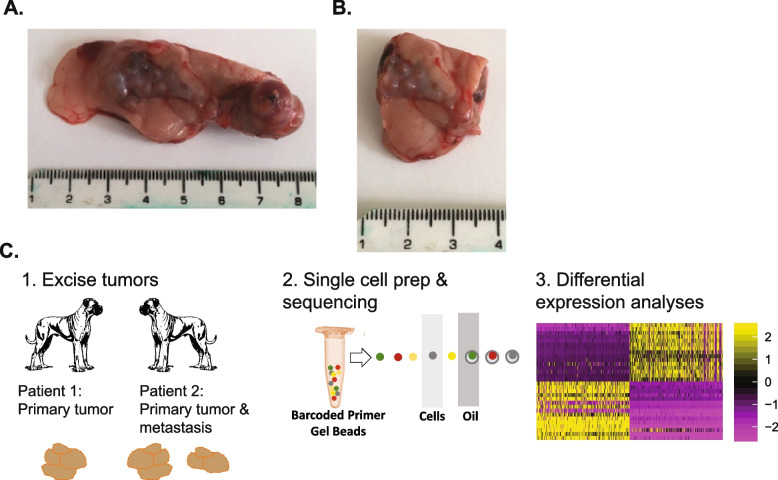
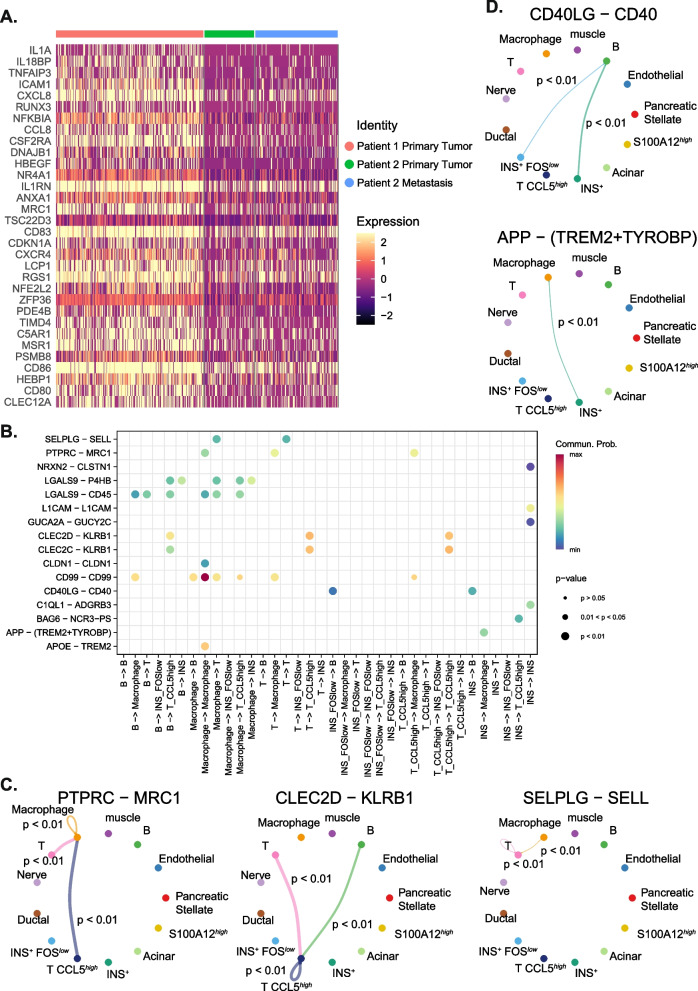
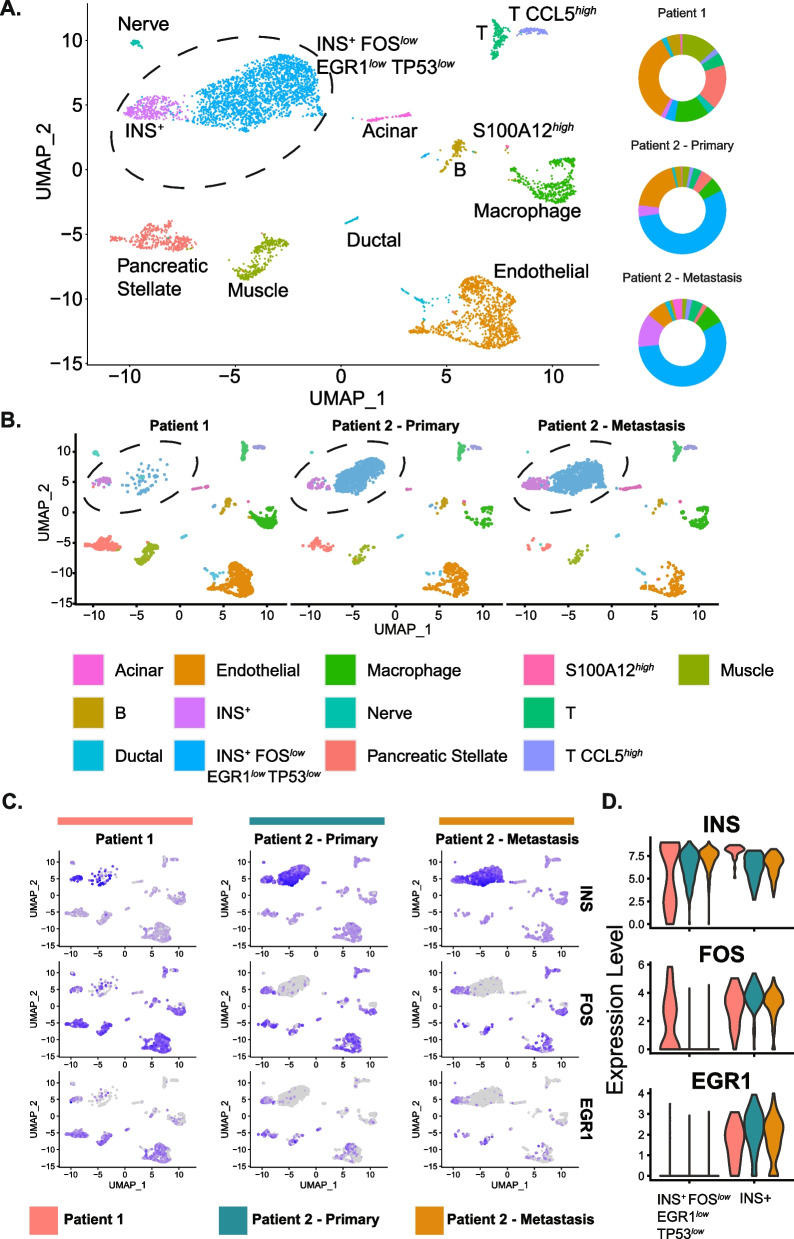
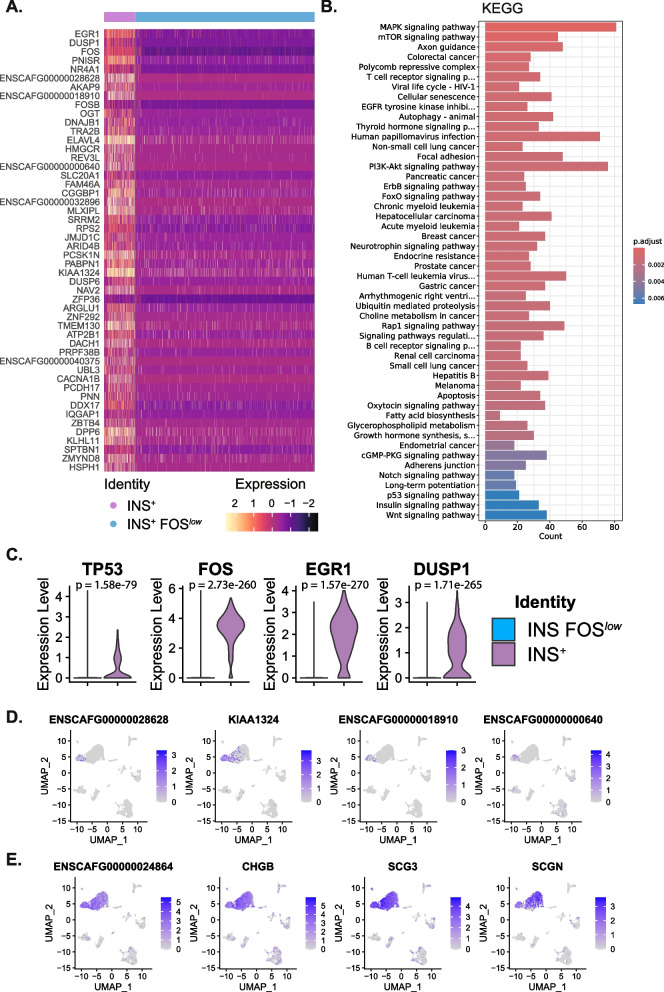
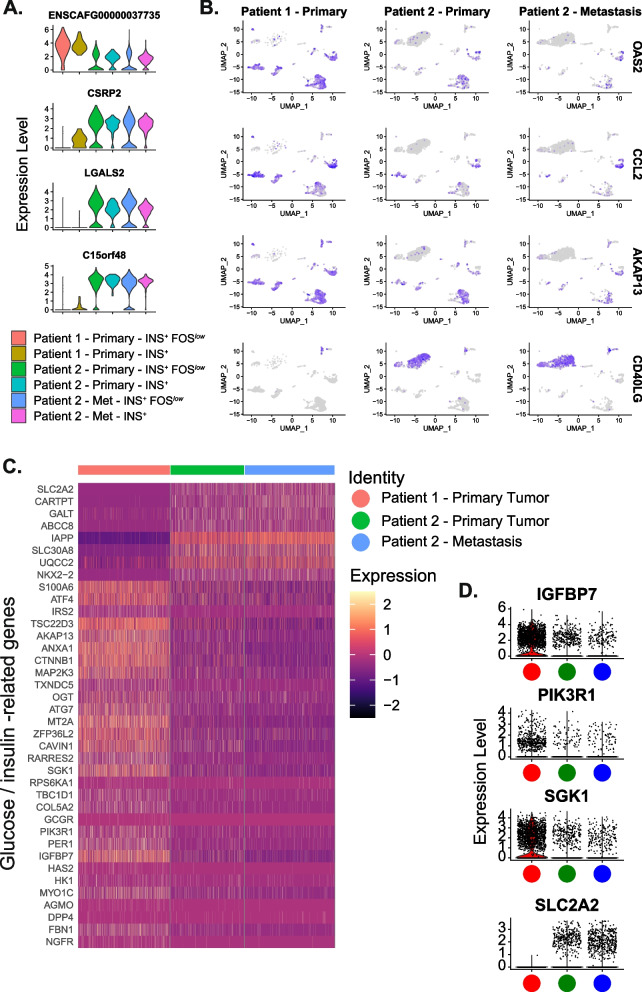
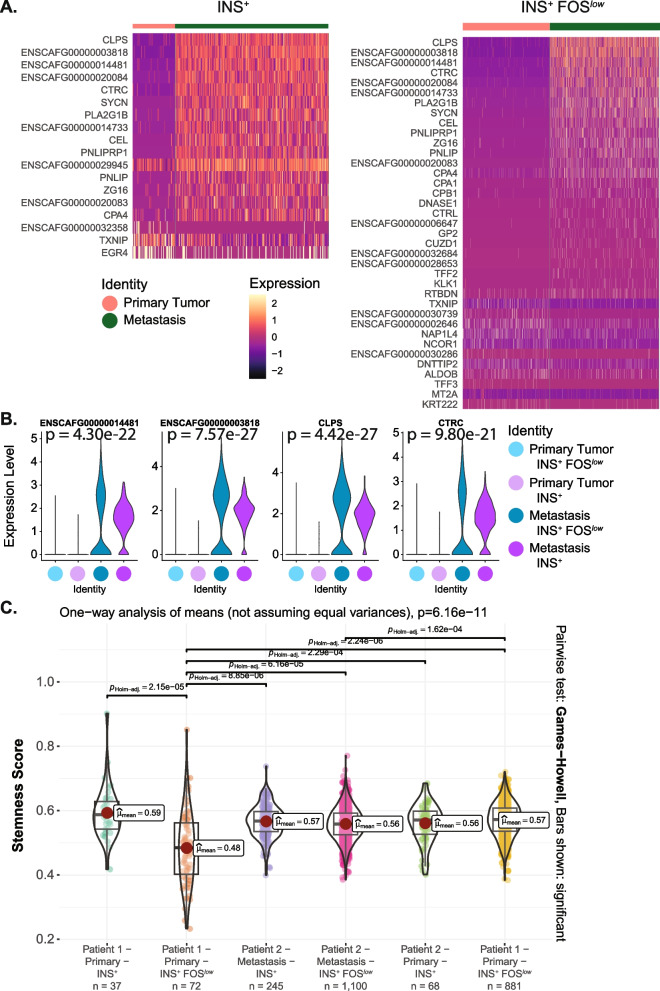
Canine malignant insulinoma is a rare, highly metastatic and life-threatening neuroendocrine tumour of pancreatic beta cells. To map the single-cell transcriptomic landscape of canine insulinoma for the first time, transcriptomic profiles of 5,532 cells were captured from two spontaneous insulinomas (Patient 1 and 2) and one associated metastasis (Patient 2) in two Boxer dogs. Distinct cancer, endocrine, and immune cell populations were identified. Notably, all three tumour samples contained two transcriptionally distinct insulin-expressing tumour cell populations (INS and INSFOS ), characterised here for the first time. These two cancer cell populations significantly differed by ~ 8,000 differentially expressed genes (DEGs), particularly tumour suppressor genes (e.g. , ) and cancer-related pathways (e.g., MAPK, p53). In contrast, was one of a few genes ubiquitously expressed and significantly upregulated (> 20-fold) in both insulin-expressing tumour populations compared to other captured populations. Both populations were also characterised by expression of chromogranin/secretogranin neuroendocrine tumour marker genes (e.g. , ). There were far fewer gene expression differences observed between insulin-expressing tumour cells from the two patients (~ 600 DEGs) than between the two cancer cell populations within each patient. These DEGs included , , , , and Unexpectedly for a tumour of endocrine origin, the metastasis in Patient 2 exhibited > 20-70 fold upregulation of exocrine pancreatic genes including , , and . Immune cell analyses identified distinct infiltrating immune populations, including memory T cells and macrophages and revealed likely tumour-immune interactions, including the CD40-CD40L interaction. This study provides the first single-cell RNA sequencing (scRNA-seq) analysis of naturally occurring insulinoma in any species, revealing tumour cell heterogeneity, novel immune microenvironment features, and potential therapeutic targets. Despite its small scale, the findings highlight the utility of scRNA-seq in veterinary oncology and its translational potential for pancreatic neuroendocrine tumours across species.
The online version contains supplementary material available at 10.1186/s44356-025-00026-3.
犬恶性胰岛素瘤是一种罕见的、具有高度转移性且危及生命的胰腺β细胞神经内分泌肿瘤。为首次描绘犬胰岛素瘤的单细胞转录组图谱,从两只拳师犬的两个自发性胰岛素瘤(患者1和患者2)及一处相关转移灶(患者2)中捕获了5532个细胞的转录组概况。鉴定出了不同的癌细胞、内分泌细胞和免疫细胞群体。值得注意的是,所有三个肿瘤样本均包含两个转录上不同的表达胰岛素的肿瘤细胞群体(INS和INSFOS),本文首次对其进行了表征。这两个癌细胞群体在约8000个差异表达基因(DEG)上存在显著差异,特别是肿瘤抑制基因(例如 )和癌症相关通路(例如MAPK、p53)。相比之下, 是在两个表达胰岛素的肿瘤群体中与其他捕获群体相比普遍表达且显著上调(>20倍)的少数基因之一。这两个群体还以嗜铬粒蛋白/分泌粒蛋白神经内分泌肿瘤标志物基因(例如 )的表达为特征。两名患者表达胰岛素的肿瘤细胞之间观察到的基因表达差异(约600个DEG)远少于每名患者体内两个癌细胞群体之间的差异。这些DEG包括 、 、 、 和 。对于一种内分泌起源的肿瘤而言出乎意料的是,患者2中的转移灶表现出外分泌胰腺基因(包括 、 、 和 )上调20 - 70倍以上。免疫细胞分析鉴定出了不同的浸润免疫群体,包括记忆T细胞和巨噬细胞,并揭示了可能的肿瘤 - 免疫相互作用,包括CD40 - CD40L相互作用。本研究首次对任何物种中自然发生的胰岛素瘤进行了单细胞RNA测序(scRNA - seq)分析,揭示了肿瘤细胞异质性、新的免疫微环境特征和潜在的治疗靶点。尽管规模较小,但这些发现突出了scRNA - seq在兽医肿瘤学中的实用性及其对跨物种胰腺神经内分泌肿瘤的转化潜力。
在线版本包含可在10.1186/s44356 - 025 - 00026 - 3获取的补充材料。