
低负荷抗阻训练联合血流限制对中老年患者膝关节康复的影响:一项系统评价与Meta分析
The effects of low-load resistance training combined with blood flow restriction on knee rehabilitation in middle-aged and elderly patients: A systematic review and meta-analysis.
作者信息
Chen Juan, Wu Lei, Li Chenna, Yan Hao
机构信息
School of Rehabilitation Engineering, China Civil Affairs University, Beijing, China.
School of Strength and Conditioning Training, Beijing Sport University, Beijing, China.
出版信息
PLoS One. 2025 Jun 2;20(6):e0323388. doi: 10.1371/journal.pone.0323388. eCollection 2025.
UNLABELLED
This meta-analysis evaluates the effectiveness of low-load resistance training combined with blood flow restriction in knee rehabilitation.
METHODS
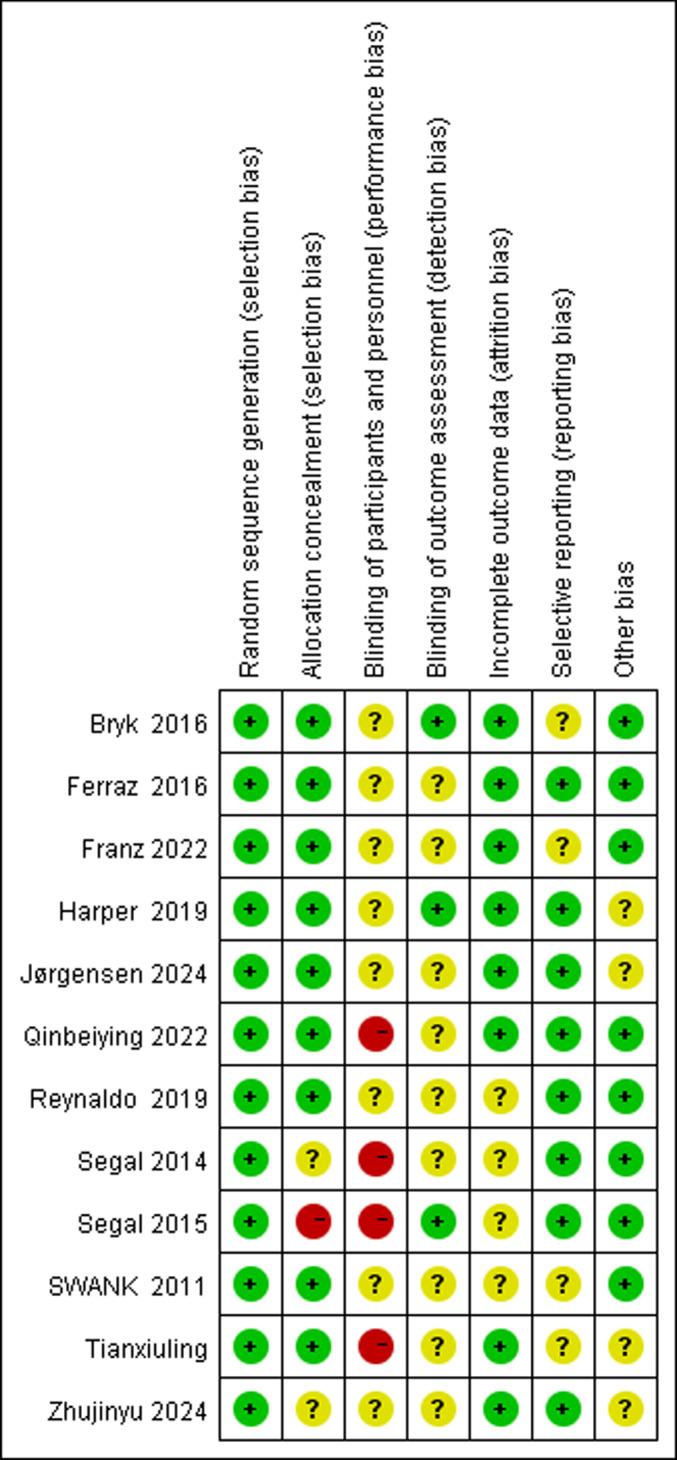
Randomized controlled trials investigating the effects of blood flow restriction training on knee injury rehabilitation were systematically searched in the PubMed, EBSCO, and Web of Science databases for studies published between January 2000 and May 2024. The Cochrane Risk of Bias Tool was used to assess study quality, and statistical analyses were performed using Review Manager 5.3 software.
RESULTS
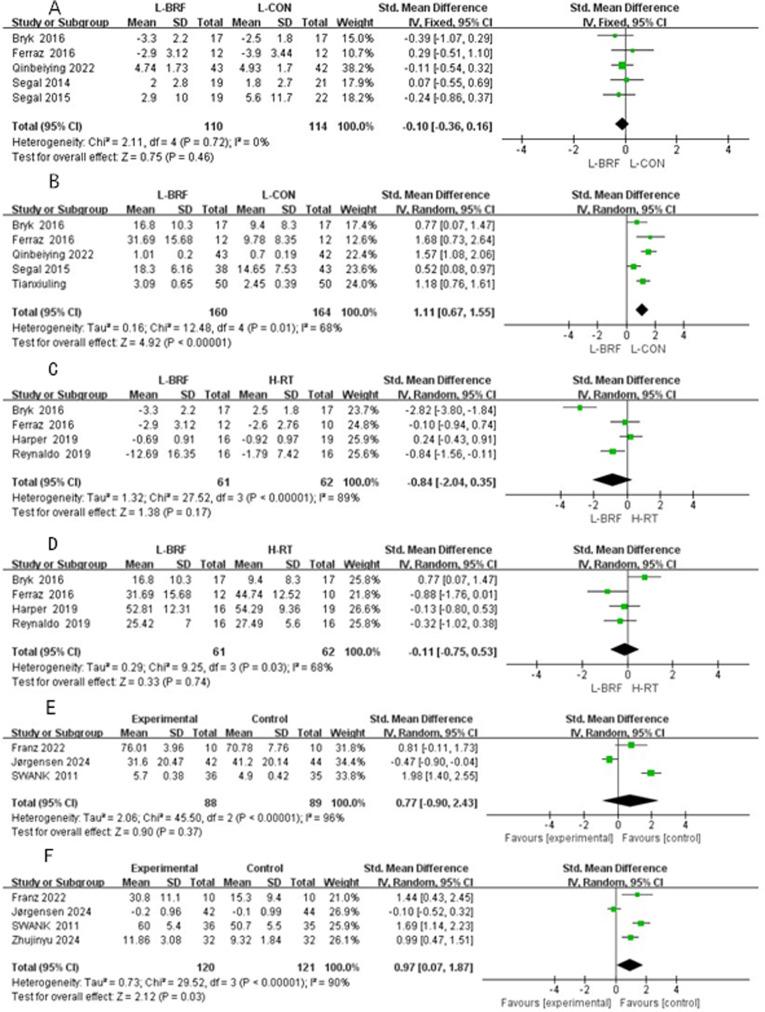
(1) Compared to low-load control training, blood flow restriction training showed no significant difference in pain scores (standardized mean difference = -0.10, P = 0.46) but significantly improved muscle strength (standardized mean difference = 1.11, P < 0.00001). (2) When compared to high-intensity resistance training, blood flow restriction training demonstrated no significant differences in muscle strength (standardized mean difference = -0.11, P = 0.74) or pain scores (standardized mean difference = -0.84, P = 0.17). (3) Preoperative blood flow restriction training did not significantly improve postoperative pain scores (standardized mean difference = 0.77, P = 0.37); however, among 241 patients undergoing preoperative training, blood flow restriction training significantly enhanced postoperative muscle strength (standardized mean difference = 0.97, P = 0.03).
CONCLUSIONS
Although blood flow restriction training has limited effects on reducing pain, it significantly improves muscle strength, particularly in preoperative rehabilitation and low-load training settings, making it a valuable alternative in clinical knee rehabilitation strategies.
未标注
本荟萃分析评估低负荷抗阻训练结合血流限制在膝关节康复中的有效性。
方法
在PubMed、EBSCO和Web of Science数据库中系统检索2000年1月至2024年5月发表的关于血流限制训练对膝关节损伤康复影响的随机对照试验。使用Cochrane偏倚风险工具评估研究质量,并使用Review Manager 5.3软件进行统计分析。
结果
(1)与低负荷对照训练相比,血流限制训练在疼痛评分方面无显著差异(标准化均差=-0.10,P=0.46),但显著提高了肌肉力量(标准化均差=1.11,P<0.00001)。(2)与高强度抗阻训练相比,血流限制训练在肌肉力量(标准化均差=-0.11,P=0.74)或疼痛评分(标准化均差=-0.84,P=0.17)方面无显著差异。(3)术前血流限制训练未显著改善术后疼痛评分(标准化均差=0.77,P=0.37);然而,在241例接受术前训练的患者中,血流限制训练显著增强了术后肌肉力量(标准化均差=0.97,P=0.03)。
结论
尽管血流限制训练在减轻疼痛方面效果有限,但它能显著提高肌肉力量,尤其是在术前康复和低负荷训练环境中,使其成为临床膝关节康复策略中有价值的替代方法。



 Zotero 插件