Laczó Martina, Svacova Zuzana, Lerch Ondrej, Martinkovic Lukas, Krejci Monika, Nedelska Zuzana, Horakova Hana, Matoska Vaclav, Vyhnalek Martin, Hort Jakub, Hornberger Michael, Laczó Jan
Memory Clinic, Department of Neurology, Second Faculty of Medicine, Charles University and Motol University Hospital, V Uvalu 84, Praha 5 - Motol, 150 06, Prague, Czechia.
Department of Psychology, Faculty of Arts, Charles University, Prague, Czechia.
J Neurol. 2025 Jun 2;272(6):438. doi: 10.1007/s00415-025-13151-8.
Spatial navigation deficits are early symptoms of Alzheimer's disease (AD). The apolipoprotein E (APOE) ε4 allele is the most important genetic risk factor for AD. This study investigated effects of APOE genotype on spatial navigation in biomarker-defined individuals with amnestic mild cognitive impairment (aMCI) and associations of AD biomarkers and atrophy of AD-related brain regions with spatial navigation.
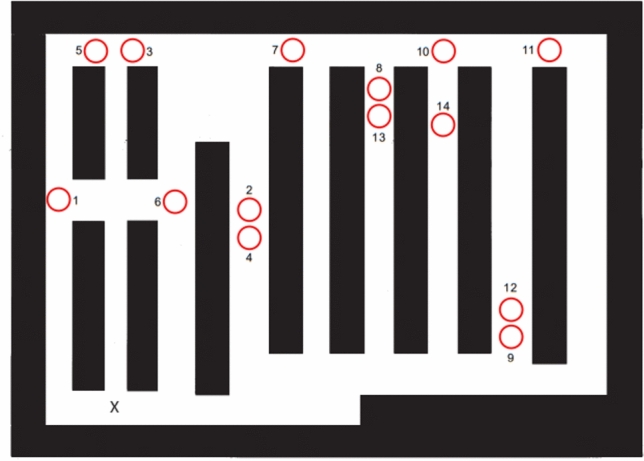
107 participants, cognitively normal older adults (CN, n = 48) and aMCI individuals stratified into AD aMCI (n = 28) and non-AD aMCI (n = 31) groups, underwent cognitive assessment, brain MRI, and spatial navigation assessment using the Virtual Supermarket Test with egocentric and allocentric tasks and a self-report questionnaire. Cerebrospinal fluid (CSF) biomarkers (amyloid-β, phosphorylated tau and total tau) and amyloid PET imaging were assessed in aMCI participants.
AD aMCI participants had the highest prevalence of APOE ε4 carriers and worst allocentric navigation. CSF levels of AD biomarkers and atrophy in AD-related brain regions were associated with worse allocentric navigation. Between-group differences in spatial navigation and associations with AD biomarkers and regional brain atrophy were not influenced by APOE genotype. Self-reported navigation ability was similar across groups and unrelated to spatial navigation performance.
These findings suggest that allocentric navigation deficits in aMCI individuals are predominantly driven by AD pathology, independent of APOE genotype. This highlights the role of AD pathology as measured by biomarkers, rather than genetic status, as a major factor in navigational impairment in aMCI, and emphasizes the assessment of spatial navigation as a valuable tool for early detection of AD.
空间导航缺陷是阿尔茨海默病(AD)的早期症状。载脂蛋白E(APOE)ε4等位基因是AD最重要的遗传风险因素。本研究调查了APOE基因型对生物标志物定义的遗忘型轻度认知障碍(aMCI)个体空间导航的影响,以及AD生物标志物和AD相关脑区萎缩与空间导航的关联。
107名参与者,包括认知正常的老年人(CN,n = 48)以及分为AD aMCI组(n = 28)和非AD aMCI组(n = 31)的aMCI个体,接受了认知评估、脑部MRI检查,并使用具有自我中心和空间中心任务的虚拟超市测试及一份自我报告问卷进行空间导航评估。对aMCI参与者评估了脑脊液(CSF)生物标志物(淀粉样蛋白-β、磷酸化tau蛋白和总tau蛋白)以及淀粉样蛋白PET成像。
AD aMCI参与者中APOE ε4携带者的患病率最高,且空间中心导航最差。AD生物标志物的CSF水平和AD相关脑区的萎缩与较差的空间中心导航相关。空间导航的组间差异以及与AD生物标志物和脑区萎缩的关联不受APOE基因型的影响。各组自我报告的导航能力相似,且与空间导航表现无关。
这些发现表明,aMCI个体的空间中心导航缺陷主要由AD病理驱动,与APOE基因型无关。这突出了通过生物标志物测量的AD病理而非遗传状态,作为aMCI中导航障碍的主要因素的作用,并强调了将空间导航评估作为AD早期检测的有价值工具。