Ciconello Fernanda Nery, Tuggle Christopher Keith, Gomes Julia Dezen, da Silva Bruna Pereira Martins, de Castro Durval Mariah, de Oliveira Camila Sabino, Nascimento Lucas Echevarria, Freitas Luciana Sales, Koltes James Eugene, Cesar Aline Silva Mello
Department of Animal Science, "Luiz de Queiroz" College of Agriculture, Av. Pádua Dias, 11, Piracicaba, São Paulo, 13418-900, Brazil.
Department of Animal Science, Iowa State University, Kildee Hall, 806 Stange Road, Ames, IA, 50011-3150, USA.
Sci Rep. 2025 Jun 4;15(1):19528. doi: 10.1038/s41598-025-04273-0.
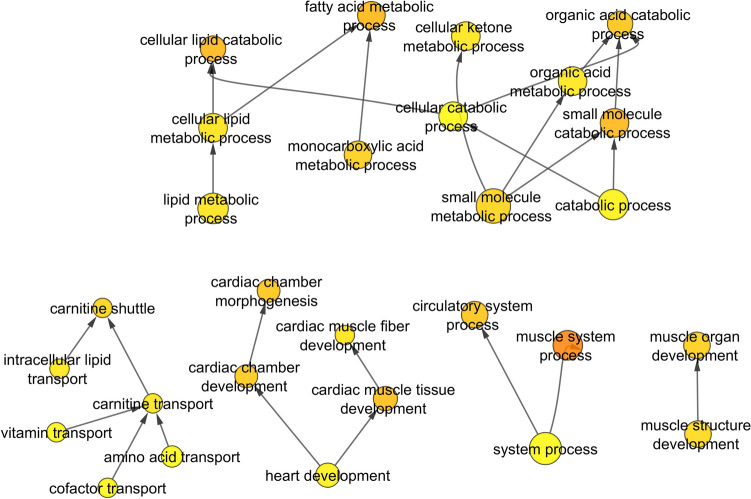
Fatty acids, particularly those derived from plant and animal oils, play roles in physiological functions and metabolic regulation in pigs. Imbalances in the ratio of polyunsaturated fatty acids (PUFAs) may influence inflammatory responses, including the modulation of pro-inflammatory cytokines. This study aimed to investigate the gene co-expression profiles in the skeletal muscle of pigs fed diets supplemented with 3.0% soybean, canola, or fish oils, correlating these profiles with cytokine abundance and identifying hub genes associated with immune-related pathways using a systems biology approach. Skeletal muscle samples from 27 pigs were subjected to RNA sequencing and weighted gene co-expression network analysis (WGCNA) to construct gene co-expression networks. The concentrations of six cytokines (IL-10, IFN-γ, IL-1β, IL-6, IL-18, and TNF-α) were quantified in muscle tissue using ELISA. Functional enrichment analysis and hub gene identification revealed several key genes involved in immune function and fatty acid metabolism. WGCNA uncovered distinct co-expression modules associated with specific dietary oil treatments. These findings provide new insights into the immunomodulatory effects of soybean, canola, and fish oils, highlighting the relevance of nutrigenomics in understanding gene-diet interactions in pigs.
脂肪酸,尤其是那些来自动植物油的脂肪酸,在猪的生理功能和代谢调节中发挥作用。多不饱和脂肪酸(PUFA)比例失衡可能会影响炎症反应,包括对促炎细胞因子的调节。本研究旨在调查饲喂添加3.0%大豆油、菜籽油或鱼油日粮的猪骨骼肌中的基因共表达谱,将这些谱与细胞因子丰度相关联,并使用系统生物学方法鉴定与免疫相关途径相关的枢纽基因。对27头猪的骨骼肌样本进行RNA测序和加权基因共表达网络分析(WGCNA)以构建基因共表达网络。使用ELISA对肌肉组织中六种细胞因子(IL-10、IFN-γ、IL-1β、IL-6、IL-18和TNF-α)的浓度进行定量。功能富集分析和枢纽基因鉴定揭示了几个参与免疫功能和脂肪酸代谢的关键基因。WGCNA发现了与特定日粮油处理相关的不同共表达模块。这些发现为大豆油、菜籽油和鱼油的免疫调节作用提供了新见解,突出了营养基因组学在理解猪基因-日粮相互作用中的相关性。