
不同微生境下泥炭藓微生物群落和代谢产物的多样性及相关性分析
Diversity and correlation analysis of microbiomes and metabolites of Sphagnum palustre in various microhabitats.
作者信息
Yang Xiaohan, Chen Huai, Wu Lin, Guo Xianlin, Xue Dan
机构信息
Mountain Ecological Restoration and Biodiversity Conservation Key Laboratory of Sichuan Province, Chengdu Institute of Biology, Chinese Academy of Sciences, No. 23 Qunxian South Street, Chengdu, Tianfu New District, 610213, China.
Zoige Wetland Ecology Research Station of the Chinese, Academy of Sciences, Chinese Academy of Sciences, Hongyuan, 624400, China.
出版信息
BMC Plant Biol. 2025 Jun 4;25(1):761. doi: 10.1186/s12870-025-06805-2.
BACKGROUND
Sphagnum peat mosses are crucial contributors to global carbon sequestration and are a dominant presence in many northern peatland environments. These mosses host a wide variety of microorganisms, which reside within their tissues and on their surfaces. Despite this close association, the connection between these microorganisms and the production of metabolites across different parts of Sphagnum remains unclear.
RESULTS
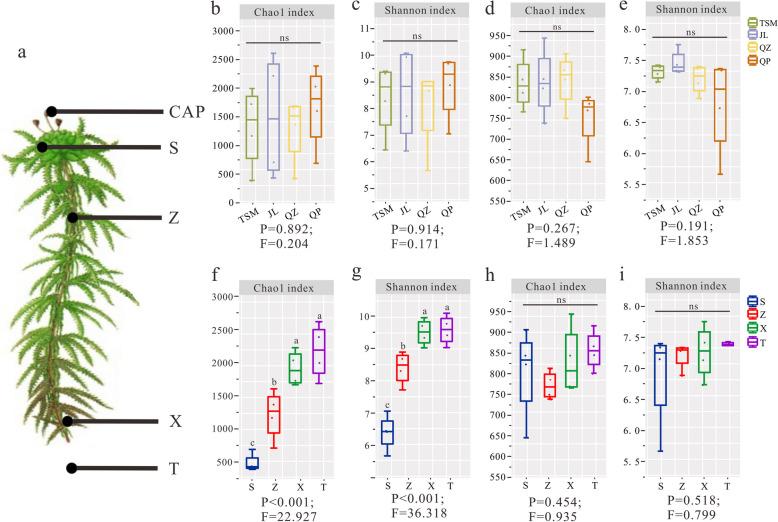
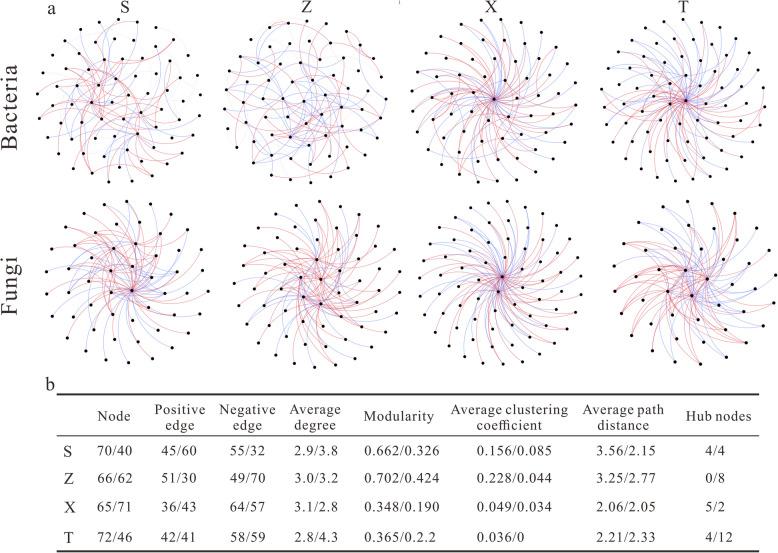
This research explored the connection between microbial diversity and metabolite production in various microhabitats of Sphagnum palustre by employing metagenomic and metabolomic techniques. Our results indicate that the S. palustre microbiome composition is more strongly influenced by microhabitat than by geographic location. Microbiome diversity microbiomes related to S. palustre showed a steady decrease from soil to near soil, from X to CAP, and from belowground to aboveground habitats. In contrast, network complexity increased. Species abundance analysis indicated that Proteobacteria was the most prevalent bacterial phylum across CAP, S, Z, and X. Additionally, Ascomycota emerged as the predominant fungal phylum. There were significant differences in nitrogen fixation activity, methane oxidation activity, total nitrogen, and total carbon among different microhabitats. The FAPROTAX analysis revealed differences in the metabolic potential of the carbon (C) and nitrogen (N) cycles across the four microhabitats. LC-MS/MS technology was employed to quantitatively assess metabolites across various S. palustre microhabitats. A total of 3,822 metabolites and 353 differential metabolites were detected, predominantly including lipids, organic acids, and carboxylic acids. The majority of these differential metabolites were associated with metabolic pathways such as carotenoid biosynthesis, steroid biosynthesis, secondary bile acid biosynthesis, as well as the biosynthesis of neomycin, kanamycin, and gentamicin. Correlation analysis revealed both positive and negative relationships between microorganisms and differential metabolites. Methylocystis, which was significantly enriched in X and T, showed a strong positive correlation with differential metabolites in S vs T and Z vs X, but a negative correlation with those in X vs T (p < 0.05).
CONCLUSION
In summary, our study demonstrates that Sphagnum palustre microbiomes are primarily influenced by microhabitats rather than specific environmental conditions at different sites. We identified significant variations in microbial community diversity across various S. palustre microhabitats. Correlation analysis revealed links between microorganisms and differential metabolic processes. This comprehensive investigation of aboveground and belowground microbiomes and metabolites in S. palustre provides new insights into the distribution of microbial communities and metabolites across different microhabitats.
背景
泥炭藓是全球碳固存的重要贡献者,在许多北方泥炭地环境中占主导地位。这些苔藓宿主着各种各样的微生物,它们存在于苔藓组织内和表面。尽管存在这种紧密联系,但这些微生物与泥炭藓不同部位代谢产物产生之间的关联仍不清楚。
结果
本研究通过宏基因组学和代谢组学技术,探索了泥炭藓不同微生境中微生物多样性与代谢产物产生之间的联系。我们的结果表明,泥炭藓微生物群落组成受微生境的影响比地理位置更大。与泥炭藓相关的微生物群落多样性从土壤到近土壤、从X到CAP以及从地下到地上生境呈稳步下降。相比之下,网络复杂性增加。物种丰度分析表明,变形菌门是CAP、S、Z和X中最普遍的细菌门。此外,子囊菌门是主要的真菌门。不同微生境之间的固氮活性、甲烷氧化活性、总氮和总碳存在显著差异。FAPROTAX分析揭示了四个微生境中碳(C)和氮(N)循环代谢潜力的差异。采用LC-MS/MS技术对泥炭藓不同微生境中的代谢产物进行定量评估。共检测到3822种代谢产物和353种差异代谢产物,主要包括脂质、有机酸和羧酸。这些差异代谢产物大多与类胡萝卜素生物合成、类固醇生物合成、次级胆汁酸生物合成以及新霉素、卡那霉素和庆大霉素的生物合成等代谢途径有关。相关性分析揭示了微生物与差异代谢产物之间的正相关和负相关关系。在X和T中显著富集的甲基孢囊菌,在S与T以及Z与X中与差异代谢产物呈强正相关,但在X与T中呈负相关(p < 0.05)。
结论
总之,我们的研究表明,泥炭藓微生物群落主要受微生境影响,而非不同地点的特定环境条件。我们确定了泥炭藓不同微生境中微生物群落多样性的显著差异。相关性分析揭示了微生物与差异代谢过程之间的联系。对泥炭藓地上和地下微生物群落及代谢产物的全面研究为不同微生境中微生物群落和代谢产物的分布提供了新见解。





 Zotero 插件