Riedl Christian J, Bormann Daniel, Steinmaurer Anja, Novak Anja, Testa Giulia, Poldlehner Elena, Haider Carmen, Berger Thomas, Mildner Michael, Höftberger Romana, Schweser Ferdinand, Hametner Simon
Division of Neuropathology and Neurochemistry, Department of Neurology, Medical University of Vienna, Vienna, 1090, Austria.
Comprehensive Center for Clinical Neurosciences and Mental Health, Medical University of Vienna, Vienna, 1090, Austria.
Acta Neuropathol Commun. 2025 Jun 4;13(1):124. doi: 10.1186/s40478-025-02020-0.
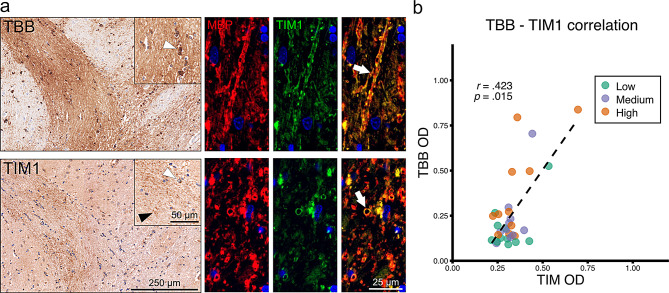
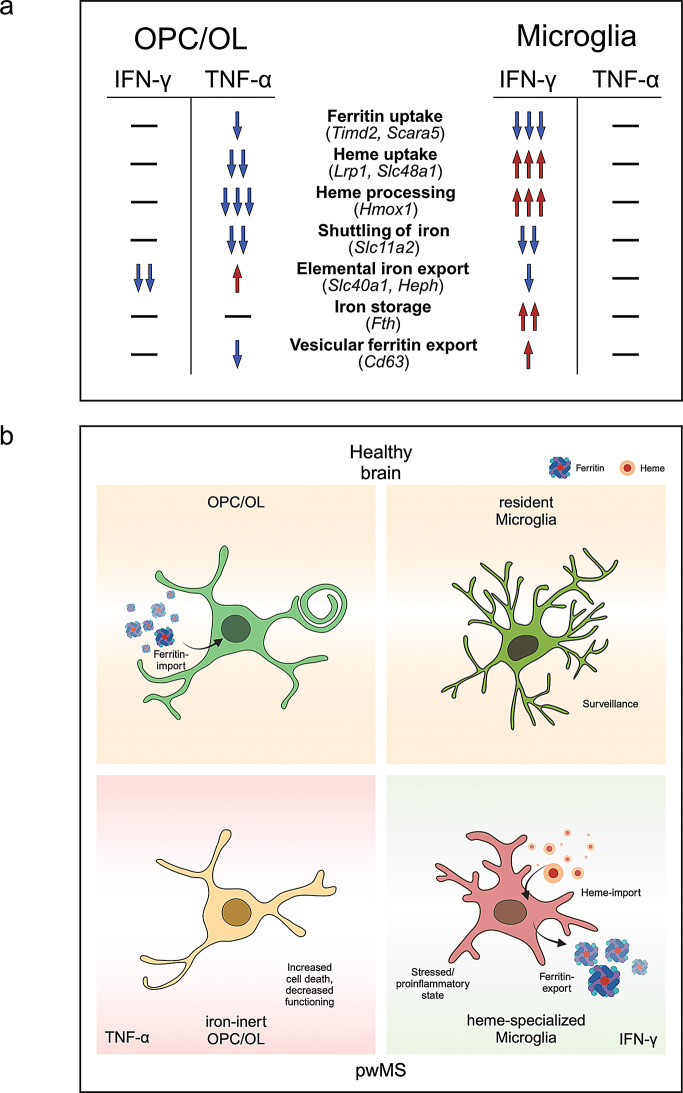
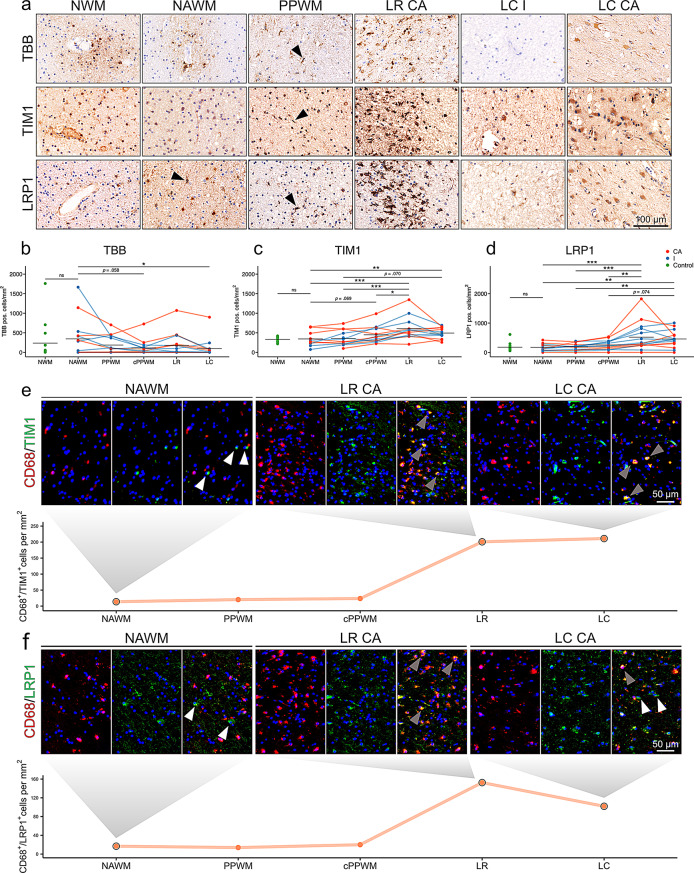
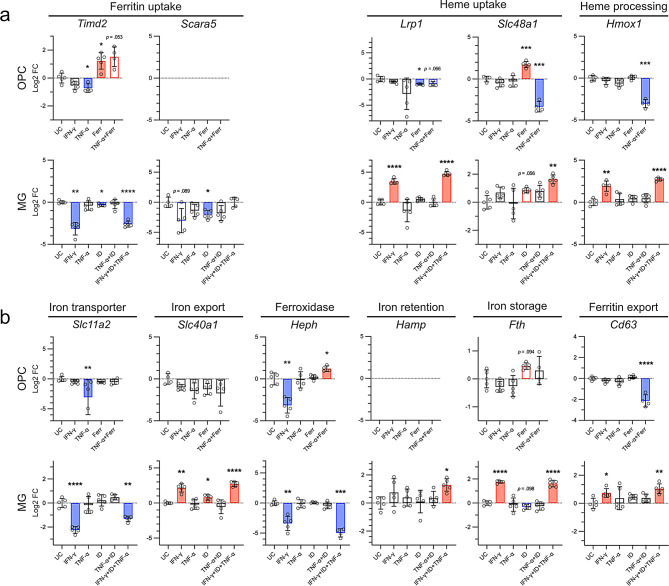
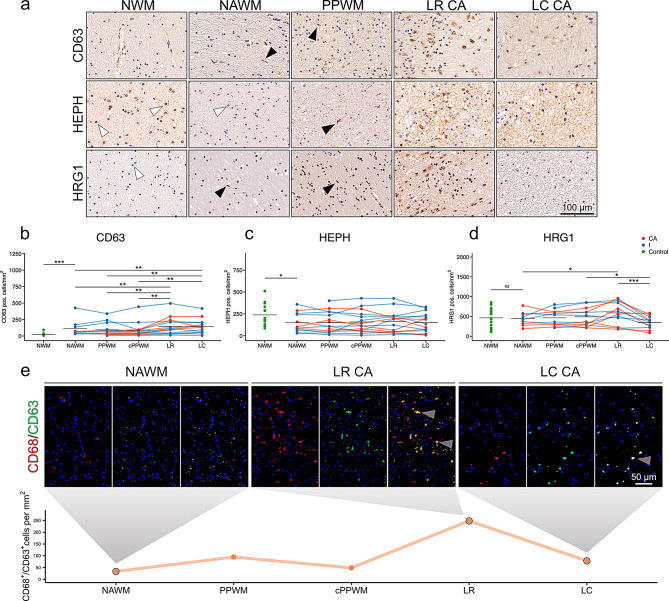
Changes in brain iron levels are a consistent feature of multiple sclerosis (MS) over its disease course. They encompass iron loss in oligodendrocytes in myelinated brain regions and iron accumulation in myeloid cells at so-called paramagnetic rims of chronic active lesions. Here, we explore the mechanisms behind this overall shift of iron from oligodendrocytes (OLs) to myeloid cells (MCs) and the loss of total brain-iron in MS. We investigated the expression of various iron importers and exporters, applying immunohistochemistry to a sample of control and MS autopsy cases. Additionally, we studied the transcriptional response of iron-related genes in primary rodent OL progenitor cells (OPCs) and microglia (MG) to various combinations of known MS-relevant pro-inflammatory stimuli together with iron loading. Histologically, we identified a correlation of OL-iron accumulation and the expression of the ferritin receptor TIM1 in myelinated white matter and observed an increase in the expression of iron-related proteins in myeloid cells at the lesion rims of MS plaques. qPCR revealed a marked increase of the heme scavenging and degradation machinery of MG under IFN-γ exposure, while OPCs changed to a more iron-inert phenotype with apparent decreased iron handling capabilities under MS-like inflammatory stimulation. Collectively, our data suggest that OL iron loss in MS is mainly due to a decrease in ferritin iron import. Iron accumulation in MCs at rims of chronic active lesions is in part driven by up-regulation of heme import and metabolism, while these cells also actively export ferritin.
脑铁水平的变化是多发性硬化症(MS)病程中的一个持续特征。这些变化包括髓鞘化脑区少突胶质细胞中的铁丢失以及慢性活动性病变所谓顺磁边缘处髓样细胞中的铁积累。在这里,我们探讨了MS中铁从少突胶质细胞(OLs)整体转移到髓样细胞(MCs)以及全脑铁丢失背后的机制。我们研究了各种铁导入蛋白和铁输出蛋白的表达,对对照和MS尸检病例样本进行了免疫组织化学检测。此外,我们研究了原代啮齿动物少突胶质前体细胞(OPCs)和小胶质细胞(MG)中与铁相关基因对各种已知的与MS相关的促炎刺激以及铁负荷的组合的转录反应。组织学上,我们在髓鞘化白质中确定了OL铁积累与铁蛋白受体TIM1表达之间的相关性,并观察到MS斑块病变边缘处髓样细胞中铁相关蛋白的表达增加。qPCR显示,在IFN-γ暴露下,MG的血红素清除和降解机制显著增加,而在类似MS的炎症刺激下,OPCs转变为铁惰性更强的表型,铁处理能力明显下降。总体而言,我们的数据表明,MS中OL铁丢失主要是由于铁蛋白铁导入减少。慢性活动性病变边缘MCs中的铁积累部分是由血红素导入和代谢上调驱动的,而这些细胞也会主动输出铁蛋白。