Hassani Ashkan, Flores Marlene, Streuli Sam, Jiang Yan, Guerra Alison Wishard, Fielding-Miller Rebecca
College of Osteopathic Medicine, Touro University Nevada, Las Vegas, Nevada, USA.
University of California san Diego, La Jolla, California, USA.
J Sch Health. 2025 Aug;95(8):597-603. doi: 10.1111/josh.70026. Epub 2025 Jun 5.
While mask mandates are unlikely to return in the event of a major resurgence in COVID-19 or another major respiratory disease surge, voluntary masking still shows promise. This ethnographic study seeks to understand the masking decision-making processes of parents and children in the diverse San Diego region, including US-Mexico Border school districts and military housing school communities.
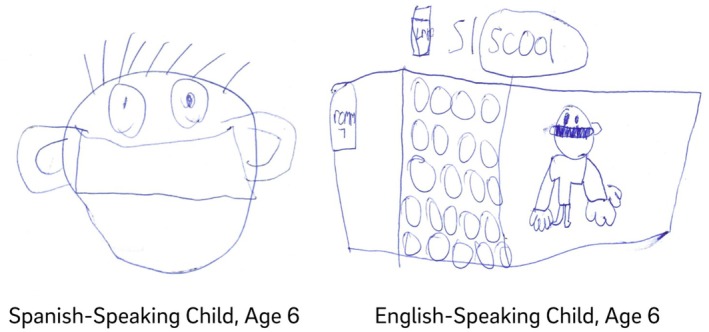
We conducted 19 interviews with parents and their young children focused on COVID-19 efforts at their child's school in English and Spanish and collected detailed field notes on masking culture from over 60 systematic observations from elementary schools across San Diego County from December 2021 to May 2022. We conducted analysis using Dedoose, including multiple rounds of coding and ongoing consensus meetings between researchers.
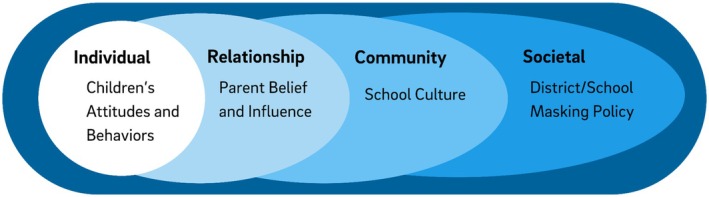
Guided by the social ecological model (SEM), we categorized the results into the following categories: Children's Attitudes and Behaviors, Parent Belief and Influence, School Culture, and District/School Mask Mandates. Each level of the SEM influenced individual and family masking behavior. In our data, School Culture in particular differentiated schools in mask adherence and encouraged masking after state mandates ended.
IMPLICATIONS FOR SCHOOL HEALTH POLICY, PRACTICE AND EQUITY: Masking does not need to end with mandates. Masking has been proven to reduce COVID-19 transmission, and school health policies should consider encouraging masking beyond mandates.
Adapting health messaging to the local context, partnering with trusted community champions, and building trust across governmental, school, and public health entities can improve the effectiveness of public health messaging.
虽然在新冠疫情大幅反弹或其他重大呼吸道疾病激增时,口罩强制令不太可能恢复,但自愿佩戴口罩仍显示出前景。这项人种学研究旨在了解圣地亚哥地区多样化社区中家长和孩子佩戴口罩的决策过程,该地区包括美墨边境学区和军事住房社区的学校。
我们用英语和西班牙语对家长及其年幼子女进行了19次访谈,重点是孩子所在学校应对新冠疫情的措施,并从2021年12月至2022年5月对圣地亚哥县各小学进行的60多次系统观察中收集了关于口罩文化的详细实地记录。我们使用Dedoose进行分析,包括多轮编码以及研究人员之间持续的共识会议。
在社会生态模型(SEM)的指导下,我们将结果分为以下几类:儿童的态度和行为、家长的信念和影响、学校文化以及学区/学校口罩强制令。社会生态模型的每个层面都影响着个人和家庭的口罩佩戴行为。在我们的数据中,学校文化尤其使学校在口罩佩戴依从性方面有所差异,并在州强制令结束后鼓励佩戴口罩。
对学校卫生政策、实践和公平性的启示:口罩佩戴无需随强制令结束。事实证明,佩戴口罩可减少新冠病毒传播,学校卫生政策应考虑在强制令之外鼓励佩戴口罩。
使健康信息适应当地情况,与值得信赖的社区倡导者合作,并在政府、学校和公共卫生实体之间建立信任,可提高公共卫生信息的有效性。