Li Yuanfeng, He Wei, Piao Yinzi, Wang Yumeng, Peng Mengna, Li Huaping, Hu Rongdang, Li Dongdong, Shi Linqi, Liu Yong
Translational Medicine Laboratory, The First Affiliated Hospital of Wenzhou Medical University, Wenzhou, Zhejiang, China.
Department of Orthodontics School and Hospital of Stomatology, Wenzhou Medical University Wenzhou, Wenzhou, Zhejiang, China.
Nat Commun. 2025 Jun 5;16(1):5246. doi: 10.1038/s41467-025-60570-2.
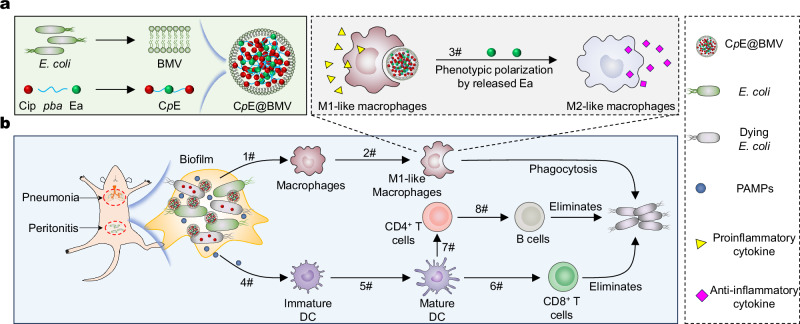
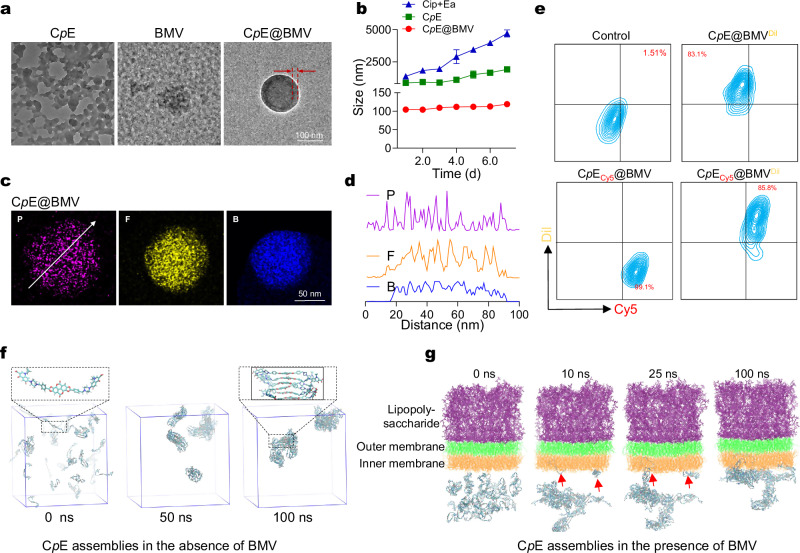
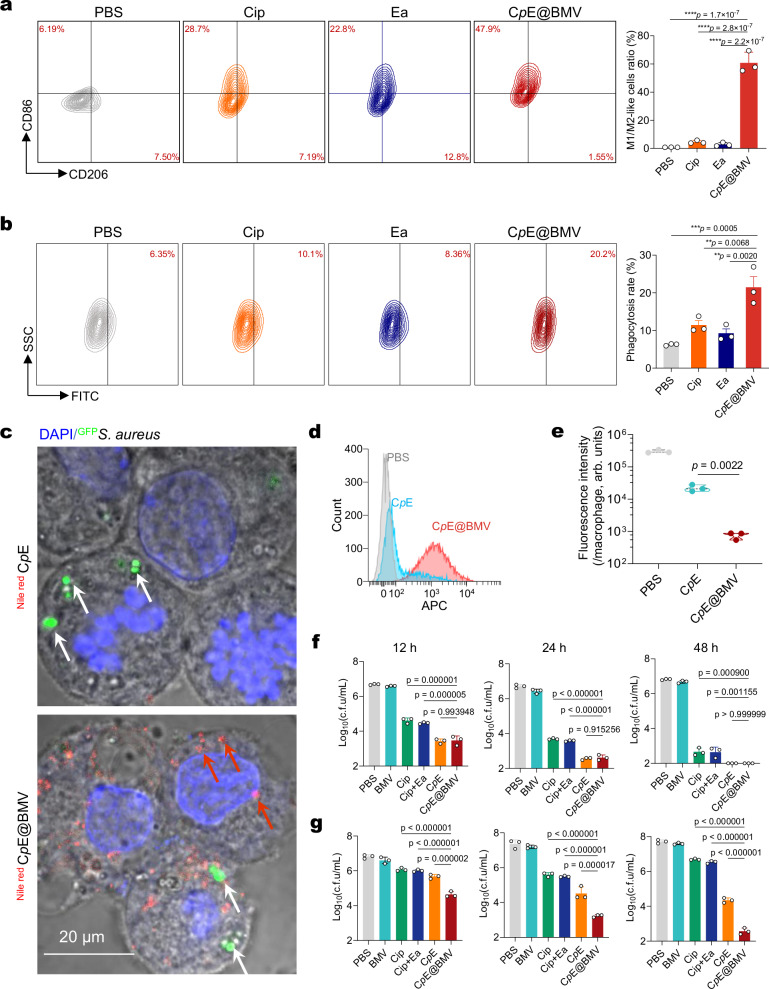
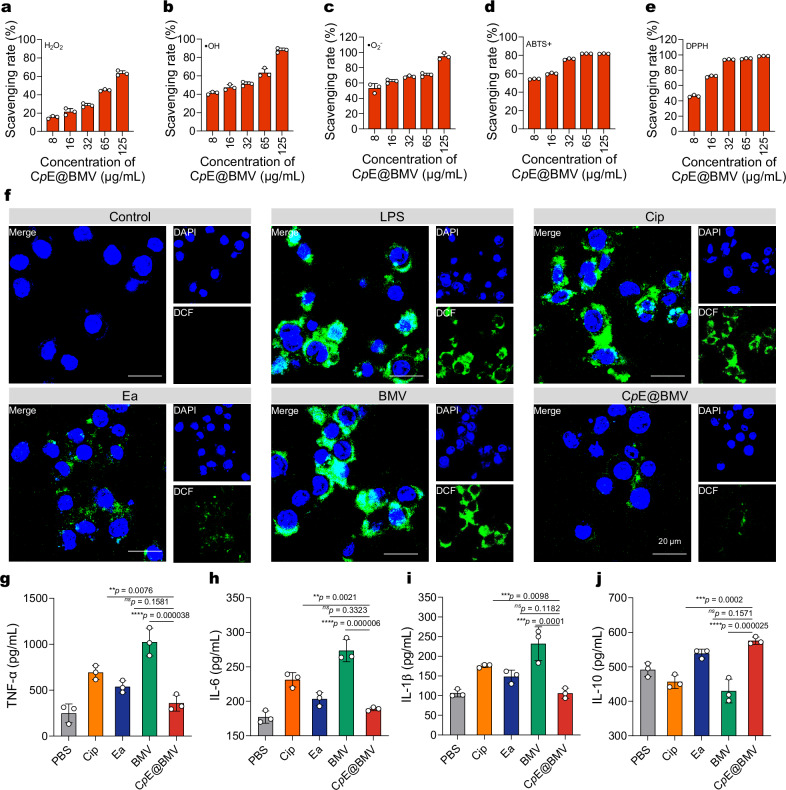
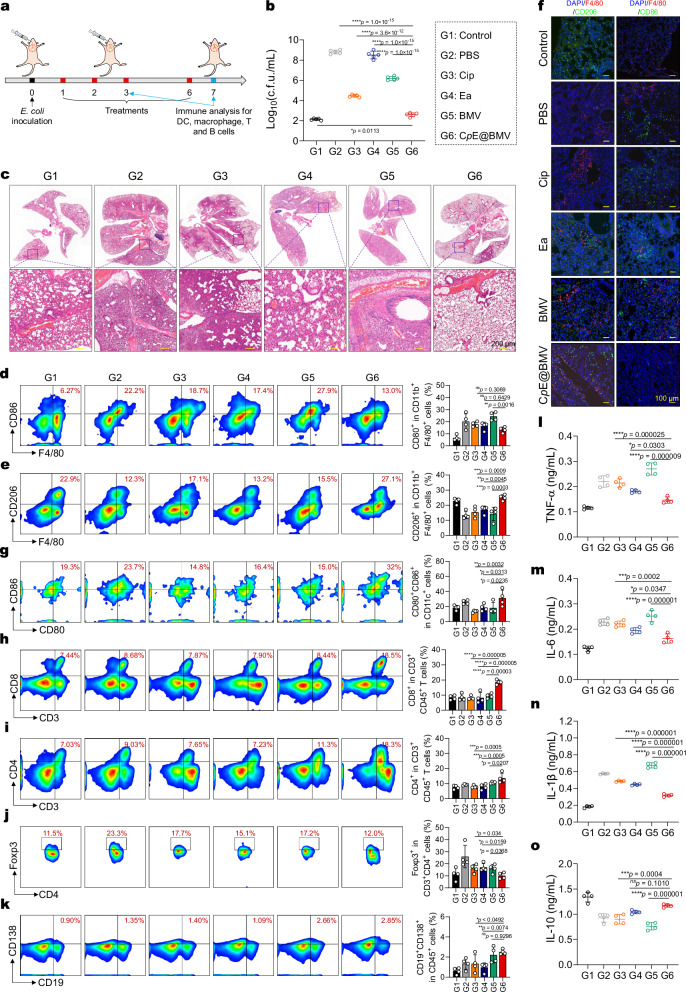
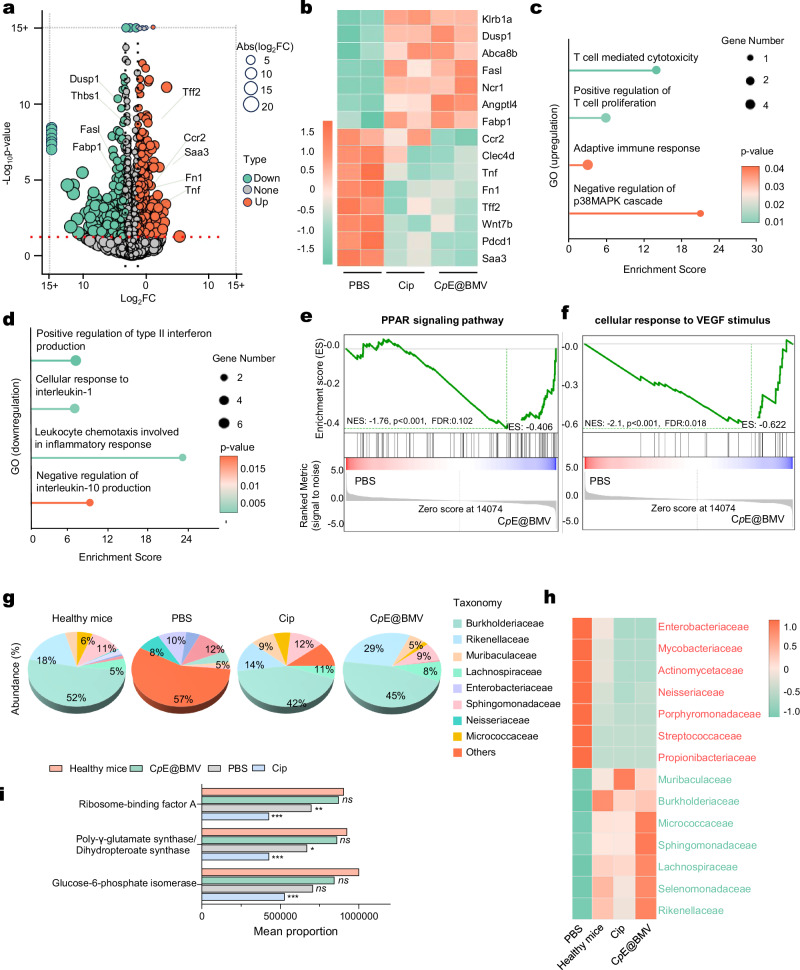
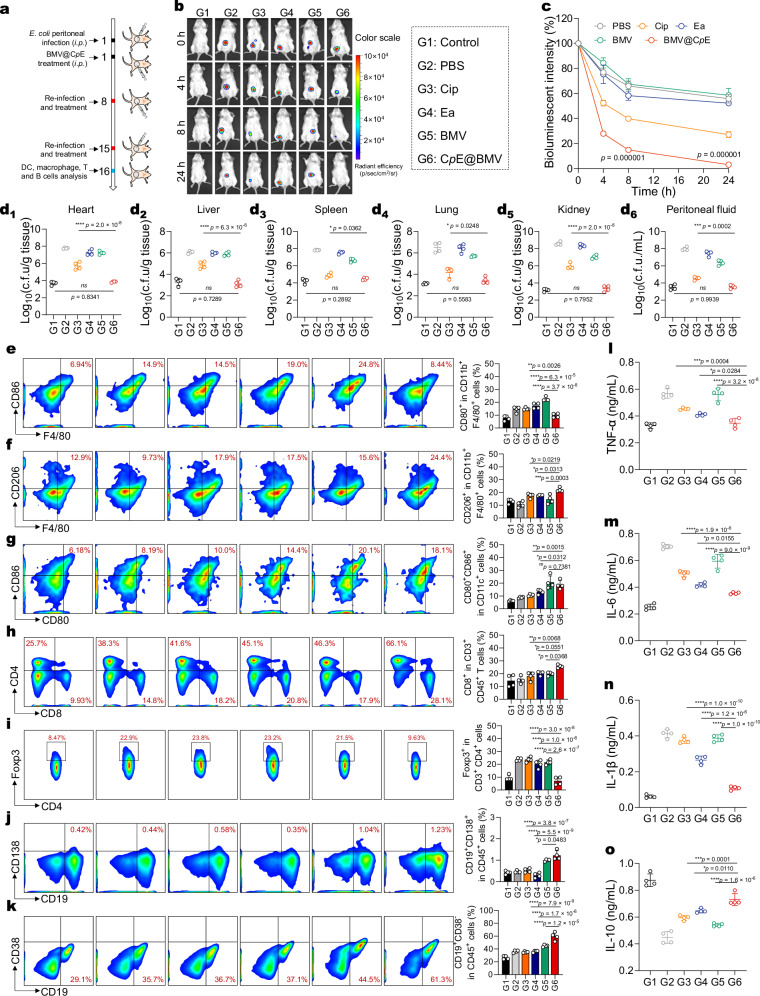
Overcoming challenges in drug targeting and modulating the immunosuppressive microenvironment are critical for treating chronic bacterial infections, which are often characterized by intracellular bacteria and biofilms. To overcome these barriers, we report a multifunctional nanomedicine (CpE@BMV). The prodrug conjugate (CpE), composed of two phenylboronic acid-modified ciprofloxacin (Cip-pba) molecules and ellagic acid (Ea), self-assembles due to its hydrophobic nature and π-π stacking. Bacterial membrane vesicles (BMVs) derived from Escherichia coli aid in CpE assembly and structural stabilization. Upon administration, pathogen-associated molecular patterns on CpE@BMV engage toll-like receptors on macrophages, activating these cells and enhancing their phagocytic response. Once internalized, CpE responds to elevated intracellular H₂O₂ levels, releasing Cip to eliminate intracellular bacteria. Additionally, Ea scavenges excess reactive oxygen species in inflamed macrophages and modulates the expression of inflammatory factors, preventing an exaggerated inflammatory response. The CpE@BMV formulation also penetrates biofilms, eliminating bacteria and releasing antigens. These antigens are transported to draining lymph nodes, where they induce dendritic cell maturation and trigger a robust T and B cell-mediated immune response, helping restore immune balance and combat pathogens effectively in female mouse models. Therefore, our CpE@BMV provide an efficient strategy combining chemical and immunological therapies for chronic bacterial infection management.
克服药物靶向方面的挑战并调节免疫抑制微环境对于治疗慢性细菌感染至关重要,慢性细菌感染通常以内细胞细菌和生物膜为特征。为了克服这些障碍,我们报道了一种多功能纳米药物(CpE@BMV)。前药缀合物(CpE)由两个苯基硼酸修饰的环丙沙星(Cip-pba)分子和鞣花酸(Ea)组成,因其疏水性和π-π堆积作用而自组装。源自大肠杆菌的细菌膜囊泡(BMVs)有助于CpE组装和结构稳定。给药后,CpE@BMV上的病原体相关分子模式与巨噬细胞上的Toll样受体结合,激活这些细胞并增强其吞噬反应。一旦被内化,CpE会对细胞内升高的H₂O₂水平做出反应,释放环丙沙星以消除细胞内细菌。此外,鞣花酸清除炎症巨噬细胞中过量的活性氧并调节炎症因子的表达,防止过度的炎症反应。CpE@BMV制剂还能穿透生物膜,消除细菌并释放抗原。这些抗原被转运至引流淋巴结,在那里它们诱导树突状细胞成熟并触发强大的T细胞和B细胞介导的免疫反应,有助于在雌性小鼠模型中恢复免疫平衡并有效对抗病原体。因此,我们的CpE@BMV为慢性细菌感染管理提供了一种结合化学疗法和免疫疗法的有效策略。