Fathi Ali, Heidari Mohammad, Rasouli Javad, Ghasemnejad-Berenji Hojat
Department of Epidemiology, School of Medicine, Urmia University of Medical Sciences, Urmia, Iran.
Reproductive Health Research Center, Clinical Research Institute, Urmia University of Medical Sciences, Urmia, Iran.
BMC Womens Health. 2025 Jun 5;25(1):280. doi: 10.1186/s12905-025-03766-4.
Given the significance of ovarian cancer and the importance of early diagnosis, this meta-analysis aimed to assess the diagnostic value of the ROMA index in predicting ovarian cancer in postmenopausal women.
This systematic review and meta-analysis were conducted in accordance with the Preferred Reporting Items for Systematic Reviews and Meta-Analyses (PRISMA) guidelines. Relevant articles were retrieved from databases, including Web of Science, PubMed (MEDLINE), Google Scholar, Scopus, and Embase. The quality of the included studies was assessed using QUADAS-2. The GRADEPRO tool was used to evaluate and grade the quality of the evidence obtained from the meta-analysis. The diagnostic performance of the ROMA index in postmenopausal women was evaluated and comparisons were made using sensitivity, specificity, diagnostic odds ratio (DOR), positive likelihood ratio (LR +), negative likelihood ratio (LR-), and inverse negative likelihood ratio (1/LR-). Data were analyzed in STATA software using the "midas" and "metandi" commands.
In this study, 34 out of the 99 identified studies were included in the meta-analysis. Analysis of the ROMA index in postmenopausal Asian women revealed a sensitivity of 88%, specificity of 93%, diagnostic odds ratio (DOR) of 99, positive likelihood ratio (LR +) of 13, negative likelihood ratio (LR-) of 0.131, and inverse negative likelihood ratio (1/LR-) of 8. Furthermore, in cross-sectional studies conducted on postmenopausal women, the ROMA index demonstrated a sensitivity of 90%, specificity of 93%, DOR of 129, LR + of 14, LR - of 0.106, and 1/LR - of 9. Finally, with a cut-off range of 25.1-40, the ROMA index showed a sensitivity of 90%, specificity of 90%, DOR of 76, LR + of 9, LR- of 0.115, and 1/LR- of 9. No significant publication bias was detected in this study (P > 0.05).
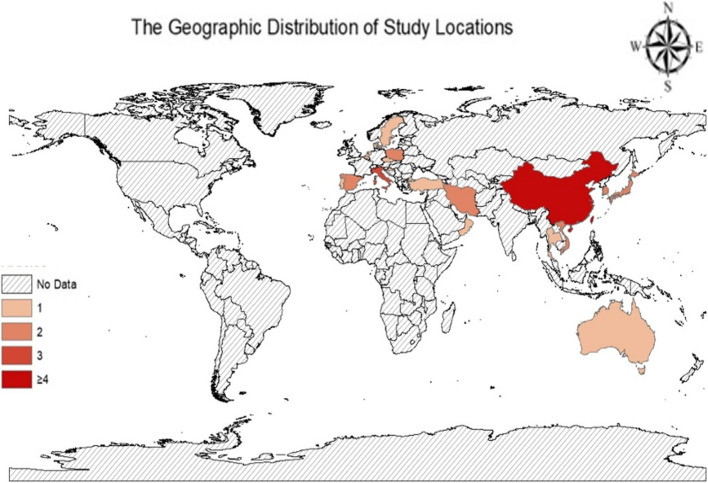
The ROMA index showed greater efficacy in postmenopausal Asian women than in their European counterparts. Cross-sectional studies produced larger estimates than cohort studies. Furthermore, the highest estimate of the ROMA index was obtained with a cutoff of (25.1-40) as opposed to (10-25).
鉴于卵巢癌的重要性以及早期诊断的意义,本荟萃分析旨在评估ROMA指数在预测绝经后女性卵巢癌方面的诊断价值。
本系统评价和荟萃分析按照系统评价与荟萃分析的首选报告项目(PRISMA)指南进行。从包括科学网、PubMed(MEDLINE)、谷歌学术、Scopus和Embase在内的数据库中检索相关文章。使用QUADAS-2评估纳入研究的质量。使用GRADEPRO工具评估和分级从荟萃分析中获得的证据质量。评估ROMA指数在绝经后女性中的诊断性能,并使用敏感性、特异性、诊断比值比(DOR)、阳性似然比(LR+)、阴性似然比(LR-)和反向阴性似然比(1/LR-)进行比较。使用STATA软件中的“midas”和“metandi”命令对数据进行分析。
在本研究中,99项已识别研究中的34项被纳入荟萃分析。对绝经后亚洲女性ROMA指数的分析显示,敏感性为88%,特异性为93%,诊断比值比(DOR)为99,阳性似然比(LR+)为13,阴性似然比(LR-)为0.131,反向阴性似然比(1/LR-)为8。此外,在对绝经后女性进行的横断面研究中,ROMA指数的敏感性为90%,特异性为93%,DOR为129,LR+为14,LR-为0.106,1/LR-为9。最后,在截断范围为25.1 - 40时,ROMA指数的敏感性为90%,特异性为90%,DOR为76,LR+为9,LR-为0.115,1/LR-为9。本研究未检测到显著的发表偏倚(P>0.05)。
ROMA指数在绝经后亚洲女性中比在欧洲女性中显示出更高的效能。横断面研究得出的估计值比队列研究的更大。此外,与截断值为(10 - 25)相比,截断值为(25.1 - 40)时ROMA指数的估计值最高。