Wu Baojun, Yang Mao, Hu Donglei, Zhang Ray, Liu Bin, Hochstadt Samantha, Lanfear David E, Witonsky Jonathan, Kumar Rajesh, Hollenbach Jill A, Burchard Esteban G, Ziv Elad, Williams L Keoki
Center for Individualized and Genomic Medicine Research, Department of Internal Medicine, Henry Ford Health, Detroit, Mich.
Department of Medicine, University of California San Francisco, San Francisco, Calif.
J Allergy Clin Immunol Glob. 2025 Apr 22;4(3):100485. doi: 10.1016/j.jacig.2025.100485. eCollection 2025 Aug.
Peanut is a major cause of food allergy. HLA genes have been consistently associated with peanut allergy in association studies. To date, however, there have been very few genetic studies of peanut allergy in non-Hispanic Black (Black) individuals, a group disproportionately affected by food allergy.
Our aim was to study the relationship between HLA alleles and peanut allergy among Black individuals.
The analysis consisted of Black participants from the Study of Asthma-Related Phenotypes and Pharmacogenomic Interactions by Race-Ethnicity (SAPPHIRE), a large cohort of individuals from metropolitan Detroit. At the time of enrollment, participants provided detailed food allergy histories, including symptoms. Four-digit resolution HLA allele calls were made using whole genome sequence data.
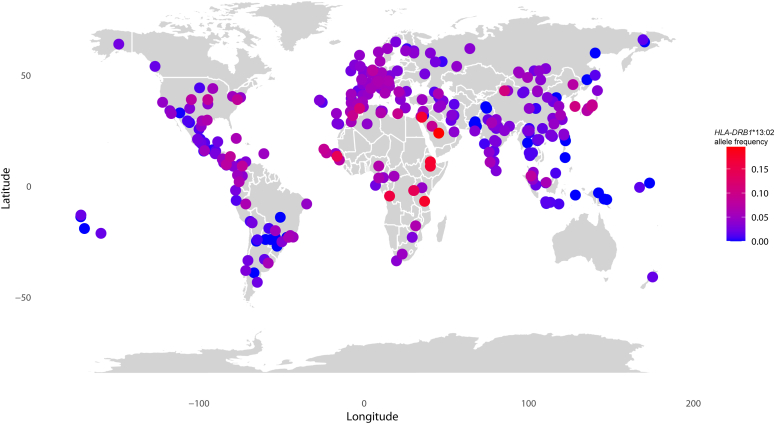
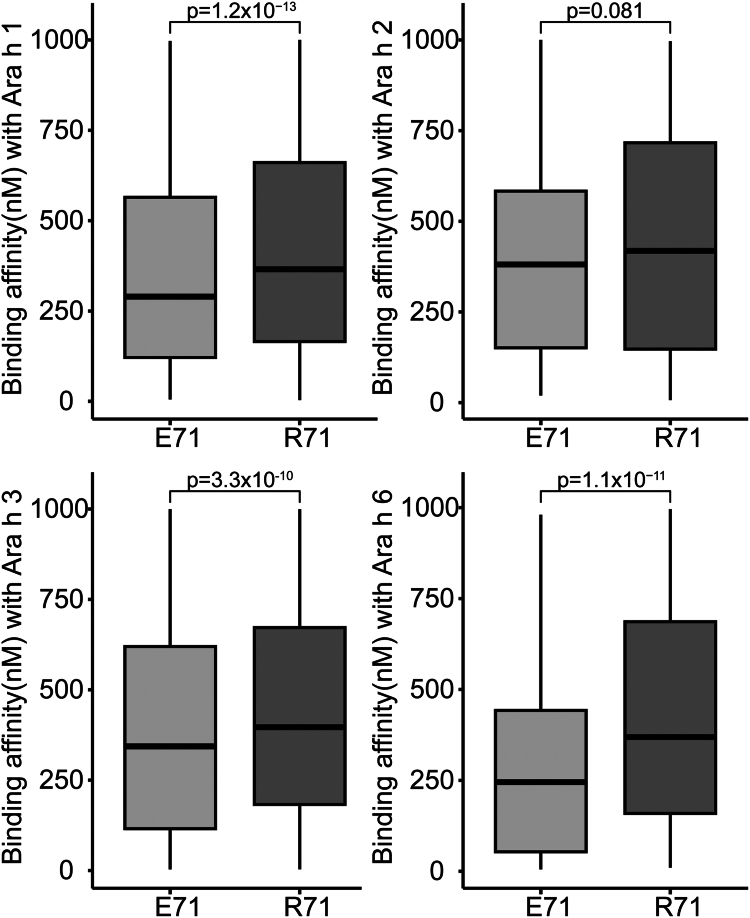
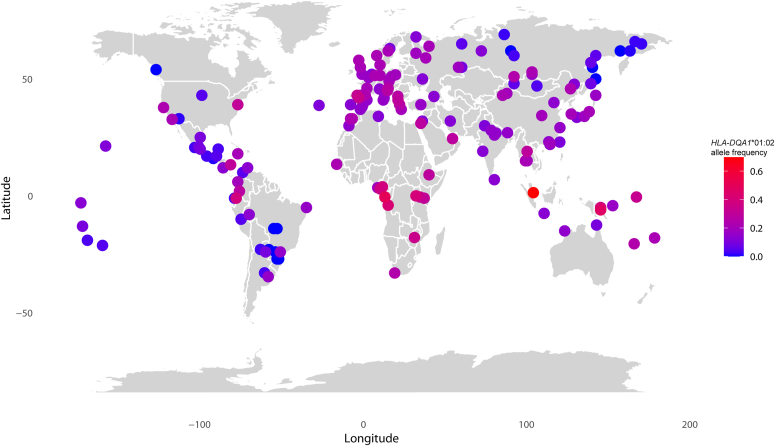
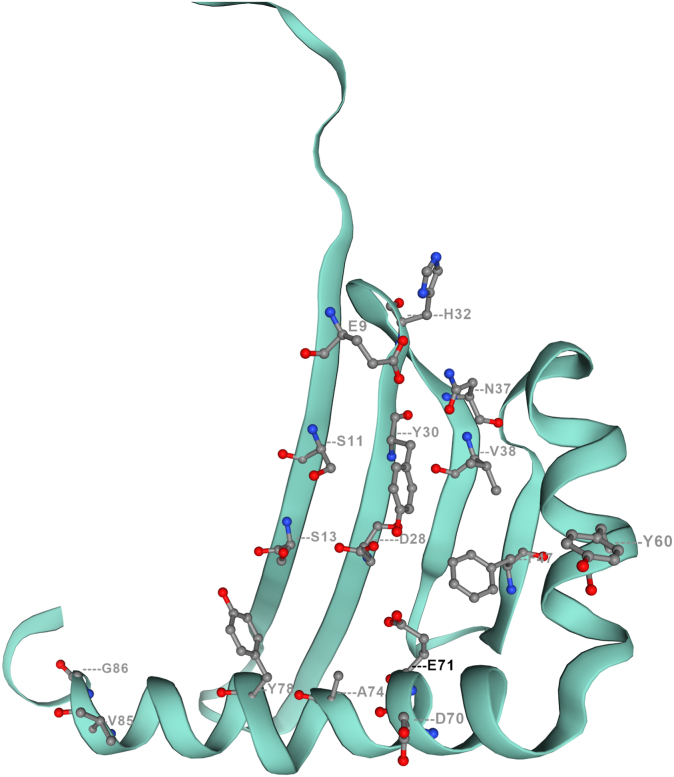
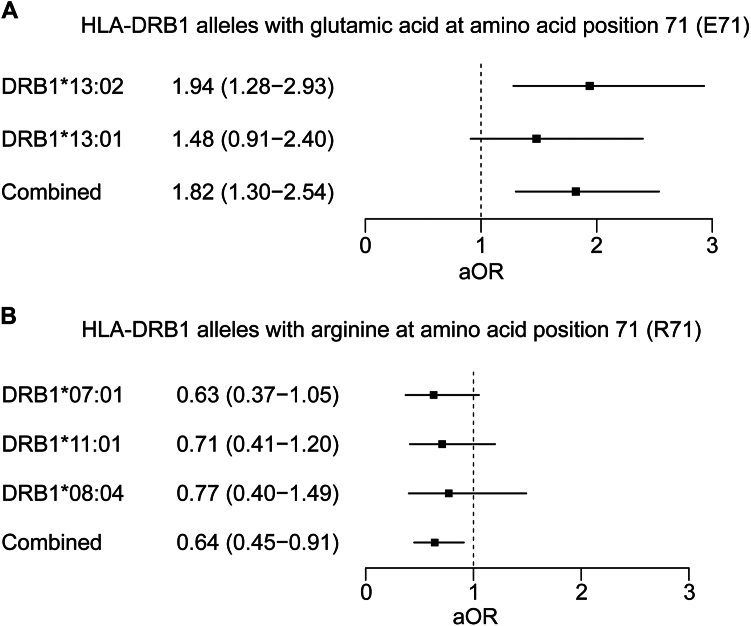
The cases consisted of 119 individuals with reported peanut allergy and 59 individuals with peanut-related anaphylaxis; the comparison group consisted of 2640 individuals without reported food allergy. ∗13:02 was the most significant allele associated with peanut allergy (adjusted odds ratio = 1.94 [95% CI = 1.28-2.93]), and ∗01:02 was the top association with peanut-related anaphylaxis (aOR = 1.67 [95% CI = 1.14-2.44]). Amino acid polymorphisms at position 71 in the binding groove of HLA-DRB1 were associated with peanut allergy and estimated to affect peanut allergen binding affinity.
In a cohort of Black individuals, this study independently identified the same associations of peanut allergy and HLA that were previously observed in non-Hispanic White individuals. Our findings suggest that specific HLA binding groove amino acid polymorphisms may confer similar peanut allergy risk across population groups and HLA alleles.
花生是食物过敏的主要诱因。在关联研究中,HLA基因一直与花生过敏相关。然而,迄今为止,针对非西班牙裔黑人(黑人)这一受食物过敏影响尤为严重的群体,关于花生过敏的遗传学研究极少。
我们旨在研究黑人个体中HLA等位基因与花生过敏之间的关系。
分析对象来自哮喘相关表型与种族 - 民族药物基因组相互作用研究(SAPPHIRE)中的黑人参与者,该研究是一个来自底特律大都市的大型队列。在入组时,参与者提供了详细的食物过敏史,包括症状。使用全基因组序列数据进行四位数分辨率的HLA等位基因分型。
病例组包括119名报告有花生过敏的个体和59名有花生相关过敏反应的个体;对照组由2640名未报告有食物过敏的个体组成。∗13:02是与花生过敏最显著相关的等位基因(调整后的优势比 = 1.94 [95%置信区间 = 1.28 - 2.93]),∗01:02是与花生相关过敏反应的首要关联等位基因(调整后的优势比 = 1.67 [95%置信区间 = 1.14 - 2.44])。HLA - DRB1结合槽第71位的氨基酸多态性与花生过敏相关,并且估计会影响花生过敏原的结合亲和力。
在一组黑人个体中,本研究独立发现了与之前在非西班牙裔白人个体中观察到的相同的花生过敏与HLA的关联。我们的研究结果表明,特定的HLA结合槽氨基酸多态性可能在不同人群组和HLA等位基因中赋予相似的花生过敏风险。