Parameshwaran Dhanya, Bhavnani Supriya, Mukherjee Debarati, Sharma Kamal Kant, Newson Jennifer Jane, Subramaniyam Narayan Puthanmadam, Divan Gauri, Patel Vikram, Thiagarajan Tara C
Sapien Labs Center for Human Brain and Mind at Krea, IFMR, Chennai, India.
Child Development Group, Sangath, New Delhi, India.
Dev Cogn Neurosci. 2025 May 31;74:101575. doi: 10.1016/j.dcn.2025.101575.
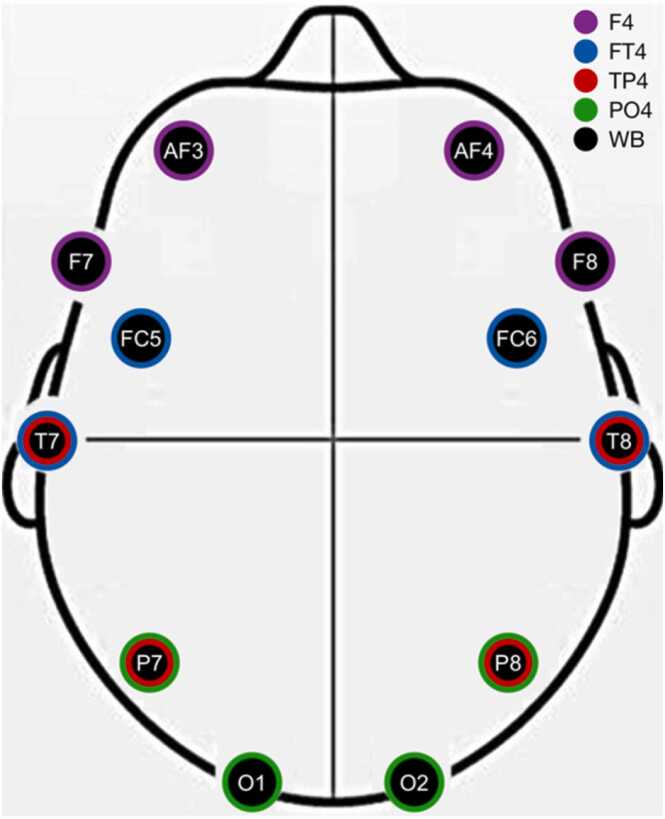
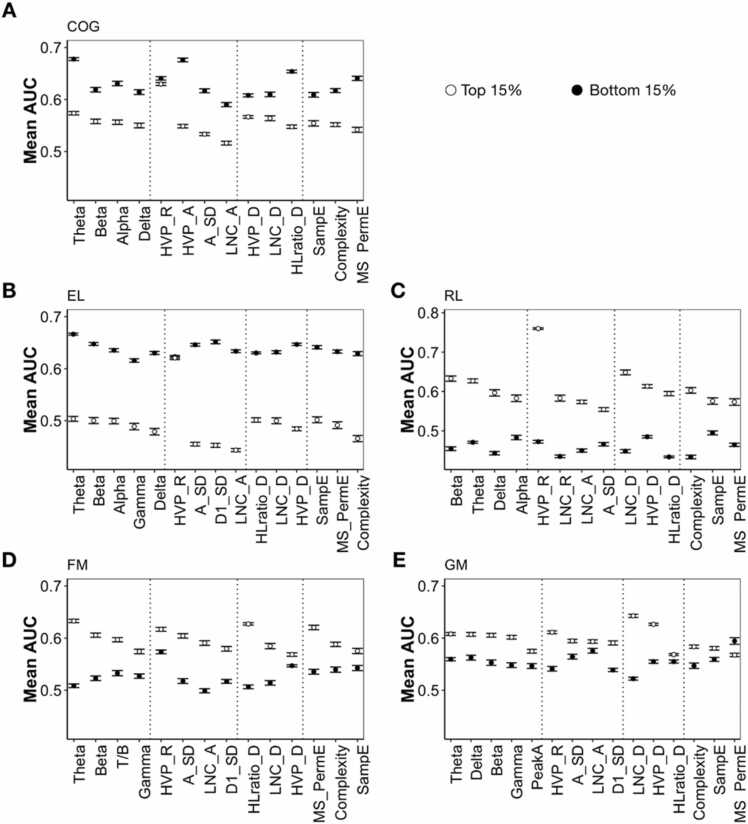
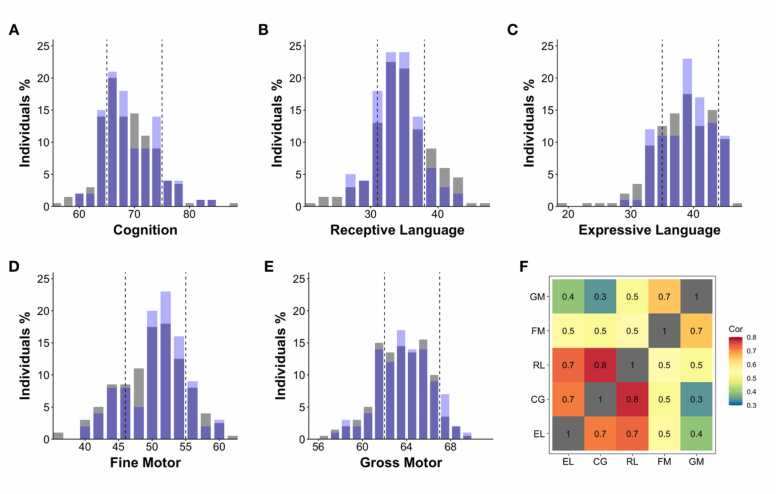
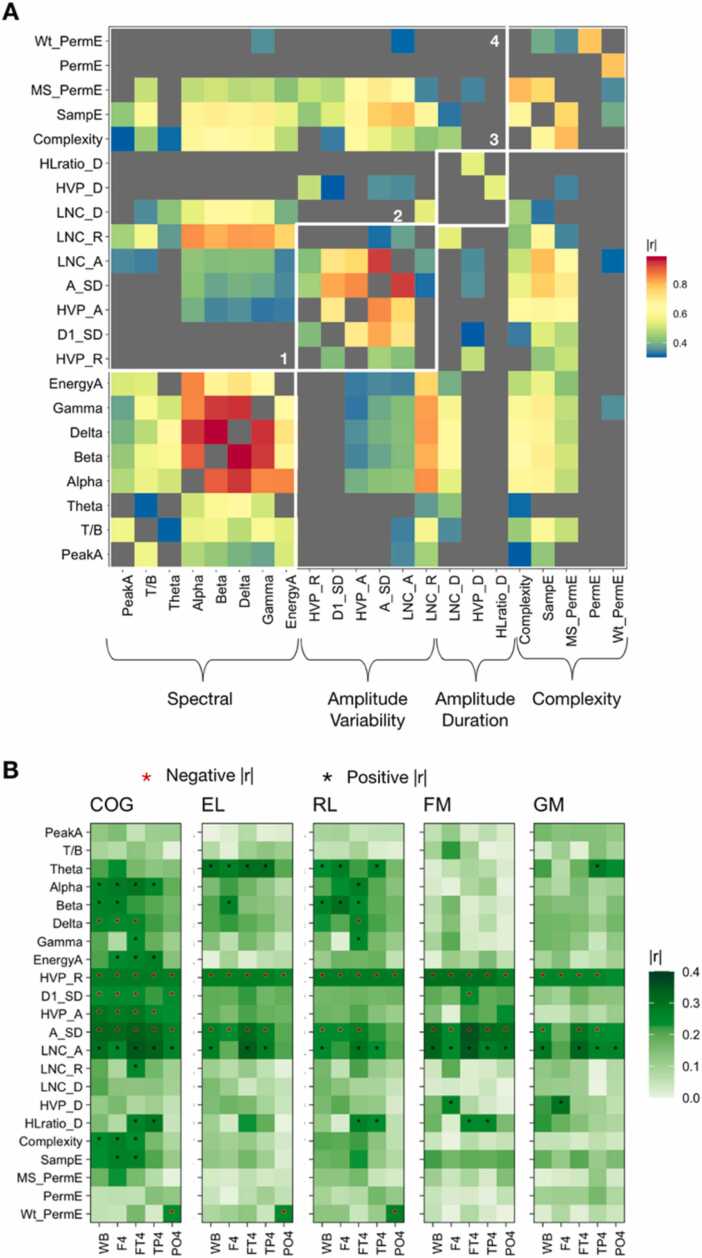
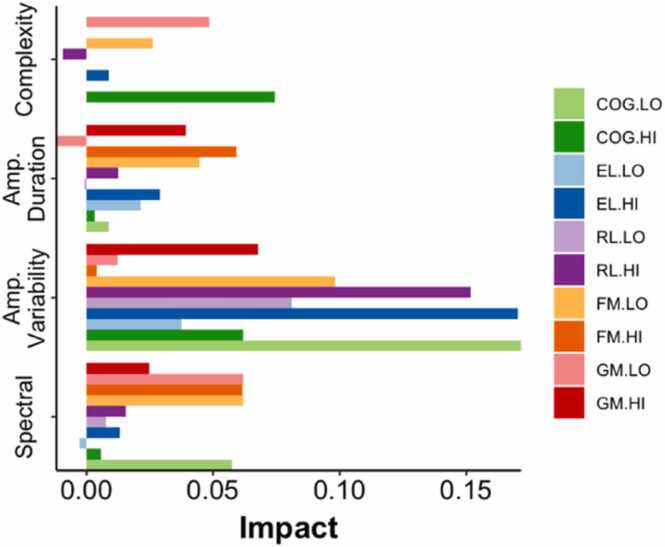
Monitoring cognitive development in early childhood enables detection of problems for timely intervention. However, currently recommended methods require lengthy evaluations of task performance, and are resource intense. Here we examined whether 3 minutes of resting-state EEG (rs-EEG) recorded in 70 33-40-month-old children using a 14-channel portable EEG device in low-resource households could classify performance on five domains of developmental outcomes (cognition, receptive language, expressive language, fine motor and gross motor coordination) as measured by the Bayley's Scale of Infant and Toddler Development, 3rd Edition (BSID-III). Applying supervised learning models to a combination of spectral features and novel time-domain features derived from EEG data, we predicted BSID-III domain scores with moderate accuracy (AUCs ranging from 0.70 to 0.84 and F1-scores ranging from 0.58 to 0.76). While spectral frequencies significantly correlated with cognitive and language domain scores, time-domain features describing amplitude variability were more significantly correlated and contributed more substantially to model outcomes. Model performance was reliable even with a subset of 4 channels. Overall, this study provides a first demonstration that rs-EEG from low electrode configuration devices can serve as a quick and reliable indicator of cognitive developmental outcomes and aid in identifying those requiring support during early childhood.
监测幼儿期的认知发展有助于发现问题以便及时干预。然而,目前推荐的方法需要对任务表现进行冗长的评估,且资源消耗大。在此,我们研究了在资源匮乏家庭中,使用14通道便携式脑电图设备记录70名33 - 40个月大儿童的3分钟静息态脑电图(rs-EEG),是否能够对贝利婴幼儿发展量表第三版(BSID-III)所测量的五个发育结果领域(认知、接受性语言、表达性语言、精细运动和大运动协调)的表现进行分类。将监督学习模型应用于从脑电图数据中提取的频谱特征和新的时域特征的组合,我们以中等准确率预测了BSID-III领域得分(曲线下面积范围为0.70至0.84,F1分数范围为0.58至0.76)。虽然频谱频率与认知和语言领域得分显著相关,但描述振幅变异性的时域特征相关性更强,对模型结果的贡献也更大。即使使用4个通道的子集,模型性能也很可靠。总体而言,本研究首次证明,来自低电极配置设备的rs-EEG可以作为认知发展结果的快速可靠指标,并有助于识别那些在幼儿期需要支持的儿童。