Voigts Jakob, Kanitscheider Ingmar, Miller Nicholas J, Toloza Enrique H S, Newman Jonathan P, Fiete Ila R, Harnett Mark T
Department of Brain and Cognitive Sciences, MIT, Cambridge, MA, USA.
McGovern Institute for Brain Research, MIT, Cambridge, MA, USA.
Nat Neurosci. 2025 Jun;28(6):1293-1299. doi: 10.1038/s41593-025-01944-z. Epub 2025 Jun 6.
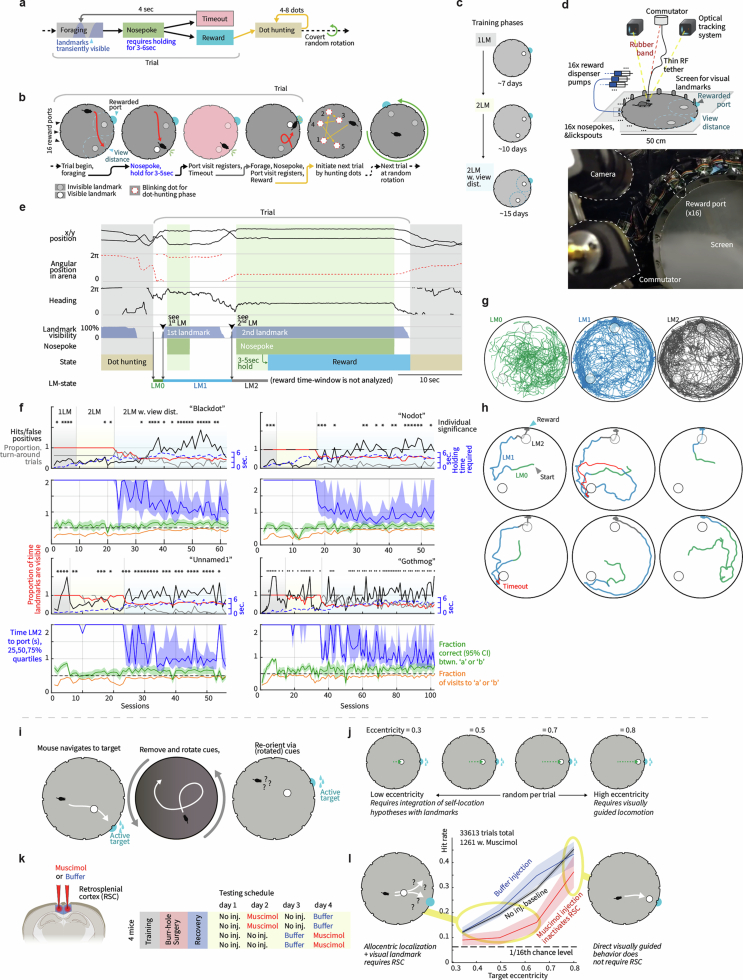
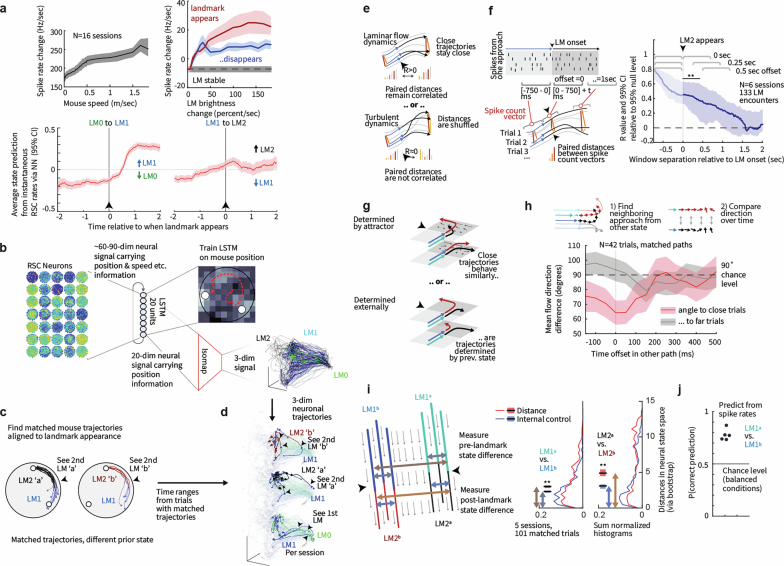
From visual perception to language, sensory stimuli change their meaning depending on previous experience. Recurrent neural dynamics can interpret stimuli based on externally cued context, but it is unknown whether they can compute and employ internal hypotheses to resolve ambiguities. Here we show that mouse retrosplenial cortex (RSC) can form several hypotheses over time and perform spatial reasoning through recurrent dynamics. In our task, mice navigated using ambiguous landmarks that are identified through their mutual spatial relationship, requiring sequential refinement of hypotheses. Neurons in RSC and in artificial neural networks encoded mixtures of hypotheses, location and sensory information, and were constrained by robust low-dimensional dynamics. RSC encoded hypotheses as locations in activity space with divergent trajectories for identical sensory inputs, enabling their correct interpretation. Our results indicate that interactions between internal hypotheses and external sensory data in recurrent circuits can provide a substrate for complex sequential cognitive reasoning.
从视觉感知到语言,感觉刺激会根据以往经验改变其意义。循环神经动力学可以根据外部提示的上下文来解释刺激,但尚不清楚它们是否能够计算并运用内部假设来解决模糊性问题。在这里,我们表明小鼠后扣带回皮质(RSC)能够随着时间形成多种假设,并通过循环动力学进行空间推理。在我们的任务中,小鼠利用通过相互空间关系识别的模糊地标进行导航,这需要对假设进行顺序细化。RSC和人工神经网络中的神经元编码了假设、位置和感觉信息的混合,并受到强大的低维动力学的约束。RSC将假设编码为活动空间中的位置,对于相同的感觉输入具有发散的轨迹,从而能够对其进行正确解释。我们的结果表明,循环回路中内部假设与外部感觉数据之间的相互作用可以为复杂的顺序认知推理提供基础。