Liao Yumei, Zhang Qinghua, Shi Qiaoyun, Liu Peng, Zhong Peiyun, Guo Lingling, Huang Zijian, Peng Yinghui, Liu Wei, Zhang Shiqing, Adorján István, Fukuzaki Yumi, Kawashita Eri, Zhang Xiao-Qi, Ma Nan, Zhang Xiaoshen, Molnár Zoltán, Shi Lei
Department of Cardiovascular Surgery, The First Affiliated Hospital, Jinan University, Guangzhou, Guangdong Province, China.
State Key Laboratory of Bioactive Molecules and Druggability Assessment, Jinan University, Guangzhou, Guangdong Province, China.
Neural Regen Res. 2026 Jan 1;21(1):333-345. doi: 10.4103/NRR.NRR-D-24-00044. Epub 2024 Sep 6.
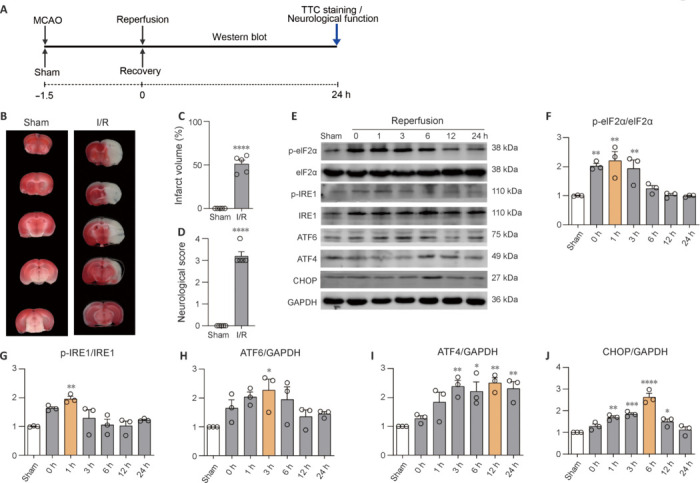
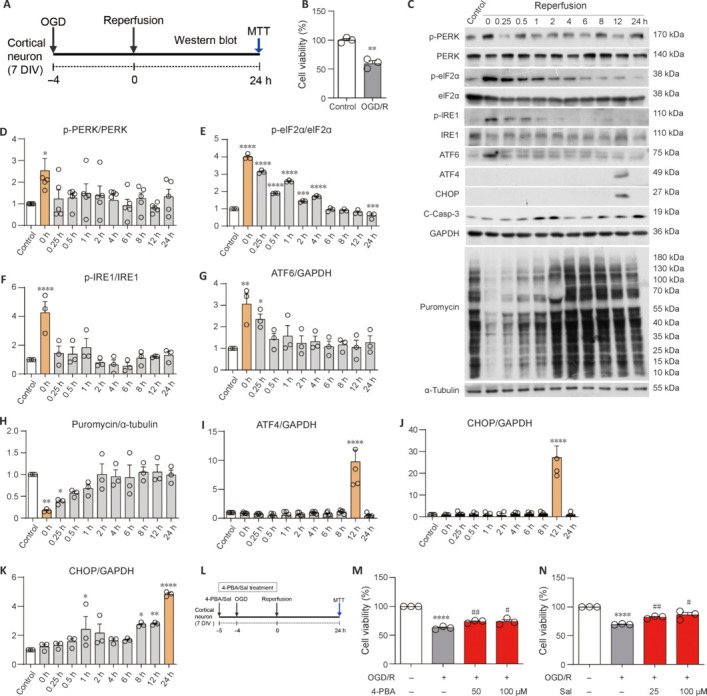
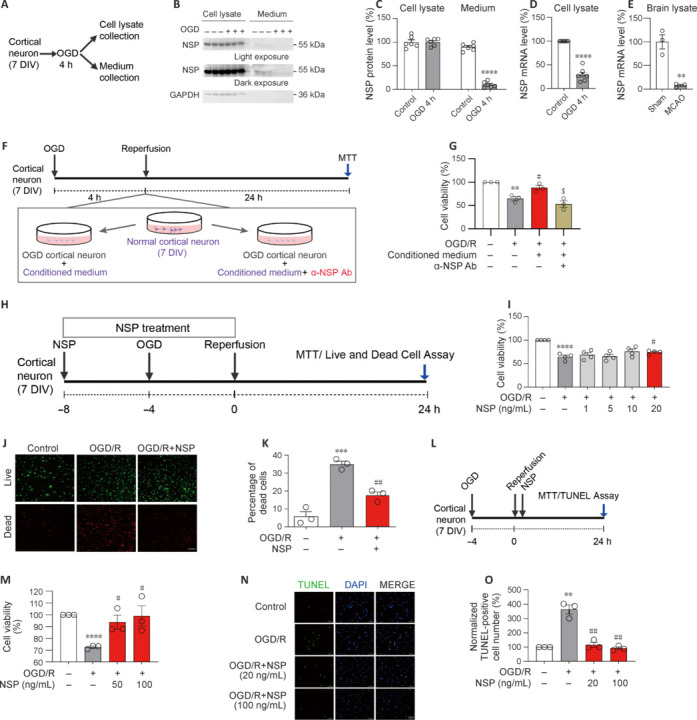
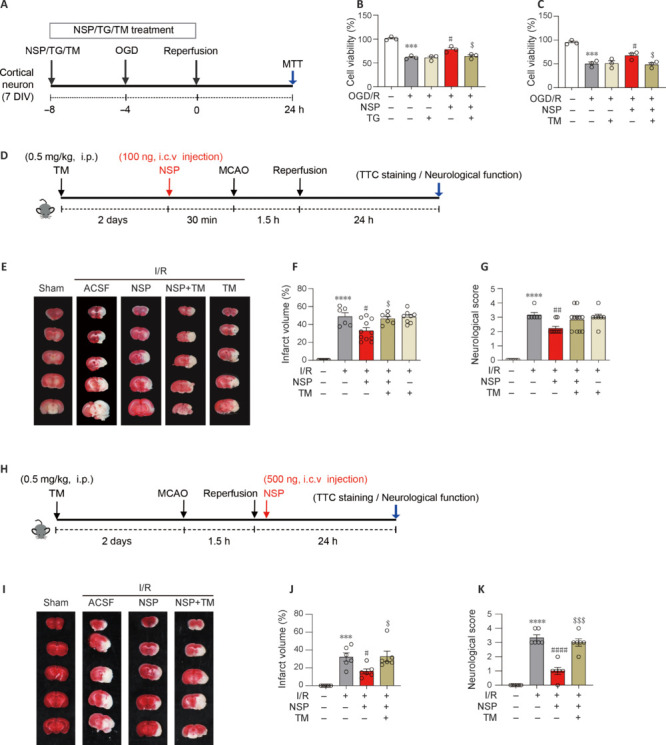
JOURNAL/nrgr/04.03/01300535-202601000-00037/figure1/v/2025-06-09T151831Z/r/image-tiff Neuroserpin, a secreted protein that belongs to the serpin superfamily of serine protease inhibitors, is highly expressed in the central nervous system and plays multiple roles in brain development and pathology. As a natural inhibitor of recombinant tissue plasminogen activator, neuroserpin inhibits the increased activity of tissue plasminogen activator in ischemic conditions and extends the therapeutic windows of tissue plasminogen activator for brain ischemia. However, the neuroprotective mechanism of neuroserpin against ischemic stroke remains unclear. In this study, we used a mouse model of middle cerebral artery occlusion and oxygen-glucose deprivation/reperfusion-injured cortical neurons as in vivo and in vitro ischemia-reperfusion models, respectively. The models were used to investigate the neuroprotective effects of neuroserpin. Our findings revealed that endoplasmic reticulum stress was promptly triggered following ischemia, initially manifesting as the acute activation of endoplasmic reticulum stress transmembrane sensors and the suppression of protein synthesis, which was followed by a later apoptotic response. Notably, ischemic stroke markedly downregulated the expression of neuroserpin in cortical neurons. Exogenous neuroserpin reversed the activation of multiple endoplasmic reticulum stress signaling molecules, the reduction in protein synthesis, and the upregulation of apoptotic transcription factors. This led to a reduction in neuronal death induced by oxygen/glucose deprivation and reperfusion, as well as decreased cerebral infarction and neurological dysfunction in mice with middle cerebral artery occlusion. However, the neuroprotective effects of neuroserpin were markedly inhibited by endoplasmic reticulum stress activators thapsigargin and tunicamycin. Our findings demonstrate that neuroserpin exerts neuroprotective effects on ischemic stroke by suppressing endoplasmic reticulum stress.
《神经丝氨酸蛋白酶抑制剂》/nrgr/04.03/01300535 - 202601000 - 00037/图1/v/2025 - 06 - 09T151831Z/r/图像 - tiff 神经丝氨酸蛋白酶抑制剂是一种分泌蛋白,属于丝氨酸蛋白酶抑制剂的丝氨酸蛋白酶抑制剂超家族,在中枢神经系统中高度表达,并在脑发育和病理学中发挥多种作用。作为重组组织型纤溶酶原激活剂的天然抑制剂,神经丝氨酸蛋白酶抑制剂在缺血条件下抑制组织型纤溶酶原激活剂活性的增加,并延长组织型纤溶酶原激活剂对脑缺血的治疗窗口。然而,神经丝氨酸蛋白酶抑制剂对缺血性中风的神经保护机制仍不清楚。在本研究中,我们分别使用大脑中动脉闭塞小鼠模型和氧 - 葡萄糖剥夺/再灌注损伤的皮质神经元作为体内和体外缺血 - 再灌注模型。这些模型用于研究神经丝氨酸蛋白酶抑制剂的神经保护作用。我们的研究结果表明,缺血后内质网应激迅速触发,最初表现为内质网应激跨膜传感器的急性激活和蛋白质合成的抑制,随后是后期的凋亡反应。值得注意的是,缺血性中风显著下调了皮质神经元中神经丝氨酸蛋白酶抑制剂的表达。外源性神经丝氨酸蛋白酶抑制剂逆转了多种内质网应激信号分子的激活、蛋白质合成的减少以及凋亡转录因子的上调。这导致氧/葡萄糖剥夺和再灌注诱导的神经元死亡减少,以及大脑中动脉闭塞小鼠的脑梗死和神经功能障碍减轻。然而,内质网应激激活剂毒胡萝卜素和衣霉素显著抑制了神经丝氨酸蛋白酶抑制剂的神经保护作用。我们的研究结果表明,神经丝氨酸蛋白酶抑制剂通过抑制内质网应激对缺血性中风发挥神经保护作用。